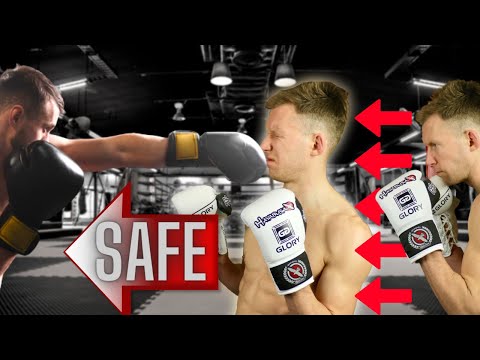
How To Enter Striking Distance W/O Getting Hit Upon Entry
0
Standard Mid Range·Gabriel Varga·Added by Admin
This is the answer to a question I received on instagram about how to enter without constantly getting hit. We want to …
Translation: standard mid range
The Standard Mid Range position places fighters at a distance where the jab can land without a full step forward — typically one to two arm lengths apart. [1] At standard mid range, the complete boxing arsenal is available: jab, cross, hook, uppercut, and their combinations, along with many kicks and knee strikes. [1],[2] Standard mid range is the distance at which most striking exchanges begin and where ring generalship and footwork are most critical. [2],[3]
Standard mid range is the baseline boxing distance. [1]
Defined in boxing range theory. [1]
The most common striking distance in MMA. [1]
No images yet for this technique.
Sign in to suggest an image.
This is the answer to a question I received on instagram about how to enter without constantly getting hit. We want to …
No instructional courses yet for this technique.
Sign in to suggest a course.
Risk of injury to the person this technique is applied to
Standing positions are pre-engagement stances; minimal direct risk
Skill level needed to execute this technique reliably
Whether this technique is allowed under major competition rule sets
Karate-Do Kyohan: The Master Text (Gichin Funakoshi, 1935)
Alias sources — [1] Mastering Jujitsu (Gracie & Danaher, 2003) [2] Championship Fighting (Dempsey, 1950)
Effectiveness sources — [1] Boxing: The Complete Guide to Training and Fitness (Hatmaker, 2004)
Mixed Japanese-Western terminology — combines traditional Japanese terms with katakana loanwords
Alias sources — [1] Mastering Jujitsu (Gracie & Danaher, 2003) [2] Championship Fighting (Dempsey, 1950)
Effectiveness sources — [1] Boxing: The Complete Guide to Training and Fitness (Hatmaker, 2004)
balance, lower body stability, quick directional change
well-proportioned build with strong base
calves, quadriceps, core, hip stabilisers
Gabriel Varga emphasizes not walking straight forward and then throwing your shot, as this gives opponents time to counter. Instead, use fakes to create openings, slip your head off the center line as you move in, keep your guard tight, and move explosively from the right distance so opponents have less time to react.
Walking straight forward before throwing gives your opponent time to react and counter, especially if you have shorter arms than they do. Instead, combine your forward movement with head movement and fakes to stay safer upon entry.
Gabriel Varga recommends digging in on the ball of your back foot with your heel disconnected, similar to a sprinter's stance. This position allows for more explosive forward movement and faster entry.
Drilling with a live partner is essential to understanding distance, as shadow boxing and bag work alone don't develop this awareness. You need to practice recognizing when you're outside punch range, when kicks can reach you, and at what point you can be punched.
The Standard Mid Range position places fighters at a distance where the jab can land without a full step forward — typically one to two arm lengths apart. At standard mid range, the complete boxing arsenal is available: jab, cross, hook, uppercut, and their combinations, along with many kicks and knee strikes.
Standard mid range is the classic boxing distance, the fundamental fighting distance in the 'sweet science' where the jab, movement, and ring craft determine tactical advantage. It is the most studied fighting distance in combat sports.
Unified MMA: legal — Legal; IBJJF: legal — Legal; IJF: legal — Legal; WBC/Boxing: legal — Legal — stance and footwork are fundamental; WKF: legal — Legal; UWW: legal — Legal
Danger rating 2/10. Low — standing positions are pre-engagement stances; minimal direct risk
The standard setup chain: Achieve Position → Stabilize → Maintain → Attack.
Standard counters include: Posture Control — maintain strong posture to limit the opponent's offensive options / Escape to Neutral — work back to standing or a neutral position.
Common variants: Standard variation (primary positioning for control and attack); Offensive variation (configured for submission or striking opportunities); Transitional variation (positioned for quick movement to the next position); Defensive variation (prioritising stability and control over attack).
The most common striking distance in MMA.
Top errors to watch for: Dropping the non-punching hand while attacking — both hands must be active: one attacks, one defends / Throwing single punches at mid range — combinations are necessary for effective mid-range offence / Standing square at mid range — maintain a proper stance for mobility and power generation / Not moving after combinations — standing still after punching invites counters.
The Standard Mid Range is also known as Sutandādo Chūkyori, Basic Boxing Range, Standard Punching Distance.