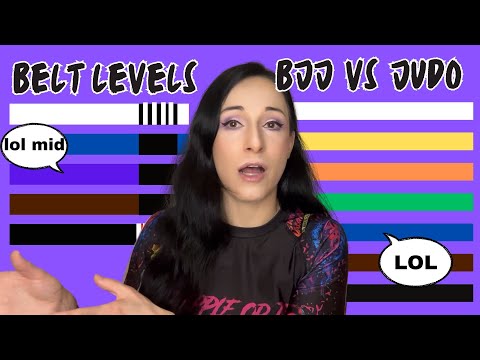
BJJ vs Judo belt levels and promotion differences | Why my belts are mid
0
Mid Range·The Purple Belt Diaries
#bjj #judo #jiujitsu Brazilian Jiu Jitsu and Judo have some common ground when it comes to belt levels, but also some v…
Translation: mid range
The Mid Range subfamily covers the fighting distance where both fighters are within punching range — the distance where straight punches (jab, cross) and front kicks can land. [1] Mid range is the most common fighting distance in boxing and kickboxing, where the majority of exchanges occur. [1],[2] Mid range favours fighters with superior boxing technique, timing, and combinations, as the full arsenal of punches is available along with many kicks. [2],[3]
Mid-range fighting is the core of boxing and is emphasised in MMA striking. [1]
Mid-range striking is the most common distance for significant strikes in UFC competition. [1]
No images yet for this technique.
Sign in to suggest an image.
#bjj #judo #jiujitsu Brazilian Jiu Jitsu and Judo have some common ground when it comes to belt levels, but also some v…
No instructional courses yet for this technique.
Sign in to suggest a course.
Risk of injury to the person this technique is applied to
Standing positions are pre-engagement stances; minimal direct risk
Skill level needed to execute this technique reliably
Whether this technique is allowed under major competition rule sets
Karate-Do Kyohan: The Master Text (Gichin Funakoshi, 1935)
Alias sources — [1] Mastering Jujitsu (Gracie & Danaher, 2003) [2] Championship Fighting (Dempsey, 1950) [3] Championship Fighting (Dempsey, 1950)
Effectiveness sources — [1] Boxing: The Complete Guide to Training and Fitness (Hatmaker, 2004) [2] Mastering Jujitsu (Gracie & Danaher, 2003)
Standard Japanese martial arts terminology (kanji/hiragana)
Established Japanese martial arts naming convention — native Japanese term (和語/漢語)
Alias sources — [1] Mastering Jujitsu (Gracie & Danaher, 2003) [2] Championship Fighting (Dempsey, 1950) [3] Championship Fighting (Dempsey, 1950)
Effectiveness sources — [1] Boxing: The Complete Guide to Training and Fitness (Hatmaker, 2004) [2] Mastering Jujitsu (Gracie & Danaher, 2003)
balance, lower body stability, quick directional change
well-proportioned build with strong base
calves, quadriceps, core, hip stabilisers
Every move, in any martial art, shares a few universal traits. Mix and match below to pinpoint the right tool — or compare equivalents across styles.
No, they are not equivalent. A blue belt in judo and a blue belt in Brazilian jiu-jitsu differ in terms of the time and training requirements needed to achieve each rank, according to The Purple Belt Diaries.
The Mid Range subfamily covers the fighting distance where both fighters are within punching range — the distance where straight punches (jab, cross) and front kicks can land. Mid range is the most common fighting distance in boxing and kickboxing, where the majority of exchanges occur.
Mid range is the primary fighting distance in boxing and kickboxing, where the art of the jab, cross, and combination punching has been refined over centuries. It is considered the fundamental distance at which striking skill is most tested.
Unified MMA: legal — Legal; IBJJF: legal — Legal; IJF: legal — Legal; WBC/Boxing: legal — Legal — stance and footwork are fundamental; WKF: legal — Legal; UWW: legal — Legal
Danger rating 2/10. Low — standing positions are pre-engagement stances; minimal direct risk
The standard setup chain: Achieve Position → Stabilize → Maintain → Attack.
Standard counters include: Posture Control — maintain strong posture to limit the opponent's offensive options / Escape to Neutral — work back to standing or a neutral position.
Common variants: Standard variation (primary positioning for control and attack); Offensive variation (configured for submission or striking opportunities); Transitional variation (positioned for quick movement to the next position); Defensive variation (prioritising stability and control over attack).
Mid-range striking is the most common distance for significant strikes in UFC competition.
Top errors to watch for: Staying at mid range without a specific offensive or defensive plan — mid range is high-risk; have a purpose / Trading punches at mid range without defence — defence must accompany every attack at this distance / Not using combinations at mid range — single shots are less effective than combinations here / Standing still at mid range — movement is essential to avoid becoming an easy target.
The Mid Range is also known as Chūkyori, Boxing Range, Punching Distance, Medium Range.