Standard Close Range

Genus

スタンダード近距離(Sutandādo Kinkyori)

Hybrid

Translation: standard close range

Overview

The Standard Close Range position places both fighters within arm's reach, typically at a distance where the lead hand can touch the opponent without fully extending. [1] At standard close range, the primary offensive tools are hooks, uppercuts, elbows, knees, clinch entries, and takedown shots. [1],[2] Defensive considerations at close range include underhook battles, frame management, and stance adjustments to prevent takedowns. [2],[3]

Also known as
Basic Infighting Distance[1]Standard Close Quarters[2]

History & Origin

Standard close range fighting is a fundamental distance in all striking and grappling sports, representing the zone where the widest variety of offensive techniques become available. [1] It is the primary fighting distance in boxing's infighting style and MMA's clinch exchanges. [2],[3]

Effectiveness

Standard close range is the baseline infighting distance. [1]

Lineage

Defined in boxing and MMA range theory. [1]

Competition Record

A fundamental distance in combat sports competition. [1]

Images

No images yet for this technique.

Sign in to suggest an image.

Biomechanical Mechanism

Primary ActionPerpendicular chest-to-chest control — pinning the opponent's upper body while maintaining mobility
Joints InvolvedAttacker's chest (primary contact), hips (sprawled or driving), opponent's near shoulder and hip (controlled)
Force VectorDownward and lateral — chest pressure pins the opponent while hip positioning prevents escape
Positional MechanicCrossface and underhook combination controls the opponent's head and near arm, preventing bridging or turning

Position & Entry

From neutral positionAssume the fighting stance by placing feet at shoulder width, bending knees slightly, and establishing guard position
Before engagementEstablish the proper stance as the starting position before initiating or receiving attacks

Variants

Standard variationprimary positioning for control and attack
Offensive variationconfigured for submission or striking opportunities
Transitional variationpositioned for quick movement to the next position
Defensive variationprioritising stability and control over attack

Videos

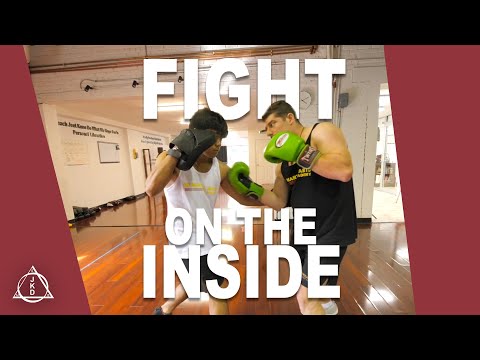
Fighting on the Inside | Close Range Tactics

0
Standard Close Range·NY Martial Arts Academy·Added by Admin

In this video, Sifu Teddy breaks down counters to the shell defense. When your opponent shells up, they’re protected up

1 video

Learn This Technique

No instructional courses yet for this technique.

Sign in to suggest a course.

Ratings

Danger Rating

Risk of injury to the person this technique is applied to

2
Low2/10

Standing positions are pre-engagement stances; minimal direct risk

Difficulty

Skill level needed to execute this technique reliably

Beginner
Competition Legality

Whether this technique is allowed under major competition rule sets

Unified MMA — Legal
Unified Rules of MMA, August 2025PDF
WBC/Boxing — Legal — stance and footwork are fundamental {srcWBC Rules of Boxing}

Training Notes

Standard close range positioning: the fighters are within elbow and knee distance, hands are active in tie-ups or frames, and the stance is slightly lower than at mid range to facilitate takedown offence and defence (Couture, Wrestling for Fighting, 2007)
Step 1: close the distance with a jab or feint to cover the approach
Step 2: establish hand position: collar tie, wrist control, or underhook
Step 3: lower the hips slightly for takedown readiness
Step 4: from this range, options are: clinch entries, short strikes (hooks, uppercuts, elbows, knees), and level changes for takedowns
The stance at close range is more square than at long range — the sideways stance exposes the back at clinch distance
Head position is critical: the head should be on the centreline or on the underhook side, never extended forward
Drill: partner work at close range — alternate between clinch entries, short strikes, and takedowns for 3-minute rounds

Common Mistakes

!Maintaining a long-range stance at close range — the stance must adapt; more square, slightly lower
!Not establishing hand position immediately — at close range, whoever gets grips first controls the exchange
!Throwing long punches at close range — short, compact strikes are effective here
!Neglecting takedown awareness — close range is takedown range; maintain hip and hand defence
!Keeping the head in the centre without movement — the head must be active: inside position on the underhook side
!Not training the transition from striking to clinch — close range requires seamless integration
!Standing upright at close range against a wrestler — lower the hips to defend takedowns

Related Techniques

Counter Techniques

Setup Chain

1Achieve Positiontransition into this position through passing, sweeping, or scrambling
2Stabilizeestablish controlling grips and weight distribution
3Maintainadjust to the opponent's escape attempts to hold position
4Attacklaunch offensive techniques from the stabilized position

Sources & References

Primary Source

Brazilian Jiu-Jitsu: Theory and Technique (Renzo Gracie & Royler Gracie, 2001)

1BookBoxing (Dempsey, 1950)

Alias sources — [1] Mastering Jujitsu (Gracie & Danaher, 2003) [2] Championship Fighting (Dempsey, 1950)

2BookMuay Thai: The Art of Fighting (Kraitus, 2002)

Effectiveness sources — [1] Boxing: The Complete Guide to Training and Fitness (Hatmaker, 2004)

3OtherJapanese Martial Arts Hybrid Terminology

Mixed Japanese-Western terminology — combines traditional Japanese terms with katakana loanwords

4CitationBoxing (Dempsey, 1950)

Alias sources — [1] Mastering Jujitsu (Gracie & Danaher, 2003) [2] Championship Fighting (Dempsey, 1950)

5CitationMuay Thai: The Art of Fighting (Kraitus, 2002)

Effectiveness sources — [1] Boxing: The Complete Guide to Training and Fitness (Hatmaker, 2004)

Community

Athletics

Requires

balance, lower body stability, quick directional change

Favours

well-proportioned build with strong base

Key muscles

calves, quadriceps, core, hip stabilisers

Frequently Asked Questions

How do I attack an opponent who has a tight shell defense?

You need to understand the shell to counter it effectively. Tap the shell to find openings in different areas like the body and legs, then exploit those vulnerabilities with strikes or takedowns.

What are the main targets available when fighting at close range?

The primary targets are the body, the low line (knees and groin), and the face. The body and low line are particularly vulnerable when an opponent is in a defensive shell, making them good areas to target with taps and strikes.

How should I properly execute a shell defense to protect my body?

Bring your elbows toward your hips and stay super small to create a tight defense. Avoid dropping your hands, as this compromises the integrity of the shell and leaves you vulnerable to strikes.

How does the Standard Close Range work?

The Standard Close Range position places both fighters within arm's reach, typically at a distance where the lead hand can touch the opponent without fully extending. At standard close range, the primary offensive tools are hooks, uppercuts, elbows, knees, clinch entries, and takedown shots.

Where does the Standard Close Range come from?

Standard close range fighting is a fundamental distance in all striking and grappling sports, representing the zone where the widest variety of offensive techniques become available. It is the primary fighting distance in boxing's infighting style and MMA's clinch exchanges.

Is the Standard Close Range legal in competition?

Unified MMA: legal — Legal; IBJJF: legal — Legal; IJF: legal — Legal; WBC/Boxing: legal — Legal — stance and footwork are fundamental; WKF: legal — Legal; UWW: legal — Legal

How dangerous is the Standard Close Range?

Danger rating 2/10. Low — standing positions are pre-engagement stances; minimal direct risk

How do I set up the Standard Close Range?

The standard setup chain: Achieve Position → Stabilize → Maintain → Attack.

How do I defend against the Standard Close Range?

Standard counters include: Posture Control — maintain strong posture to limit the opponent's offensive options / Escape to Neutral — work back to standing or a neutral position.

What are the variants of the Standard Close Range?

Common variants: Standard variation (primary positioning for control and attack); Offensive variation (configured for submission or striking opportunities); Transitional variation (positioned for quick movement to the next position); Defensive variation (prioritising stability and control over attack).

How effective is the Standard Close Range in competition?

A fundamental distance in combat sports competition.

What are common mistakes when doing the Standard Close Range?

Top errors to watch for: Maintaining a long-range stance at close range — the stance must adapt; more square, slightly lower / Not establishing hand position immediately — at close range, whoever gets grips first controls the exchange / Throwing long punches at close range — short, compact strikes are effective here / Neglecting takedown awareness — close range is takedown range; maintain hip and hand defence.

What are other names for the Standard Close Range?

The Standard Close Range is also known as Sutandādo Kinkyori, Basic Infighting Distance, Standard Close Quarters.