Standard New York

Genus

スタンダードニューヨーク(Sutandādo Nyū Yōku)

Transliteration

Translation: standard New York

Overview

The Standard New York establishes the advanced rubber guard configuration with maximum leg control over the opponent's shoulder and arm, creating direct submission threats from the position. [1] The standard New York builds on the chill dog by securing deeper control that makes the transition to gogoplata, omoplata, or triangle nearly immediate. [1],[2] It represents one of the most advanced and controlling positions in the rubber guard pathway. [2],[3]

Also known as
Basic New York[1]Classic New York[2]

History & Origin

The standard New York is an advanced position in Eddie Bravo's 10th Planet rubber guard system, representing one of the culmination points of the rubber guard sequence before the submission finish. [1] It is taught to advanced students who have mastered the earlier positions. [2],[3]

Effectiveness

The standard New York is the baseline version of this rubber guard position. [1]

Lineage

Developed by Eddie Bravo. [1]

Competition Record

Used in no-gi competition. [1]

Images

No images yet for this technique.

Sign in to suggest an image.

Biomechanical Mechanism

Primary ActionUsing the legs and hips to control the opponent from the bottom — maintaining distance management and attack angles
Joints InvolvedHips (primary engine for sweeps and attacks), knees (framing and hooking), ankles (secondary hooks)
Force VectorPulling, framing, and hip-escaping — creating angles for attacks while preventing passing
Positional MechanicThe guard is an active offensive position — leg control compensates for bottom positioning by threatening sweeps and submissions

Position & Entry

From closed guardBreak the opponent's posture, secure mission control (overhook the head with the leg), establish rubber guard configuration
From high guardClimb the legs high, flex the hip to bring the foot to the shoulder, lock the rubber guard position

Variants

Standard guardprimary leg and grip configuration for control and attacks from bottom
Offensive guardconfigured for sweeps and submissions
Defensive guardprioritising distance management and preventing passes
Transition guardmoving between guard types to adjust to the opponent's passing style

Videos

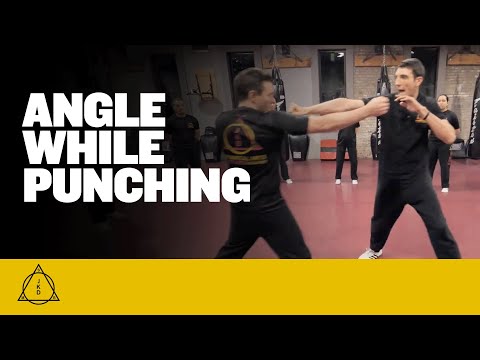
Learn How to Angle When You Punch | Sifu Adam at NY Martial Arts Academy

0
Standard New York·NY Martial Arts Academy·Added by Admin

A key point of martial arts is knowing how to avoid getting hit. Head movement, footwork, and even getting an angle when

1 video

Learn This Technique

No instructional courses yet for this technique.

Sign in to suggest a course.

Ratings

Danger Rating

Risk of injury to the person this technique is applied to

2
Low2/10

Guard positions are defensive; injury risk comes from transitions, not the position itself

Difficulty

Skill level needed to execute this technique reliably

Intermediate
Competition Legality

Whether this technique is allowed under major competition rule sets

Restricted
IJF — Guard pulling penalized as non-combativity — ground...
IJF Sport and Organisation Rules 2025, Article 27PDF
Legal
IBJJF — Legal — guard is fundamental to BJJ, sweeps from ...
IBJJF Rules Book v6.0, June 2024PDF
ADCC — Legal, guard pull penalized -1 point in points por...
ADCC Rules Update, April 2025PDF
Unified MMA — Legal — no penalty for playing guard
Unified Rules of MMA, August 2025PDF
FIAS Sport Sambo — Legal
FIAS International Sambo Competition RulesPDF

Training Notes

Standard new york execution: from mission control, use the free hand to grab the opponent's near-side arm (the arm on the rubber guard leg side), feed it under the controlling leg, and secure the arm between both legs (Eddie Bravo, Mastering the Rubber Guard, 2006)
Step 1: from mission control (shin across neck, ankle held), identify the near-side arm
Step 2: use the free hand to grip the opponent's near wrist
Step 3: pull the near arm underneath the rubber guard leg — threading it between the leg and the opponent's neck
Step 4: once the arm is threaded, squeeze the knees together to trap the arm
Step 5: from here, the gogoplata is immediate: release the shin from the neck and feed it under the chin for the choke
The arm thread is what distinguishes new york from chill dog: near arm under the leg (new york) vs far arm pulled across (chill dog)
Drill: from mission control, establish new york and attempt the gogoplata — 3 reps per side (advanced technique)
Common Mistakes

!Threading the arm without maintaining neck control — the shin must stay on the neck throughout the thread
!Pulling the arm too aggressively — the thread must be controlled to maintain the overall position
!Not squeezing the knees after threading — the arm must be trapped securely between the legs
!Attempting the gogoplata before the arm is fully isolated — complete the new york position before attacking
!Using muscle instead of leverage for the thread — hip adjustment and angle changes create the space for the arm
!Not releasing the ankle hand at the right moment — timing the hand release with the arm thread is critical
!Training new york without adequate flexibility preparation — this is the most flexibility-demanding rubber guard position

Related Techniques

Counter Techniques

Setup Chain

1Achieve Guard Contactestablish leg control around or against the opponent
2Control Gripssecure sleeve, collar, or wrist control for manipulation
3Manage Distanceuse legs and grips to control the range and prevent passing
4Threaten Submissions/Sweepscreate offensive threats to keep the opponent reactive

Sources & References

Primary Source

Advanced Brazilian Jiu-Jitsu Techniques (Marcelo Garcia, 2011)

1BookThe Guard (Moreira & Beneville, 2008)

Alias sources — [1] Advanced Rubber Guard (Bravo, 2006) [2] Advanced Rubber Guard (Bravo, 2006)

2BookJiu-Jitsu University (Ribeiro, 2008)

Effectiveness sources — [1] Mastering the Rubber Guard (Bravo, 2006)

3OtherJapanese Combat Sports Katakana Convention

Standard katakana transliteration of Western martial arts terminology (外来語) — used in Japanese MMA, boxing, and BJJ communities

4CitationThe Guard (Moreira & Beneville, 2008)

Alias sources — [1] Advanced Rubber Guard (Bravo, 2006) [2] Advanced Rubber Guard (Bravo, 2006)

5CitationJiu-Jitsu University (Ribeiro, 2008)

Effectiveness sources — [1] Mastering the Rubber Guard (Bravo, 2006)

Community

Athletics

Requires

hip flexibility, active legs, grip management

Favours

long legs for distance control and guard retention

Key muscles

hip flexors, adductors, quadriceps, core, grip

Frequently Asked Questions

Why is getting to my opponent's center line important when punching?

Getting to your opponent's center line gives you a better target to hit while limiting their available tools. According to Sifu Adam at NY Martial Arts Academy, when you control the center line, both of your tools face your opponent while they can't effectively target you, giving you a significant advantage.

What's a common mistake when angling to 90 degrees?

A common mistake is curving too much to reach a 90-degree angle, which leaves your tools and his tools facing away from each other rather than maintaining offensive and defensive positioning. Sifu Adam emphasizes checking where your tools are facing relative to your opponent's tools when you make your angle adjustment.

Should I step or push when moving to get positional advantage?

When you see an opening and want to take a better position, stepping and hitting will be too slow and your opponent will move. Sifu Adam suggests that pushing or curving along the lateral plane is a quicker way to get into the advantageous position while maintaining your attack.

How does the Standard New York work?

The Standard New York establishes the advanced rubber guard configuration with maximum leg control over the opponent's shoulder and arm, creating direct submission threats from the position. The standard New York builds on the chill dog by securing deeper control that makes the transition to gogoplata, omoplata, or triangle nearly immediate.

Where does the Standard New York come from?

The standard New York is an advanced position in Eddie Bravo's 10th Planet rubber guard system, representing one of the culmination points of the rubber guard sequence before the submission finish. It is taught to advanced students who have mastered the earlier positions.

Is the Standard New York legal in competition?

IBJJF: legal — Legal — guard is fundamental to BJJ, sweeps from guard score 2 points; IJF: restricted — Guard pulling penalized as non-combativity — groundwork from guard permitted …; ADCC: legal — Legal, guard pull penalized -1 point in points portion; Unified MMA: legal — Legal — no penalty for playing guard; FIAS Sport Sambo: legal — Legal

How dangerous is the Standard New York?

Danger rating 2/10. Low — guard positions are defensive; injury risk comes from transitions, not the position itself

How do I set up the Standard New York?

The standard setup chain: Achieve Guard Contact → Control Grips → Manage Distance → Threaten Submissions/Sweeps.

How do I defend against the Standard New York?

Standard counters include: Guard Pass — systematically work to clear the legs and establish a dominant position / Leg Pin — control one or both legs to neutralize guard retention / Pressure Passing — use heavy chest pressure to flatten and immobilize the guard player.

What are the variants of the Standard New York?

Common variants: Standard guard (primary leg and grip configuration for control and attack…); Offensive guard (configured for sweeps and submissions); Defensive guard (prioritising distance management and preventing passes); Transition guard (moving between guard types to adjust to the opponent's pa…).

How effective is the Standard New York in competition?

Used in no-gi competition.

What are common mistakes when doing the Standard New York?

Top errors to watch for: Threading the arm without maintaining neck control — the shin must stay on the neck throughout the thread / Pulling the arm too aggressively — the thread must be controlled to maintain the overall position / Not squeezing the knees after threading — the arm must be trapped securely between the legs / Attempting the gogoplata before the arm is fully isolated — complete the new york position before attacking.

What are other names for the Standard New York?

The Standard New York is also known as Sutandādo Nyū Yōku, Basic New York, Classic New York.