How to Sit Like a Kung Fu Master
0
Standard Chair Sit Position·Mantis Mechanics·Added by Admin
Have you ever noticed that Kung Fu Masters have impeccable posture while sitting? This is not by mistake! Their traini…
Translation: standard chair sit position
The Standard Chair Sit Position is the base-level execution of the chair sit, with the controlling fighter seated directly behind the opponent, both hips on the mat, legs wrapped loosely around the opponent's torso, and hands controlling the upper body. [1] From this position, the controller's primary objectives are inserting hooks to establish full back control, or transitioning to a body triangle. [1],[2] The position requires active grip fighting and hip pressure to prevent the bottom fighter from turning or creating space to escape. [2],[3]
The standard chair sit position is the baseline seated back control used in BJJ. [1]
A modern BJJ back control variant. [1]
Used in BJJ competition. [1]
No images yet for this technique.
Sign in to suggest an image.
Have you ever noticed that Kung Fu Masters have impeccable posture while sitting? This is not by mistake! Their traini…
Great Back take option when in technical mount.
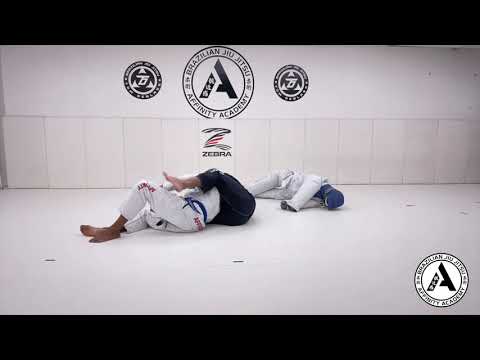
The Standard Chair Sit Position in Brazilian Jiu-Jitsu is a back-control position established from mount after securing a seat belt grip and isolating the opponent on their side. According to Affinity Academy, the position requires sliding the attacking athlete's knee high (ideally passing the opponent's head) while positioning the back leg parallel to the opponent's spine with the foot close to their back. The critical execution detail is the entry: the athlete must sit on their buttocks while falling the shoulder toward the opponent's hip rather than falling backward, which lifts the opponent's back off the floor and enables hook placement. Affinity Academy emphasizes that backward falling compromises the position's integrity. Once seated, if the hook cannot be inserted immediately due to leg length constraints, arching the back facilitates hook placement. Two finishing options exist: inserting the hook underneath around the hip, or for advanced students, going over top to access arm isolations and strangles. Mantis Mechanics' video on general sitting posture—while not directly addressing the jiu-jitsu context—reinforces foundational principles about maintaining an upright spine, proper hip hinging, and centered weight distribution on the sitz bones, principles applicable to maintaining postural integrity during the chair sit position.
Synthesized from 2 instructors
No instructional courses yet for this technique.
Sign in to suggest a course.
Risk of injury to the person this technique is applied to
Back control is dominant position; enables rear chokes (Danaher 2021)
Skill level needed to execute this technique reliably
Whether this technique is allowed under major competition rule sets
Advanced Brazilian Jiu-Jitsu Techniques (Marcelo Garcia, 2011)
Alias sources — [1] Jiu-Jitsu University (Ribeiro, 2008) [2] Mastering Jujitsu (Gracie & Danaher, 2003)
Effectiveness sources — [1] Jiu-Jitsu University (Ribeiro, 2008)
Standard katakana transliteration of Western martial arts terminology (外来語) — used in Japanese MMA, boxing, and BJJ communities
Alias sources — [1] Jiu-Jitsu University (Ribeiro, 2008) [2] Mastering Jujitsu (Gracie & Danaher, 2003)
Effectiveness sources — [1] Jiu-Jitsu University (Ribeiro, 2008)
hook control, seatbelt grip endurance, hip connection
long legs for deep hooks, strong grip for seatbelt
hip adductors, biceps, forearms, core
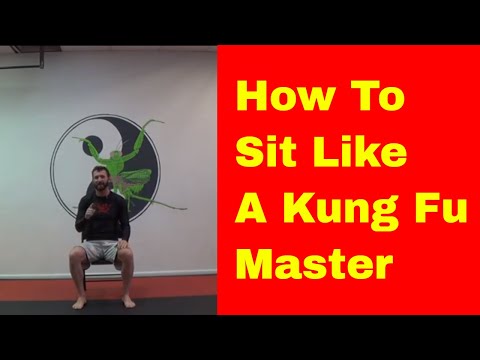
Keep your back straight and maintain an upright posture with shoulders rolled back. Find the center of your sit bones by rocking your pelvis slightly—avoid sitting too far forward or back on those bones. Mantis Mechanics emphasizes that good positioning from the start makes it much easier to maintain proper posture throughout your sit.
Being mindful about your sitting technique minimizes impact on your joints and back, and helps you avoid poor positioning that can compromise performance. Rather than just dropping into a chair, you should hinge at the hips, keep your back upright with shoulders rolled back, transfer weight to your feet, and push yourself up into position.
Even in a good sitting position, Mantis Mechanics does not recommend sitting for long periods of time, as maintaining the upright posture will become tiring on your core and supporting muscles.
Do not fall straight back, as this will cause you to lose the position. Instead, fall with your shoulder toward your partner's hip so you can rock them up and maintain control. From there, arch your back to set your hook properly.
The Standard Chair Sit Position is the base-level execution of the chair sit, with the controlling fighter seated directly behind the opponent, both hips on the mat, legs wrapped loosely around the opponent's torso, and hands controlling the upper body. From this position, the controller's primary objectives are inserting hooks to establish full back control, or transitioning to a body triangle.
The standard chair sit position represents the fundamental version of this transitional back control, taught as part of the back-taking process in competitive grappling. It is the starting point for developing full back control.
IBJJF: legal — Legal, back control with hooks or body triangle scores 4 points; IJF: legal — Legal — back control leads to pin or submission opportunities; ADCC: legal — Legal, back mount scores 3 points (4 from sweep); Unified MMA: legal — Legal — dominant position for ground-and-pound and rear naked choke; UWW: legal — Legal — back exposure is the primary scoring mechanism in wrestling; FIAS Sport Sambo: legal — Legal
Danger rating 4/10. Moderate — back control is dominant position; enables rear chokes (Danaher 2021)
The standard setup chain: Achieve Position → Stabilize → Maintain → Attack.
Standard counters include: Hand Fight — grip-fight the choking hand to prevent the rear naked choke / Shoulder Walk — walk shoulders to the mat to escape back control / Turn into Guard — rotate to face the attacker and recover guard position.
Common variants: Back control with hooks (both feet hooked inside the opponent's thighs); Body triangle back control (legs locked in a figure-four around the torso); Rear mount (mounted on the back with both hooks, opponent face-down); Chair sit back control (sitting behind the opponent with hooks, upright position).
Used in BJJ competition.
Top errors to watch for: Hips too far from the opponent — close the gap; hip distance allows escape / Leaning back instead of maintaining upright posture — the upright position provides the best control / Hooks angled outward instead of inward — the hooks must curl inward for control / Seatbelt too high (on the neck) or too low (on the stomach) — the sternum area is the correct position.
The Standard Chair Sit Position is also known as Sutandādo Chea Shitto Pojishon, Chair Position, Sitting Back Control.