The First 3 Mount Escapes You Need To Know in BJJ
0
Standard Sit-Out Technique·Brandon Mccaghren
When you first start Jiu Jitsu, you're gonna be getting stuck in the bottom of mount. A lot. Even by people who aren't v…
Translation: standard sit-out technique
The Standard Sit-Out Technique executes the fundamental sit-out escape by kicking the hips out to one side from the turtle position, rotating the body to face the opponent while landing on the hip or buttock. [1] The turtled fighter plants one hand on the mat, kicks the hips out to the opposite side in an explosive motion, and rotates the body to face the opponent, ending in a seated or guard position. [1],[2] The sit-out is completed in one explosive motion, and the speed of the hip kick is the key factor in its success. [2],[3]
The sit-out is one of the most fundamental and effective turtle escapes in wrestling, using a combination of hand control, hip rotation, and explosive hip movement to escape the bottom position. [1] It is a core wrestling escape that translates directly to BJJ and MMA turtle escape situations. [1],[2]
The sit-out is a standard escape in wrestling competition. [1]
No images yet for this technique.
Sign in to suggest an image.
When you first start Jiu Jitsu, you're gonna be getting stuck in the bottom of mount. A lot. Even by people who aren't v…
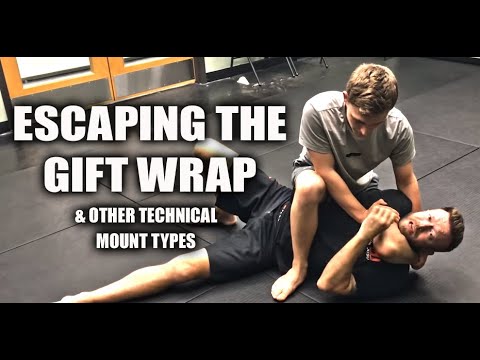
Technical mount, or kneeling mount, can be extremely tricky to escape. The top opponent has submission opportunities and…
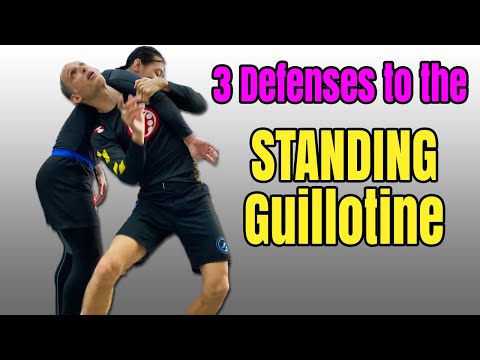
In this video we look at 3 defenses to the standing guillotine. The guillotine occurs on the ground as well, but the def…
The sit-out escape, as taught across instructional contexts, represents a fundamental reversal technique applicable to mounted and side-mounted positions. Brandon Mccaghren emphasizes the sit-out within the broader framework of mount escapes, describing it as the kipping or hip bump escape variant where the defender maintains a survival posture with a frame across the opponent's far hip and an inside elbow, bumping forward with the bottom knee while pulling one knee inward to return to guard. This escape preserves defensive framing rather than exposing the body through bilateral hand traps. Knight Jiu-Jitsu addresses sit-out mechanics when mounted on the side, detailing hip elevation, C-clamp ankle control, and hip displacement toward the supporting leg to insert the leg inside before executing a shin sweep or knee cut pass. Both instructors emphasize the importance of foot positioning and preventing opponent connections (seat belt control, arm triangle vulnerability). The technique requires fluid, continuous motion rather than isolated movements, with timing considerations critical to success against advancing opponents. Mccaghren notes the sit-out's effectiveness increases when combined with proper weight distribution and hip movement, while Knight Jiu-Jitsu highlights spatial awareness and the option to transition into follow-up attacks when escaping.
Synthesized from 3 instructors
No instructional courses yet for this technique.
Sign in to suggest a course.
Risk of injury to the person this technique is applied to
Turtle escapes involve rolling and granby movements; neck strain risk
Skill level needed to execute this technique reliably
Whether this technique is allowed under major competition rule sets
Jiu-Jitsu University (Saulo Ribeiro, 2008)
Alias sources — [1] Wrestling Physical Conditioning Encyclopedia (John Jesse, 1974) [2] NCAA wrestling terminology
Effectiveness sources — [1] Wrestling for Fighting (Randy Couture, 2007) [2] Coaching Wrestling Successfully (Dan Gable, 1999)
Standard katakana transliteration of Western martial arts terminology (外来語) — used in Japanese MMA, boxing, and BJJ communities
Alias sources — [1] Wrestling Physical Conditioning Encyclopedia (John Jesse, 1974) [2] NCAA wrestling terminology
Effectiveness sources — [1] Wrestling for Fighting (Randy Couture, 2007) [2] Coaching Wrestling Successfully (Dan Gable, 1999)
hip escape (shrimping) speed, framing strength, timing
flexible hips and quick lateral movement
hip flexors, obliques, triceps (framing), core
Brandon McCaghren emphasizes making the bridge and roll one fluid movement rather than two separate steps—this will significantly increase your success rate. You should look back over your shoulder and bridge in that direction, rather than trying to roll sideways.
Brandon McCaghren recommends shifting your hips over and turning your knees toward the foot, then pulling your heel to your butt—avoid trying to trap from the center, since your opponent can stay low and hide the foot trap from there.
Keep your elbow tucked inside and maintain a frame on your opponent's hip, rather than pushing them away with your hands. This positioning is important to hide your underhook and prevent your opponent from setting up an arm triangle.
Knight Jiu-Jitsu notes that if your opponent gets high on your armpits, many of your bridging escapes become ineffective, so keeping your elbows down and concentrating on controlling their hips prevents them from riding too high.
The Standard Sit-Out Technique executes the fundamental sit-out escape by kicking the hips out to one side from the turtle position, rotating the body to face the opponent while landing on the hip or buttock. The turtled fighter plants one hand on the mat, kicks the hips out to the opposite side in an explosive motion, and rotates the body to face the opponent, ending in a seated or guard position.
The standard sit-out technique is the most fundamental turtle escape in wrestling, taught as one of the first bottom-position escapes in every wrestling programme worldwide. Its adoption into BJJ and MMA has made it a universal grappling technique.
Unified MMA: legal — Legal defensive/transitional technique; IBJJF: legal — Legal; IJF: legal — Legal; ADCC: legal — Legal; UWW: legal — Legal, escape scores 1 point (freestyle), reversal scores 1 point; FIAS Sport Sambo: legal — Legal; NCAA Folkstyle: legal — Legal, escape scores 1 point, reversal scores 2 points
Danger rating 3/10. Moderate — turtle escapes involve rolling and granby movements; neck strain risk
The standard setup chain: Create Space → Disrupt Control → Execute Escape → Recover Position.
Standard counters include: Maintain Pressure — keep consistent weight distribution to limit escape space / Anticipate Direction — read escape attempt direction and block early / Transition — flow to a new position when the current one is threatened.
Common variants: Shrimp to guard (framing and hip-escaping to recover full guard or half guard); Underhook escape (winning the underhook and coming to knees or reversing); Bridge to knees (bridging into the opponent and transitioning to turtle or…); Ghost escape (inverting under the opponent to re-guard from the opposit…).
The sit-out is a standard escape in wrestling competition.
Top errors to watch for: Posting too far from the body — the hand should be close for a strong, stable pivot / Kicking the leg too high — the leg stays low, close to the mat, for speed and efficiency / Not completing the full 180-degree rotation — you must end facing the opponent / Pausing after the sit-out without transitioning — immediately go to guard or standing.
The Standard Sit-Out Technique is also known as Sutandādo Shitto Auto Waza, Basic Sit Out, Standard Sit Through.