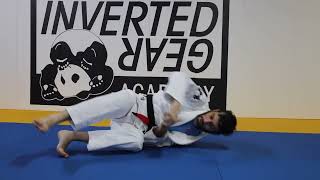
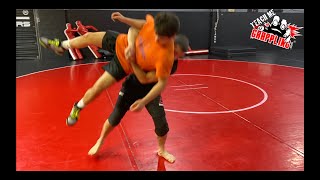
Introduction to Standing Guillotine Defenses
The standing guillotine presents unique defensive opportunities compared to ground-based scenarios. Standing position allows greater mobility through free use of the feet and legs, making escapes more accessible than when grounded on the knees.
Defense 1: Head Circling Technique
The first defense begins by controlling the opponent's elbow and drawing their arm through slightly. The practitioner rotates their head toward the direction of the locked hands, creating space and allowing the head to escape while the shoulder wedges against the opponent's arm to prevent follow-through.
Head Circling Escape Continuation
As the head continues to rotate against the wedged shoulder, the practitioner achieves a Russian tie position. This positioning allows for takedown opportunities or positioning on the opponent's back, making this defense effective even when the guillotine is fully locked.
Defense 2: Four-Finger Wrist Grip with Shoulder Control
When the opponent's grip is not yet fully secured with high elbows, the practitioner uses their outside hand to locate the opponent's wrist with four fingers. Simultaneously, the other hand travels over the opponent's shoulder, limiting their hand elevation and reducing strangle pressure.
Four-Finger Grip to Crossozo Transition
From the wrist and shoulder control, the practitioner steps behind the opponent and drives with their head to elevate the opponent's elbow. A large step around the corner combined with body lock pressure allows the practitioner to control the opponent's base and direction.
Cross-Side Positioning from Four-Finger Defense
The escape concludes with the practitioner landing in a cross-side position with their hips on one side and head on the other. This configuration severely restricts the opponent's finishing options; the practitioner can then control the opponent's head and apply a counter-strangle to force release of the guillotine.
Defense 3: Arm Spin with Timing
The third defense requires precise timing, executed before the opponent's hands fully lock. The practitioner glues their outside arm to the opponent's tricep, pulls their elbow back, and shoots their free arm through the created space similar to a wrestling high crotch or fireman's carry entry.
Arm Spin Completion and Head Positioning
The practitioner steps through with their back leg while driving their head against the opponent's rear deltoid. This positioning prevents the opponent from completing their hand lock with the practitioner's head in front of their body, though this defense carries risk if the opponent secures a far-side grip.
Technical Recommendation and Practice Considerations
The head circling defense is the most versatile and reliable technique, applicable in both standing and ground positions. Practitioners should begin with a compliant partner and focus on understanding the mechanical principles to build confidence and reduce anxiety when their head is pulled downward.
3 Defenses to the STANDING Guillotine (BJJ/Jiu-Jitsu/Judo)
Key Takeaways
- •Introduction to Standing Guillotine Defenses
- •Defense 1: Head Circling Technique
- •Head Circling Escape Continuation
- •Defense 2: Four-Finger Wrist Grip with Shoulder Control
In this video we look at 3 defenses to the standing guillotine. The guillotine occurs on the ground as well, but the defenses from standing can be a little easier because they involve your ability to move around on your feet. On the ground it can be difficult to move and your mobility is limited by your partner’s guard; when you have your feet and legs free - as you do when standing - you can move much more readily. Our first defense involves us circling our head out of a standard high elbow guillotine and controlling the elbow to make room enough to slip out. Next, we work on a defense where our partners hands are locked, and we use our arm position to keep their hands low. Finally we work on a speed and timing based response, the arm spin, which takes us out of danger and lets us go back in on the attack ourselves. ⭐ ➡️ MY BIO (by John Danaher): https://bit.ly/3gUMU5R === Like this video? Please subscribe! === 🚨 INSTAGRAM: http://www.instagram.com/bzglick 🚨 FACEBOOK: http://www.facebook.com/bzglick 🥋 SHOYOROLL: https://shoyoroll.com/ 🙇🏻 BROOKLYN BJJ: https://www.brooklynbjj.com 👊 Link to MY INSTRUCTIONAL VIDEOS: https://bjjfanatics.com/collections/all/fighter_BRIAN-GLICK .
Frequently Asked Questions
What does this video teach about standard sit-out technique?
This video covers introduction to standing guillotine defenses, defense 1: head circling technique, head circling escape continuation. It provides detailed instruction from Brian Glick.
How long does it take to learn standard sit-out technique?
The basic mechanics can be understood in a single session, but developing reliable execution requires consistent drilling over weeks of practice. This 9-part breakdown helps structure your training by isolating each phase of the technique.
What are the key details for finishing standard sit-out technique?
The practitioner steps through with their back leg while driving their head against the opponent's rear deltoid. This positioning prevents the opponent from completing their hand lock with the practitioner's head in front of their body, though this defense carries risk if the opponent secures a far-side grip.