Learning How To Granby Roll
0
Granby Roll·Inverted Gear
Do you have any topic you want us to cover? Let us know with a comment below! Don’t forget to subscribe for more Brazili…
Translation: Granby roll
The Granby Roll is a dynamic wrestling escape from the turtle position where the bottom fighter rolls over their shoulder to invert, escape the opponent's top control, and recover guard or create a scramble — named after Granby High School in Norfolk, Virginia, where the technique was developed and made famous. [1] The Granby Roll uses shoulder-rolling momentum to escape when the opponent is riding or attempting to take the back from the turtle position, inverting underneath them and coming out the other side in guard or a neutral position. [1],[2] The technique is a signature of American folkstyle wrestling that has been widely adopted into BJJ and MMA as a turtle escape, and has also influenced modern BJJ inversion-based guard play (berimbolo, rolling back takes) which use similar shoulder-rolling mechanics. [2],[3] While athletic and requiring practice, the Granby Roll is one of the most effective escapes against heavy riders and back-take attempts from turtle. [3]
The Granby Roll was developed at Granby High School in Norfolk, Virginia in the 1960s-70s under wrestling coach Billy Martin, who built the school's wrestling program around the dynamic rolling escape. [1] The technique became a hallmark of Granby High School's wrestling program and spread throughout American folkstyle wrestling, eventually being adopted into BJJ and MMA. [1],[2] The rolling mechanics of the Granby Roll have influenced modern BJJ inversion-based techniques including the berimbolo and rolling back takes. [2],[3]
No images yet for this technique.
Sign in to suggest an image.
Do you have any topic you want us to cover? Let us know with a comment below! Don’t forget to subscribe for more Brazili…
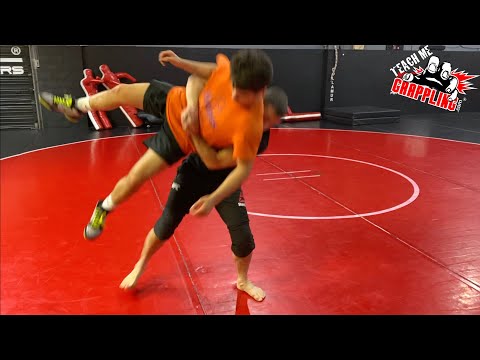
PLEASE Click this link to SUPPORT the TeachMeGrappling Channel!!! https://www.patreon.com/TeachMeGrappling or https:/…
No instructional courses yet for this technique.
Sign in to suggest a course.
Risk of injury to the person this technique is applied to
Moderate — the primary risk is neck strain from the rolling motion if the head position is incorrect; there is also risk of the opponent catching a choke during the inversion if the roll is sloppy
Skill level needed to execute this technique reliably
Whether this technique is allowed under major competition rule sets
Coaching Wrestling Successfully (Dan Gable, 1999)
Description sources — [1] Granby High School wrestling history [2] Wrestling technique manuals [3] BJJ inversion evolution
Description sources — [1] Granby High School wrestling history [2] Wrestling technique manuals [3] BJJ inversion evolution
shoulder flexibility (rolling on the shoulder), neck strength (supporting the body briefly during inversion), core control (directing the roll), spatial awareness
athletic/agile body type, good proprioception, comfortable with inversions
shoulders (bearing weight during roll), core (controlling rotation), neck (support), hip flexors (driving hips over)
Every move, in any martial art, shares a few universal traits. Mix and match below to pinpoint the right tool — or compare equivalents across styles.
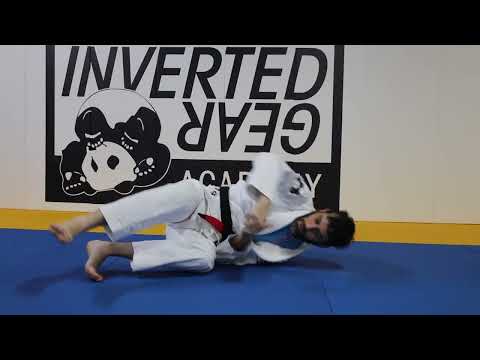
Many people get jammed or end up on their face because they place weight on their head instead of distributing it toward their shoulder line. According to Inverted Gear, keeping the weight on your shoulder rather than your head prevents this problem.
Use your feet and elbow to maintain the roll—your foot helps lift your hips, and pushing your elbow into the ground keeps you rolling forward rather than stalling out. Inverted Gear recommends practicing by rolling back and forth across the room to build comfort with the motion.
Coach Brian emphasizes never attempting a Granby roll when your opponent is hooking your leg, as your leg will get stuck and expose you to a knee bar. Also avoid it when your opponent is directly controlling you at close range, as they can catch your back instead.
Coach Brian prefers placing the arm to the side rather than between the legs, similar to how you'd position yourself when defending a kimura or protecting against a plata.
The Granby Roll is a dynamic wrestling escape from the turtle position where the bottom fighter rolls over their shoulder to invert, escape the opponent's top control, and recover guard or create a scramble — named after Granby High School in Norfolk, Virginia, where the technique was developed and made famous. The Granby Roll uses shoulder-rolling momentum to escape when the opponent is riding or attempting to take the back from the turtle position, inverting underneath them and coming out the other side in guard or a neutral position.
The Granby Roll was developed at Granby High School in Norfolk, Virginia in the 1960s-70s under wrestling coach Billy Martin, who built the school's wrestling program around the dynamic rolling escape. The technique became a hallmark of Granby High School's wrestling program and spread throughout American folkstyle wrestling, eventually being adopted into BJJ and MMA.
Unified MMA: legal — Legal defensive/transitional technique; IBJJF: legal — Legal; IJF: legal — Legal; ADCC: legal — Legal; UWW: legal — Legal, escape scores 1 point (freestyle), reversal scores 1 point; FIAS Sport Sambo: legal — Legal; NCAA Folkstyle: legal — Legal, escape scores 1 point, reversal scores 2 points
Danger rating 3/10. Low-moderate — the primary risk is neck strain from the rolling motion if the head position is incorrect; there is also risk of the opponent catching a choke during the inversion if the roll is sloppy
The standard setup chain: Establish Turtle → Sense Opponent's Weight → Tuck Chin → Drive Hips Over Shoulder → Complete Inversion → Recover Guard.
Standard counters include: When on top: maintain heavy pressure to prevent the turtle from being maintained / Anticipate the roll direction and follow / Secure hooks before the Granby can be executed / Attack with a choke during the inversion moment.
Common variants: Forward Granby Roll (rolling forward over the shoulder [1]); Lateral Granby Roll (rolling sideways); Sit-through to Granby (combining a sit-out with a Granby Roll); Peterson Roll to Granby (chaining the Peterson Roll with a Granby for a two-escape…); Granby to leg entanglement (using the Granby inversion to enter ashi garami positions…).
The Granby Roll is used in NCAA folkstyle and international wrestling competition. It has influenced BJJ's inversion-based techniques.
Top errors to watch for: Rolling on the head/neck instead of the shoulder — this is dangerous; always roll on the SHOULDER with the chin tucked / Rolling without commitment — a half-Granby leaves you in a worse position; commit fully to the roll / Rolling into the opponent's control — the roll should go AWAY from the opponent's weight; rolling toward their heavy … / Not tucking the chin — exposing the chin/throat during the roll invites chokes.
The Granby Roll is also known as Guranbī Rōru, Granby Roll Escape, Granby, Wrestling Roll Escape.