Introduction and Overview
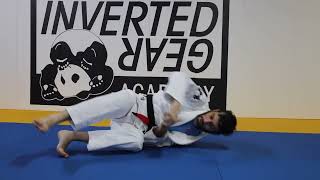
The Granby roll is primarily a wrestling technique, though it can be applied in Brazilian jiu-jitsu and MMA contexts. The technique involves combining elements of forward and backward rolls to change direction and escape pressure.
Fundamental Roll Mechanics
Practitioners should master basic shoulder rolls and backward rolls on both sides before attempting the Granby. The arm position can vary—some place the arm between the legs, while others position it to the side for a smoother transition.
Forward-to-Backward Roll Transition
The Granby roll morphs a forward roll into a backward roll by initiating the forward roll, then turning the head and transitioning toward a backward movement pattern. The technique concludes with the practitioner landing on their knees, having reversed direction.
Continuous Drill and Warm-up
A useful conditioning drill involves performing multiple Granby rolls in succession without lifting the head from the mat, creating a circular pattern. This exercise serves as both a neck loosener and cardiovascular warm-up for wrestling training.
Referee Position Setup
In wrestling, the Granby is commonly performed from the referee position, where one wrestler begins underneath. The bottom wrestler should first cross-step to clear their leg and prevent the opponent from maintaining hooks before initiating the roll.
Escape Mechanics and Control
When the top wrestler attempts to chop or pull the bottom wrestler's arm, the bottom wrestler tucks into the Granby roll. Proper execution allows the bottom wrestler to land on their knees and potentially establish a go-behind or maintain wrist control.
Peterson Guard Consideration
If the bottom wrestler follows through without proper positioning, they risk landing in a Peterson guard position, which is disadvantageous in wrestling but especially risky in jiu-jitsu due to submission vulnerabilities. The preferred outcome is either gaining positional advantage or creating separation from the opponent.
Application Differences Between Disciplines
The Granby roll's effectiveness varies significantly between wrestling, jiu-jitsu, and MMA due to different rule sets and submission threats. In jiu-jitsu, the technique is less commonly used because positional changes must account for submission vulnerabilities that don't exist in wrestling.
Just a GRANBY Roll!!
Key Takeaways
- •Introduction and Overview
- •Fundamental Roll Mechanics
- •Forward-to-Backward Roll Transition
- •Continuous Drill and Warm-up
PLEASE Click this link to SUPPORT the TeachMeGrappling Channel!!! https://www.patreon.com/TeachMeGrappling or https://www.paypal.me/CoachBrianPeterson Your contribution is much appreciated and will help me continue to bring you content! 🙏 www.NextLevelGuy.com The NextLevelGuy Podcast with Coach Brian Peterson has been released!! Check it out! http://teachmegrappling.com This video Jake and I breakdown a basic wrestling granby roll. Check out the details and you are sure to find something useful! Enjoy! If you have any questions, comments, or suggestions, please comment below. More videos to come! Please like, share, and subscribe!!
Related Techniques
Frequently Asked Questions
What does this video teach about granby roll?
This video covers introduction and overview, fundamental roll mechanics, forward-to-backward roll transition. It provides detailed instruction from TeachMeGrappling Coach Brian.
How long does it take to learn granby roll?
The basic mechanics can be understood in a single session, but developing reliable execution requires consistent drilling over weeks of practice. This 8-part breakdown helps structure your training by isolating each phase of the technique.
What are the key details for finishing granby roll?
If the bottom wrestler follows through without proper positioning, they risk landing in a Peterson guard position, which is disadvantageous in wrestling but especially risky in jiu-jitsu due to submission vulnerabilities. The preferred outcome is either gaining positional advantage or creating separation from the opponent.