How to do a Snap Roll
0
Snap Roll·lu7432
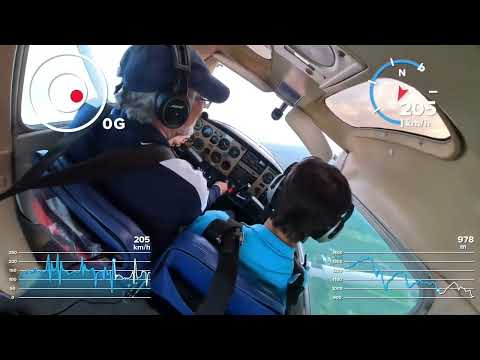
Snap Roll Tutorial with the AXN Floater jet. This Plane Snap rolls so fast that it is scary.. Have fun with the snap rol…
Translation: snap roll
The Snap Roll subfamily covers quick, explosive rolling escapes from turtle that use a snapping rotational motion to create separation from the opponent and transition to a guard or standing position. [1] Unlike the Peterson roll which aims to reverse position, the snap roll prioritises speed and separation — the turtled fighter rolls quickly to create enough space to either reguard or stand up. [1],[2] The snap roll is effective against opponents who are attempting to break down the turtle or set up back control, as the explosive roll catches them during their attack sequence. [2],[3]
The snap roll uses a quick snapping motion to roll and escape from turtle. [1]
Developed in wrestling as a turtle escape. [1]
Used in wrestling competition. [1]
No images yet for this technique.
Sign in to suggest an image.
Snap Roll Tutorial with the AXN Floater jet. This Plane Snap rolls so fast that it is scary.. Have fun with the snap rol…
No instructional courses yet for this technique.
Sign in to suggest a course.
Risk of injury to the person this technique is applied to
Turtle escapes involve rolling and granby movements; neck strain risk
Skill level needed to execute this technique reliably
Whether this technique is allowed under major competition rule sets
Jiu-Jitsu University (Saulo Ribeiro, 2008)
Alias sources — [1] Wrestling Physical Conditioning Encyclopedia (John Jesse, 1974) [2] NCAA wrestling terminology [3] Common coaching terminology
Effectiveness sources — [1] Wrestling Physical Conditioning Encyclopedia (Petrov, 1977)
Standard katakana transliteration of Western martial arts terminology (外来語) — used in Japanese MMA, boxing, and BJJ communities
Alias sources — [1] Wrestling Physical Conditioning Encyclopedia (John Jesse, 1974) [2] NCAA wrestling terminology [3] Common coaching terminology
Effectiveness sources — [1] Wrestling Physical Conditioning Encyclopedia (Petrov, 1977)
grip fighting ability, hip mobility for sliding to the mat, chin defence
strong hands for grip fighting, flexible hips
forearms (grip fighting), core, hip flexors, neck
Every move, in any martial art, shares a few universal traits. Mix and match below to pinpoint the right tool — or compare equivalents across styles.
Pull on the control stick, use rudder input, then apply opposite rudder and push to return to level flight. Bashar Dahabra emphasizes using full power throughout the maneuver.
Coming out of the maneuver improperly or at the wrong moment can compromise the technique. Focus on executing a clean exit rather than avoiding other control inputs.
The Snap Roll subfamily covers quick, explosive rolling escapes from turtle that use a snapping rotational motion to create separation from the opponent and transition to a guard or standing position. Unlike the Peterson roll which aims to reverse position, the snap roll prioritises speed and separation — the turtled fighter rolls quickly to create enough space to either reguard or stand up.
The snap roll escape developed in wrestling and was adapted for BJJ and MMA, where the turtle position is a common transitional position. Its emphasis on speed and separation makes it particularly useful in MMA where the turtle is vulnerable to ground-and-pound.
Unified MMA: legal — Legal defensive/transitional technique; IBJJF: legal — Legal; IJF: legal — Legal; ADCC: legal — Legal; UWW: legal — Legal, escape scores 1 point (freestyle), reversal scores 1 point; FIAS Sport Sambo: legal — Legal; NCAA Folkstyle: legal — Legal, escape scores 1 point, reversal scores 2 points
Danger rating 3/10. Moderate — turtle escapes involve rolling and granby movements; neck strain risk
The standard setup chain: Create Space → Disrupt Control → Execute Escape → Recover Position.
Standard counters include: Maintain Pressure — keep consistent weight distribution to limit escape space / Anticipate Direction — read escape attempt direction and block early / Transition — flow to a new position when the current one is threatened.
Common variants: Slide to side (choking-arm side) (fighting hands and sliding hips to the mat on the choking…); Peel-and-turn (stripping the seatbelt grip and turning into the opponent); Trap-arm escape (trapping one arm and rolling to pin the opponent's back); Body triangle escape (addressing the body triangle lock before escaping the hooks).
Used in wrestling competition.
Top errors to watch for: Snap-rolling when the opponent has tight grips — the roll requires some looseness in the opponent's control / Rolling too slowly — the snap roll must be fast; a slow roll lets the opponent follow / Rolling without purpose — the roll must end in guard recovery or a scramble; don't roll to nowhere / Not tucking the chin during the roll — protect the neck throughout.
The Snap Roll is also known as Sunappu Rōru, Snap Roll Escape, Forward Roll Escape, Tuck And Roll.