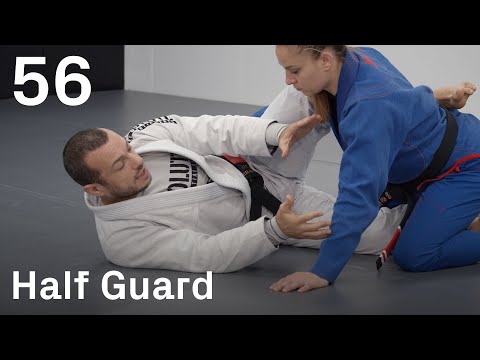
Basic Sweep from Half Guard
0
Half Guard Sweep·Absolute MMA St Kilda - Melbourne
Full Course Playlist → https://youtube.com/playlist?list=PLDrQXekZsfYZfV1QZ4T5UkxLwFwQ12EbP Find the Introduction course…
Translation: Half guard sweep
The Half Guard Sweep family covers all sweeping (reversal) techniques executed from the half guard position — where the bottom player controls one of the opponent's legs between their own legs and uses that control as leverage for reversals. [1] Half guard sweeps were revolutionised by Roberto 'Gordo' Correa in the 1990s, who transformed half guard from a mere recovery position into a complete offensive platform, and were further developed by Lucas Leite, Tom DeBlass, Bernardo Faria, and the 10th Planet Lockdown system. [1],[2] The underhook-based sweep (coming to the knees with an underhook and driving forward) is the most fundamental and highest-percentage half guard sweep, while deep half guard sweeps (sliding underneath the opponent) and Lockdown sweeps (using the figure-four leg control) provide alternative pathways. [2],[3] Half guard sweeps are among the most commonly executed sweeps in both gi and no-gi competition because half guard is the most frequently reached guard position during scrambles and guard recovery. [3]
Half guard sweeps were developed primarily by Roberto 'Gordo' Correa in the 1990s after a knee injury limited his closed guard game, forcing him to develop an offensive system from half guard. [1] Gordo's old school sweep and underhook system proved that half guard was a viable offensive position, not just a guard recovery step. [1],[2] Lucas Leite refined the system and won multiple IBJJF World Championships using half guard sweeps as his primary technique. [2],[3] Eddie Bravo's Lockdown system added a no-gi dimension, and Jeff Glover and Ryan Hall developed the deep half guard sweep game. [3]
Half guard sweeps are among the most effective and commonly used sweeps in competition because half guard is the most frequently reached guard position during scrambles and guard passes. [1] Lucas Leite's competition record demonstrates half guard sweep effectiveness at the highest level — multiple IBJJF World Championship titles won primarily from half guard. [2] The old school sweep is one of the highest-percentage individual sweeps in all of BJJ. [3]
No images yet for this technique.
Sign in to suggest an image.
Full Course Playlist → https://youtube.com/playlist?list=PLDrQXekZsfYZfV1QZ4T5UkxLwFwQ12EbP Find the Introduction course…
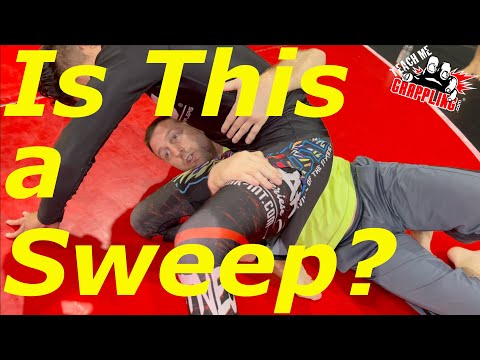
This video we work on the wedding sweep again when an opponent is attempting to knee slice. Check out the details and y…
No instructional courses yet for this technique.
Sign in to suggest a course.
Risk of injury to the person this technique is applied to
Half guard sweeps are ground-based reversals with minimal impact; the primary risk is the top player securing a guillotine or d'arce choke during the sweep attempt when the bottom player comes to the knees
Skill level needed to execute this technique reliably
Whether this technique is allowed under major competition rule sets
Jiu-Jitsu University (Saulo Ribeiro, 2008)
Description sources — [1] Jiu-Jitsu University (Ribeiro, 2008) and Roberto Gordo's innovation [2] Lucas Leite competition record [3] Deep half and Lockdown development
Description sources — [1] Jiu-Jitsu University (Ribeiro, 2008) and Roberto Gordo's innovation [2] Lucas Leite competition record [3] Deep half and Lockdown development
upper body strength (underhook battle), hip mobility (coming to knees from bottom), leg strength (maintaining half guard control)
strong shoulders (underhook and whizzer battles), compact build (easier to get underneath for deep half)
shoulders (underhook), core (coming to knees), hamstrings (trapping the leg), forearms (grip fighting)
Every move, in any martial art, shares a few universal traits. Mix and match below to pinpoint the right tool — or compare equivalents across styles.
The Deep Half Sweep subfamily covers sweeps from the deep half guard, an advanced half guard variation where the guard player dives deep underneath the opponent, positioning their body entirely beneath the opponent's hips. [1] Deep half guard provides extraordinary sweeping leverage because the guard player is directly under the opponent's centre of gravity, making it possible to off-balance and sweep with relatively little effort. [1,2] Deep half sweeps include the waiter sweep (hooking the far leg with the foot), the Homer Simpson sweep (walking under to the other side), and direct elevations. [2,3]
The Electric Chair Sweep subfamily covers the half guard sweep that uses a lockdown (double leg interlock) on the opponent's trapped leg combined with an underhook to stretch and sweep the opponent by lifting their leg with the lockdown and driving with the underhook. [1] The electric chair gets its name from the stretching effect on the opponent's groin and hip — the lockdown pulls the trapped leg while the underhook pushes the body, creating an uncomfortable split that either sweeps the opponent or forces them to give up the position. [1,2] The electric chair is both a sweep and a submission threat, as the stretch can force a tap-out from groin or hip pain. [2,3]
The Old School Sweep subfamily covers the classic half guard underhook sweep where the guard player obtains an underhook, comes up to the knees, and drives the opponent over using the underhook leverage and the half guard leg control. [1] The 'old school' sweep is so named because it was one of the earliest half guard sweeps developed, predating the more modern deep half and lockdown systems. [1,2] The sweep uses fundamental principles — underhook control, hip switch, and forward drive — making it one of the most reliable and universally applicable half guard sweeps. [2,3]
The Plan B Sweep subfamily covers the half guard sweep that is typically used when the primary underhook sweep fails and the opponent drives their weight down, creating an opportunity for an alternative sweep angle. [1] The 'Plan B' name reflects its role as the secondary sweep option from half guard — when the opponent defends the underhook sweep by driving forward, their forward momentum can be redirected into a different sweep direction. [1,2] Plan B sweeps typically involve taking a different grip configuration and sweeping the opponent in a different direction than the original underhook sweep attempt. [2,3]
Half guard sweeps include the old school sweep, plan B sweep, electric chair, and dozens of other variations. Half guard appears in 547 passages across 23 books. Roberto 'Gordo' Correa revolutionized the half guard from a failed position into one of the most sophisticated attack platforms in BJJ. (23 books; Ribeiro, Jiu-Jitsu University)
A common mistake is being flat on your back instead of on your side. According to Absolute MMA St Kilda, you need your hips out to the side with proper frames in place, or your opponent can easily escape back into a dominant position.
No. Absolute MMA St Kilda emphasizes that you should replace the knee shield with your underhook simultaneously—taking the underhook as the knee shield removes. If you remove the knee shield first, your opponent can drop down and pass your guard.
You likely haven't switched your leg hook. Absolute MMA St Kilda explains that if you keep the same leg hooked during the sweep, it will trap you and prevent you from standing up—you must change your feet and remove the hooked leg to complete the sweep cleanly.
Always keep your opponent's leg trapped with at least one of your legs and maintain your knee shield. Absolute MMA St Kilda stresses never leaving the trapped leg untrapped at any point, as this is your primary control mechanism.
The Half Guard Sweep family covers all sweeping (reversal) techniques executed from the half guard position — where the bottom player controls one of the opponent's legs between their own legs and uses that control as leverage for reversals. Half guard sweeps were revolutionised by Roberto 'Gordo' Correa in the 1990s, who transformed half guard from a mere recovery position into a complete offensive platform, and were further developed by Lucas Leite, Tom DeBlass, Bernardo Faria, and the 10th Planet Lockdown system.
Half guard sweeps were developed primarily by Roberto 'Gordo' Correa in the 1990s after a knee injury limited his closed guard game, forcing him to develop an offensive system from half guard. Gordo's old school sweep and underhook system proved that half guard was a viable offensive position, not just a guard recovery step.
Unified MMA: legal — Legal defensive technique; IBJJF: legal — Legal — escapes and sweeps are fundamental to BJJ, sweep from bottom scores 2…; IJF: legal — Legal; ADCC: legal — Legal, sweep scores 2 points (4 from mount/back); FIAS Sport Sambo: legal — Legal; FIAS Combat Sambo: legal — Legal
Danger rating 2/10. Low — half guard sweeps are ground-based reversals with minimal impact; the primary risk is the top player securing a guillotine or d'arce choke during the sweep attempt when the bottom player comes to the knees
The standard setup chain: Recover Half Guard → Establish Knee Shield → Win Underhook → Come to Knees → Sweep or Back Take → Consolidate.
Standard counters include: Crossface — driving the forearm across the bottom player's face to flatten them and kill the underhook / Free the Leg — hip switching and knee slice to extract the trapped leg / Whizzer — overhook with hip pressure to counter the underhook / Guillotine — attacking the neck when the bottom player comes to the knees with their head low.
Common variants: Old School sweep (the fundamental underhook half guard sweep; come to knees…); Plan B (Dog Fight) (from the underhook dog fight position, use single-leg-sty…); Deep half sweep (sliding underneath and elevating the opponent from below [2]); Electric chair sweep (Lockdown-based sweep that opens the opponent's legs later…); Knee tap sweep (from the underhook, tap the opponent's far knee while dri…); Roll-under back take (instead of sweeping to top, roll underneath to take the b…); Half butterfly sweep (combining a butterfly hook with half guard control for an…); Waiter sweep (from deep half, use the far leg to elevator the opponent …).
Half guard sweeps score 2 points in IBJJF/ADCC. Lucas Leite won multiple World Championship titles primarily from half guard sweeps.
Top errors to watch for: Attempting to sweep without the underhook — the underhook is the foundation of half guard offence; sweeping without i… / Staying flat on the back — half guard sweeps require getting to the side or knees; flat-on-back half guard is purely … / Not controlling the far leg — during the old school sweep, the opponent can post with their far leg if it's not contr… / Coming to the knees with the head down — rising with the head too low exposes the neck to guillotines and d'arce chok….
The Half Guard Sweep is also known as Hāfu Gādo Suīpu, Half Guard Reversal, Half Guard Sweep, Sweep From Half Guard.