3 Butterfly Guard Concepts That’ll Make Your Sweeps More Technical
0
Basic Butterfly Sweep·Chewjitsu
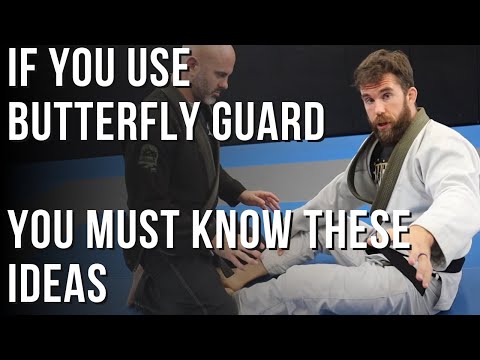
Today's video is a breakdown of some useful ideas and concepts on how to make the Butterfly Guard work for sweeps in Bra…
Translation: basic butterfly sweep
The Basic Butterfly Sweep subfamily covers the fundamental butterfly guard sweeps that use a single hook elevation combined with upper body control to off-balance and sweep the opponent to one side. [1] These are the entry-level butterfly sweeps that teach the core mechanic of all butterfly sweeping — using the hook to elevate the opponent's weight while using grips to direct where they fall. [1],[2] Basic butterfly sweeps are among the most effective and highest-percentage sweeps in all of grappling due to their simplicity and powerful mechanics. [2],[3]
Basic butterfly sweeps were developed as part of the butterfly guard system and became widely known through the competition success of Marcelo Garcia and other butterfly guard specialists. [1] The basic hook sweep in particular is one of the highest-percentage sweeps ever documented in competitive grappling. [2],[3]
The basic butterfly sweep is one of the first sweeps taught in BJJ. [1]
One of the most frequently scored sweeps in BJJ competition. [1]
No images yet for this technique.
Sign in to suggest an image.
Today's video is a breakdown of some useful ideas and concepts on how to make the Butterfly Guard work for sweeps in Bra…
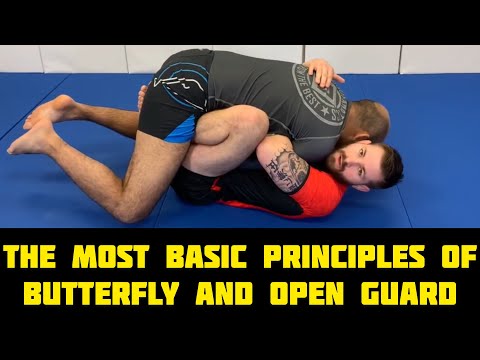
The Most Basic Principles Of Butterfly And Open Guard by Gordon Ryan - Click Here To Check Out Gordon Ryan's Instruction…
No instructional courses yet for this technique.
Sign in to suggest a course.
Risk of injury to the person this technique is applied to
Sweeps reverse position from bottom; moderate impact on landing for top player
Skill level needed to execute this technique reliably
Whether this technique is allowed under major competition rule sets
Jiu-Jitsu University (Saulo Ribeiro, 2008)
Alias sources — [1] X-Guard (Marcelo Garcia, 2008) [2] Jiu-Jitsu University (Saulo Ribeiro, 2008) [3] Brazilian Jiu-Jitsu: Theory and Technique (Renzo Gracie & Royler Gracie, 2001)
Effectiveness sources — [1] Jiu-Jitsu University (Ribeiro, 2008) [2] Mastering Jujitsu (Gracie & Danaher, 2003)
Mixed Japanese-Western terminology — combines traditional Japanese terms with katakana loanwords
Alias sources — [1] X-Guard (Marcelo Garcia, 2008) [2] Jiu-Jitsu University (Saulo Ribeiro, 2008) [3] Brazilian Jiu-Jitsu: Theory and Technique (Renzo Gracie & Royler Gracie, 2001)
Effectiveness sources — [1] Jiu-Jitsu University (Ribeiro, 2008) [2] Mastering Jujitsu (Gracie & Danaher, 2003)
timing, hip power, off-balancing skill
strong hips and active legs for sweeping leverage
hip flexors, glutes, quadriceps, core rotators
Every move, in any martial art, shares a few universal traits. Mix and match below to pinpoint the right tool — or compare equivalents across styles.
According to Chewjitsu, the position of your opponent's hips is critical—if their hips are not positioned over yours, you won't generate enough lift to sweep them. You need to scoot in and pull them on top of you first so their hips come over yours, which makes them much lighter and easier to sweep.
Chewjitsu emphasizes that while getting under the hips to kick is important, you shouldn't rely on it alone. Instead, focus on controlling your opponent's upper body—get good grips and watch their upper body movement to create a tilt in the shoulders, which is key to a technical sweep.
According to Chewjitsu, you must take away your opponent's posting hand by controlling their elbow so it cannot post out. As long as you prevent them from posting their hand, you shut down their primary defense.
Gordon Ryan (via Bernardo Faria BJJ Fanatics) stresses the importance of having concave shoulders—your shoulders should come forward—which allows you to properly control and pull your opponent into position rather than trying to pull them from a collapsed posture.
The Basic Butterfly Sweep subfamily covers the fundamental butterfly guard sweeps that use a single hook elevation combined with upper body control to off-balance and sweep the opponent to one side. These are the entry-level butterfly sweeps that teach the core mechanic of all butterfly sweeping — using the hook to elevate the opponent's weight while using grips to direct where they fall.
Basic butterfly sweeps were developed as part of the butterfly guard system and became widely known through the competition success of Marcelo Garcia and other butterfly guard specialists. The basic hook sweep in particular is one of the highest-percentage sweeps ever documented in competitive grappling.
Unified MMA: legal — Legal defensive/transitional technique; IBJJF: legal — Legal; IJF: legal — Legal; ADCC: legal — Legal; UWW: legal — Legal; FIAS Sport Sambo: legal — Legal
Danger rating 3/10. Moderate — sweeps reverse position from bottom; moderate impact on landing for top player
The standard setup chain: Control Grips → Off-Balance → Execute Sweep → Follow to Top.
Standard counters include: Base and Posture — maintain wide base and upright posture to resist the sweep / Grip Strip — break controlling grips before the sweep can be loaded / Back Step — retreat the leg being attacked to remove the sweep fulcrum.
Common variants: Standard sweep (primary off-balancing and reversal technique from the guard); Combination sweep (chaining two sweep directions to catch the opponent's adj…); Counter sweep (sweeping as the opponent initiates a guard pass attempt); Competition sweep (optimised for point-scoring in tournament settings).
One of the most frequently scored sweeps in BJJ competition.
Top errors to watch for: Sweeping without loading the opponent forward — pull them onto you with the underhook before elevating / Not falling to the side — the sweep is diagonal; falling straight back doesn't create the rotational force / Using only the hook without the underhook — both upper and lower body control are needed / Elevating too early before the opponent is loaded — timing is: pull forward → load → elevate → fall to side.
The Basic Butterfly Sweep is also known as Kihon Batafurai Suīpu, Butterfly Hook Sweep, Basic Hook Sweep, Butterfly Lift.