Introduction to Butterfly Guard Sweeping
The instructor presents three foundational concepts for improving butterfly guard sweeps. These principles have proven effective in both personal practice and student instruction.
Grip Selection and Hip Positioning
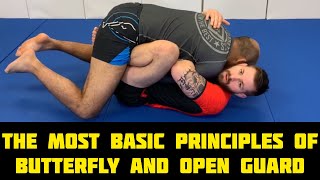
Effective butterfly sweeps begin with controlling the opponent's hips through an underhook, high overhook, or belt grip. The primary function of these grips is to pull the opponent's hips over the defender's own hips, which significantly reduces the opponent's base and stability.
Preventing the Post Defense
The defender must eliminate the opponent's ability to post their hand on the mat by controlling the wrist, elbow, or belt to prevent the arm from extending. This can be accomplished through a secured grip, wrist pin, back elbow control, or belt pinch.
Upper Body Tilt and Shoulder Control
Rather than relying solely on the butterfly hook kick, the defender should create a tilt in the opponent's shoulder similar to a truck's momentum shift. This upper body work initiates movement before the kick is applied, making the sweep significantly smoother.
The Pull-Up Motion Before the Sweep
The defender pulls the opponent up and off their base by scooting in and creating forward pressure. This lift is executed before the kick, reducing the opponent's ability to base out or defend laterally.
Hip Positioning for Optimal Sweep Mechanics
The defender must ensure the opponent's hips come over their belly button area rather than remaining in front of the belt line. Positioning the opponent over the defender's centerline significantly increases vulnerability to the sweep.
Transferable Principles Across Sweep Variations
The principle of pulling an opponent up and over the defender's body applies to numerous sweeps including scissor sweeps and tomoe nage-style techniques. This core concept makes sweeps more effective whether the opponent is in a controlled position or standing.
Summary of Key Concepts
Successful butterfly sweeps depend on three integrated elements: pulling the opponent's hips over the defender, preventing the opponent's hand post, and creating upper body tilt before executing the sweep motion. These foundational concepts enhance sweep efficiency and technical execution.
3 Butterfly Guard Concepts That’ll Make Your Sweeps More Technical
Key Takeaways
- •Introduction to Butterfly Guard Sweeping
- •Grip Selection and Hip Positioning
- •Preventing the Post Defense
- •Upper Body Tilt and Shoulder Control
Today's video is a breakdown of some useful ideas and concepts on how to make the Butterfly Guard work for sweeps in Brazilian Jiu-jitsu. These are principles that helped me understand the position better and be more effective with Butterfly Guard sweeps. So I hope they do the same for you. Keep in mind, these are ideas that I personally find useful and this is my personal philosophy on this BJJ position. It certainly isn't the only way to do it. But if you use the principles and concepts in this video I can help imagine you'll be much better at sweeping from the Butterfly Guard. Thanks for watching the video, and good luck with your training. -Chewy ----------------- Free Ebook: http://www.chewjitsu.net/focused-jiu-jitsu-13-page-ebook/ Video Courses and Products: http://www.chewjitsu.net/products T shirts: http://www.chewjitsu.net/shop/ http://www.Facebook.com/Chewjitsu http://www.instagram.com/Chewjitsu http://www.twitter.com/Chewjitsu Intro/Outtro Music : https://bknapp.bandcamp.com If you’d ever like to train with the team and I. Check out my gym Derby City MMA in Louisville,KY.
Related Techniques
Frequently Asked Questions
What does this video teach about basic butterfly sweep?
This video covers introduction to butterfly guard sweeping, grip selection and hip positioning, preventing the post defense. It provides detailed instruction from Chewjitsu.
How long does it take to learn basic butterfly sweep?
The basic mechanics can be understood in a single session, but developing reliable execution requires consistent drilling over weeks of practice. This 8-part breakdown helps structure your training by isolating each phase of the technique.
What are the key details for finishing basic butterfly sweep?
The principle of pulling an opponent up and over the defender's body applies to numerous sweeps including scissor sweeps and tomoe nage-style techniques. This core concept makes sweeps more effective whether the opponent is in a controlled position or standing.