Granny Game Main Tunnel Escape - Fastest Strategy Guide (easy and Quick Method)
0
The Tunnel Escape·suman maharana
Translation: The tunnel escape
The Tunnel Escape from side control creates space by threading the near-side arm through a tunnel-like gap under the opponent's chest to recover butterfly guard. [1]
Developed by Eddie Bravo for 10th Planet. [1]
Essential escape for no-gi practitioners. [1]
10th Planet Jiu-Jitsu. [1]
Used in EBI and MMA
No images yet for this technique.
Sign in to suggest an image.
Not yet documented
In Brazilian Jiu-Jitsu the bottom position can quickly turn offensive. In this video I opted to escape to a leg lock sit…
SALE SALE SALE OVER 50% OFF – BOX SET – ALL 4 COURSES 50% OFF CLICK HERE – https://bit.ly/2lAOHmp • The Blue Belt Sup…
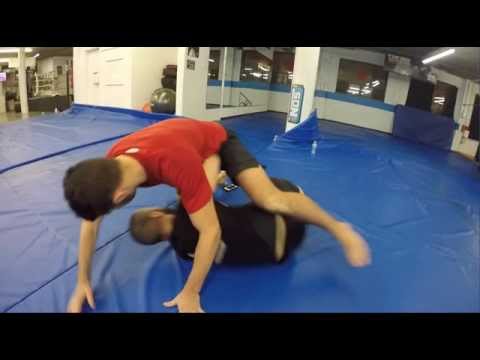
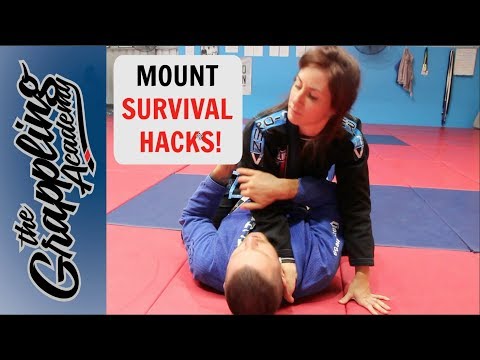
The Tunnel Escape is a mount escape technique that emphasizes leg organization and hip elevation to create space for knee escape. Tristar Gym's Firas Zahabi provides the most detailed technical breakdown, establishing that the foundational principle involves kicking the heels toward the ceiling while maintaining tight contact between heels and body to prevent opponent hook reinsertion. Zahabi identifies the critical innovation of inverting the knees—rotating them toward the mat rather than keeping soles of feet planted—to achieve greater hip elevation and create the "tunnel" space necessary for knee passage. He emphasizes frame positioning with proper grip organization: the lower arm's hand must grip the upper hand, with the elbow anchored to ground, allowing structural support against opponent weight. The Grappling Academy's Coach Tom describes related mount survival mechanics including arm-trapping responses to collar attacks and leg placement techniques, though without explicitly referencing the tunnel concept. Zahabi distinguishes the technique's applicability across gi, no-gi, and self-defense contexts, and recommends transitioning directly to leg lock positions rather than guard after successful escape. The technique requires precise sequencing: organize legs, establish frame, bridge to create initial space, invert knees to amplify hip height if needed, then slide knee through the enlarged tunnel to escape. Both instructors stress that leaving gaps between heels and body or failing to achieve sufficient hip elevation causes technique failure.
Synthesized from 3 instructors
No instructional courses yet for this technique.
Sign in to suggest a course.
Risk of injury to the person this technique is applied to
Defensive escape
Skill level needed to execute this technique reliably
Whether this technique is allowed under major competition rule sets
Mastering the Rubber Guard (Bravo, 2006)
[1] Bravo, Mastering the Rubber Guard (2006) — technique description and application
Hip mobility
Timing
The Tunnel Escape is a 10th Planet escape documented in Mastering the Rubber Guard. Uses a specific tunneling motion to escape from a disadvantaged position. (Bravo, Mastering the Rubber Guard, 2006)
Strip your opponent's leg hooks by stepping your leg over the back of their Achilles tendon to break their grip around your hips. Once you break this connection, you'll be able to use your hip escape and bridge position effectively.
According to Firas Zahabi, the arm with your elbow on the ground should be the one doing the gripping, while your other arm frames against their hips. If you reverse this and grip with your upper hand instead, your frame will collapse because you're relying only on grip strength without ground support.
If the tunnel isn't there naturally, you need to create a larger one by turning your knees toward the mat and elevating your hips higher. This takes more energy but allows you to generate the space needed to escape both your knees.
Firas Zahabi recommends going straight to a leg lock after your bridge and knee escape combination, as this takes you from the bottom position to the top position more easily than returning to guard.
The Tunnel Escape from side control creates space by threading the near-side arm through a tunnel-like gap under the opponent's chest to recover butterfly guard.
Developed by Eddie Bravo for 10th Planet.
Unified MMA: legal — Legal defensive technique; IBJJF: legal — Legal — escapes and sweeps are fundamental to BJJ, sweep from bottom scores 2…; IJF: legal — Legal; ADCC: legal — Legal, sweep scores 2 points (4 from mount/back); FIAS Sport Sambo: legal — Legal; FIAS Combat Sambo: legal — Legal
Danger rating 2/10. Defensive escape
The standard setup chain: Under attack → The Tunnel Escape → Guard recovery.
Standard counters include: Maintain control / Re-establish position.
Used in EBI and MMA
Top errors to watch for: Panicking / Not timing the hip movement.
The The Tunnel Escape is also known as Za Tonneru Esukēpu, Tunnel, Side Control Tunnel.