Leg Defense - Beating Power Half Hip Heist
0
Hip Sprawl·CMPTV
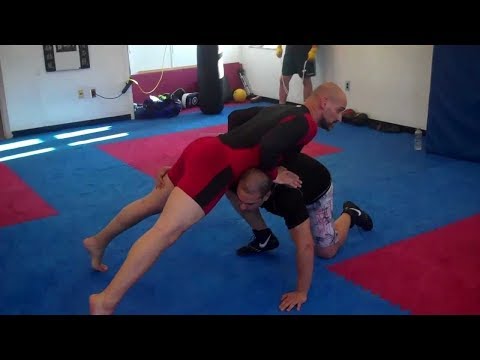
By reinforcing your elbow with your arm, getting to strong position long enough to beat the bottom leg and hip heist out…
Translation: hip sprawl
The Hip Sprawl drives the hips backward and away from the attacker while maintaining light chest contact, creating distance between the defender's legs and the attacker's grasp. [1] The hip sprawl emphasises speed and hip displacement over weight — the defender shoots the hips back explosively to remove them from the attacker's reach before the penetration step can be completed. [1],[2] The hip sprawl is the faster of the two sprawl variations and is typically the initial defensive reaction to a shot, with the heavy sprawl following if the hip sprawl doesn't fully stop the takedown. [2],[3]
The hip sprawl is the most commonly taught takedown defence in both wrestling and MMA, as it removes the hips — the primary target of most takedowns — from the attacker's reach by driving them backward and downward. [1] Proper hip sprawl technique makes single-leg and double-leg takedowns extremely difficult to complete because the attacker cannot elevate the hips. [2]
Mirko 'Cro Cop' Filipovic's sprawl-and-brawl style in PRIDE FC demonstrated the effectiveness of the hip sprawl for MMA fighters with striking backgrounds, allowing him to defend takedowns and keep fights standing. [1]
No images yet for this technique.
Sign in to suggest an image.
By reinforcing your elbow with your arm, getting to strong position long enough to beat the bottom leg and hip heist out…
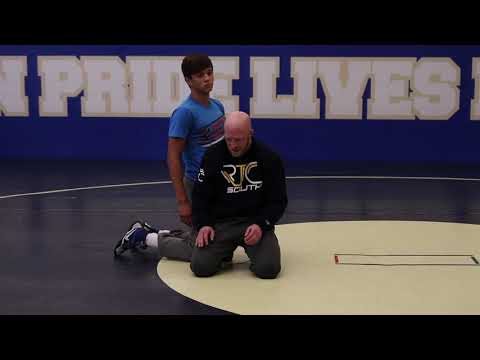
A simple and effective way to train the grappling/wrestling sprawl .A must for take down Defense and developing the spra…
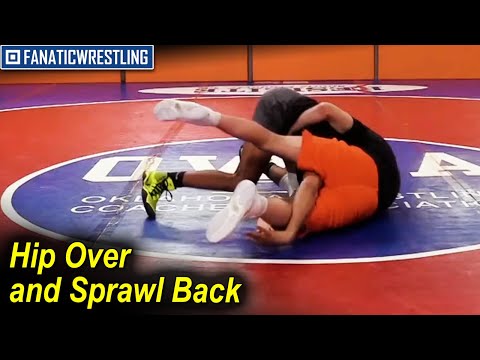
Hip Over and Sprawl Back by Zoheir El Ouarraqe https://fanaticwrestling.com/ This wrestling training video teaches how …
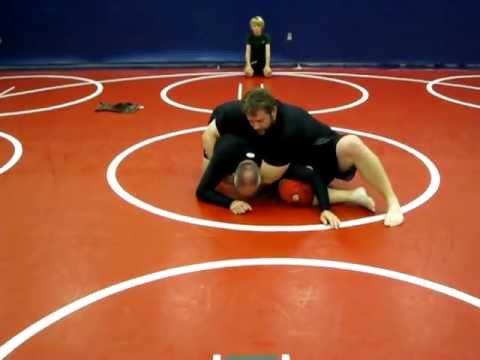
Modesto Grappling Club Instructional #50: Sprawl Control to Crucifix to Mata-Leo
The hip sprawl is a fundamental defensive technique against takedown attempts, taught across wrestling and grappling contexts with consistent core mechanics but varying emphasis depending on situation. Samir Seif presents the foundational sprawl progression: starting from a pushup position, the defender controls descent with forearms, drives hips into the mat, and kicks legs upward, with hands positioned close to the hips to avoid wrist strain. Critically, Seif emphasizes never sprawling in a straight line—the attacker's drive will penetrate—and advocates circling off the line of attack to disrupt the opponent's trajectory. Zoheir El Ouarraqe (FANATIC WRESTLING) addresses sprawl application during leg ride situations, describing how to shift weight to one side, press downward, and elevate the opponent's torso before extending into a flat position to escape behind. CMPTV focuses on hip positioning and elbow control during power half scenarios, stressing knee reinforcement of the elbow and maintaining hip separation to neutralize shoulder pressure and leg ride anchoring. Modesto Judo Club demonstrates sprawl control transitions into submissions and positional dominance, particularly the seat belt grip and crucifix position. All instructors agree on weight distribution (hips low and heavy), arm positioning (close to base), and the defensive objective of disrupting forward momentum, though they differ in their primary application context—foundational drilling (Seif), mounted leg defense (El Ouarraqe and CMPTV), and positional control (Modesto).
Synthesized from 4 instructors
No instructional courses yet for this technique.
Sign in to suggest a course.
Risk of injury to the person this technique is applied to
Sprawls and stuffs involve sudden body weight displacement; knee/hip strain risk
Skill level needed to execute this technique reliably
Whether this technique is allowed under major competition rule sets
Freestyle Wrestling: A Complete Guide for Coaches and Wrestlers (Petrov, 1977)
Alias sources — [1] Wrestling Coaching Manual (USA Wrestling, 2015) [2] MMA Instruction Manual (Ryan & Snowden, 2010) [3] MMA Instruction Manual (Ryan & Snowden, 2010)
Effectiveness sources — [1] Wrestling Coaching Manual (USA Wrestling, 2015) [2] MMA Instruction Manual (Ryan & Snowden, 2010)
Standard katakana transliteration of Western martial arts terminology (外来語) — used in Japanese MMA, boxing, and BJJ communities
Alias sources — [1] Wrestling Coaching Manual (USA Wrestling, 2015) [2] MMA Instruction Manual (Ryan & Snowden, 2010) [3] MMA Instruction Manual (Ryan & Snowden, 2010)
Effectiveness sources — [1] Wrestling Coaching Manual (USA Wrestling, 2015) [2] MMA Instruction Manual (Ryan & Snowden, 2010)
reaction speed, explosive hip extension, downward driving force
long legs for quick sprawl, heavy upper body
hip extensors, glutes, core, shoulders (dead weight)
According to Samir Seif, you should never sprawl in a straight line because your opponent can re-shot or their drive is so strong that they'll drive right through you even as you're trying to sprawl.
Samir Seif teaches that your hands come close to your hips and you pop away, moving your hands towards your hips to get a nice sprawling action.
According to Modesto Judo Club, you want to control your opponent's bicep and shoulder after the sprawl, as controlling these prevents them from locking in seat belt control or other dominant positions.
Zoheir El Ouarraqe from Fanatic Wrestling emphasizes that even if you don't score, you need to escape from the hip sprawl position because it's not a good place to be and is probably too dangerous to hang out in.
The Hip Sprawl drives the hips backward and away from the attacker while maintaining light chest contact, creating distance between the defender's legs and the attacker's grasp. The hip sprawl emphasises speed and hip displacement over weight — the defender shoots the hips back explosively to remove them from the attacker's reach before the penetration step can be completed.
The hip sprawl is the most commonly taught initial sprawl variation in wrestling, valued for its speed and effectiveness as a first-line takedown defence. It is the foundational sprawl technique taught to beginners in both wrestling and MMA.
Unified MMA: legal — Legal defensive technique; IBJJF: legal — Legal — defensive techniques are fundamental to grappling; IJF: legal — Legal defensive action; ADCC: legal — Legal; UWW: legal — Legal defensive technique; FIAS Sport Sambo: legal — Legal
Danger rating 3/10. Moderate — sprawls and stuffs involve sudden body weight displacement; knee/hip strain risk
The standard setup chain: Recognize the Shot → Hips Back → Drive Weight Down → Establish Front Headlock or Scramble.
Standard counters include: Snap Down — use the sprawl momentum to redirect into a front headlock / Fake Shot to Go-Behind — fake the takedown to draw the sprawl then circle behind / Ankle Pick — attack the far ankle while the opponent is sprawled and weight-forward.
Common variants: Full sprawl (both legs kicked back, hips dropped to the mat); Half sprawl (one leg back while the other posts for balance); Sprawl to front headlock (sprawling and immediately securing head control).
Mirko 'Cro Cop' Filipovic's sprawl-and-brawl style in PRIDE FC demonstrated the effectiveness of the hip sprawl for MMA fighters with striking backgrounds, allowing him to defend takedowns and keep fights standing.
Top errors to watch for: Not generating enough hip velocity — the hip sprawl is violent and explosive; a gentle hip check won't stop a strong … / Landing on the knees instead of driving the chest down — the chest and ribcage must be the contact point on the oppon… / Arching the back without driving the hips — the hip drive is the primary force; the arch is secondary / Staying compressed on the opponent too long without transitioning — hip sprawl → front headlock → offence.
The Hip Sprawl is also known as Hippu Supurōru, Hip Kick Sprawl, Hips-Back Sprawl, Hip Escape Sprawl.