Understanding the Crackdown Position
When an opponent applies a crackdown, the bottom player faces immediate danger and must either score or escape. This is not a sustainable position to maintain, making quick, decisive action essential for safety and control.
Initial Setup and Defensive Posture
The defender establishes a tight defensive frame by closing the elbows and protecting the sides of the body. This compact positioning prevents the opponent from obtaining dominant control while preparing for the sprawl technique.
Lateral Pressure and Weight Distribution
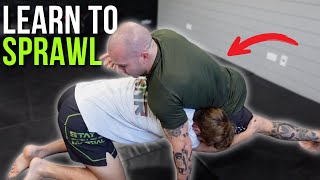
The defender applies maximum pressure to one side of the opponent's body, creating a rolling motion without committing to a full back position. The toes provide grounding power while the legs drive laterally to force the opponent onto their side.
The Hip Sprawl Extension
Once the opponent is displaced to their side, the defender explosively extends their legs upward and backward, returning to a neutral base position. This extension eliminates any gap between the defender's hips and the mat while creating separation from the opponent.
Achieving Positional Advantage
After successfully sprawling, the defender gains the ability to transition behind the opponent or establish top control. The technique works effectively whether or not the opponent initially established a leg lock, as the lateral displacement neutralizes their attack.
Exploiting Scoring Attempts
The sprawl becomes increasingly effective when the opponent commits to scoring attempts, as their forward pressure creates the exact conditions needed for lateral displacement. Maintaining hand control on the opponent's head and arms amplifies the sprawl's effectiveness.
Maintaining Leg Control During Sprawl
If the opponent successfully retains grip on the legs during the sprawl, the defender returns to the baseline defensive position with elbows tight and hands protecting. From this position, the defender can apply additional pressure through the arms to dislodge the grip or transition to a new escape.
Secondary Escape with Elbow Control
When the opponent maintains leg control after the initial sprawl, the defender applies pressure downward with the hands while pushing the opponent's elbow, creating a rocking motion. This secondary movement allows the defender to finally achieve the behind-the-back position and escape.
Hip Over and Sprawl Back by Zoheir El Ouarraqe
Key Takeaways
- •Understanding the Crackdown Position
- •Initial Setup and Defensive Posture
- •Lateral Pressure and Weight Distribution
- •The Hip Sprawl Extension
Hip Over and Sprawl Back by Zoheir El Ouarraqe https://fanaticwrestling.com/ This wrestling training video teaches how to hip over and sprawl back. Zoheir El Ouarraqe shows how to hip over and sprawl back on takedown attempts Fanatic Wrestling, like it’s sister site BJJ Fanatics was founded by a pair of grappling fanatics dedicated to bringing you the best wrestling competitors and coaches in the world to learn from. They both realized they were missing an entire section of the grappling community so the idea for Fanatic Wresting was born. To learn more great Wrestling Moves, visit https://fanaticwrestling.com/ Facebook Group: https://www.facebook.com/groups/FanaticWrestling/ Instagram: https://www.instagram.com/fanatic_wrestling/ To learn more great Wrestling Moves, visit https://fanaticwrestling.com/ 15% OFF On All Of Our BJJ Instructional Videos - Just Use The Coupon Code: TUBEFANATICS15 Website: https://fanaticwrestling.com/ . For the best fightwear, check out https://www.kojofightwear.com/ and use code " YTD15 " to get 15% off your first order.
Related Techniques
Frequently Asked Questions
What does this video teach about hip sprawl?
This video covers understanding the crackdown position, initial setup and defensive posture, lateral pressure and weight distribution. It provides detailed instruction from FANATIC WRESTLING.
How long does it take to learn hip sprawl?
The basic mechanics can be understood in a single session, but developing reliable execution requires consistent drilling over weeks of practice. This 8-part breakdown helps structure your training by isolating each phase of the technique.
What are the key details for finishing hip sprawl?
If the opponent successfully retains grip on the legs during the sprawl, the defender returns to the baseline defensive position with elbows tight and hands protecting. From this position, the defender can apply additional pressure through the arms to dislodge the grip or transition to a new escape.
Related videos
Leg Defense - Beating Power Half Hip Heist
CMPTV
How to : Wrestling and Grappling sprawl 101
Samir Seif
Modesto Grappling Club Instructional #50: Sprawl Control to Crucifix to Mata-Leo; Elbow Push Escape
Modesto Judo Club
How to do a BASIC Sprawl for BJJ or Wrestling!
TeachMeGrappling Coach Brian
Sprawl: How To Not Get Taken Down In A Fight
Stay Safe Martial Arts