How to Sprawl Hard and Stop the Takedown
0
Sprawl·Stephan Kesting
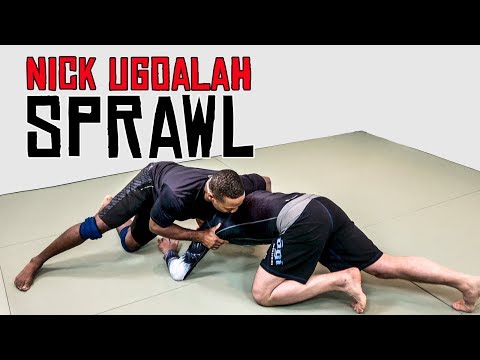
How to sprawl and stop the takedown by champion wrestler Nick Ugoalah. Here's more about training for wrestling by Nick…
Translation: sprawl
The Sprawl family covers the primary takedown defence technique where the defender drives the hips backward and downward, removing the legs from the attacker's reach and placing defensive weight on the attacker's upper body. [1] The sprawl is universally regarded as the single most important takedown defence technique in wrestling and MMA because it directly addresses the most common takedown mechanic — the level change with penetration step. [1],[2] Sprawling removes the target (the legs and hips) while simultaneously punishing the attacker by driving heavy hip pressure onto their back or head. [2],[3]
The sprawl has been a fundamental wrestling defensive technique since the sport's modern codification, evolving alongside the development of leg-attack takedowns. [1] It became even more important in MMA where defensive wrestling — primarily the sprawl — allowed strikers to keep the fight standing against wrestling-based opponents. [2],[3]
The sprawl is taught in all wrestling programmes and is the first takedown defence in MMA training. [1]
The sprawl is the most commonly used takedown defence in MMA. [1]
No images yet for this technique.
Sign in to suggest an image.
How to sprawl and stop the takedown by champion wrestler Nick Ugoalah. Here's more about training for wrestling by Nick…
No instructional courses yet for this technique.
Sign in to suggest a course.
Risk of injury to the person this technique is applied to
Sprawls and stuffs involve sudden body weight displacement; knee/hip strain risk
Skill level needed to execute this technique reliably
Whether this technique is allowed under major competition rule sets
Freestyle Wrestling: A Complete Guide for Coaches and Wrestlers (Petrov, 1977)
Alias sources — [1] Wrestling Physical Conditioning Encyclopedia (Welker, 2010) [2] Wrestling Physical Conditioning Encyclopedia (Welker, 2010)
Effectiveness sources — [1] Wrestling Physical Conditioning Encyclopedia (Petrov, 1977) [2] Mastering Jujitsu (Gracie & Danaher, 2003)
Standard katakana transliteration of Western martial arts terminology (外来語) — used in Japanese MMA, boxing, and BJJ communities
Alias sources — [1] Wrestling Physical Conditioning Encyclopedia (Welker, 2010) [2] Wrestling Physical Conditioning Encyclopedia (Welker, 2010)
Effectiveness sources — [1] Wrestling Physical Conditioning Encyclopedia (Petrov, 1977) [2] Mastering Jujitsu (Gracie & Danaher, 2003)
reaction speed, explosive hip extension, downward driving force
long legs for quick sprawl, heavy upper body
hip extensors, glutes, core, shoulders (dead weight)
Every move, in any martial art, shares a few universal traits. Mix and match below to pinpoint the right tool — or compare equivalents across styles.
The Quarter Sprawl subfamily covers the partial sprawl technique where the defender sprawls only one hip back, defending a single-leg takedown attempt by removing only the attacked leg. [1] The quarter sprawl is faster than a full sprawl because it requires less body displacement — only one hip moves backward while the other remains forward. [1,2] The quarter sprawl is the preferred defence against single-leg takedowns because it specifically addresses the attacked leg while maintaining a base with the non-attacked leg. [2,3]
The Standard Sprawl subfamily covers the full sprawl defence where the defender drives both hips simultaneously backward and downward, landing heavy on the attacker's upper body while removing both legs from reach. [1] The full sprawl is the primary defence against double-leg takedowns and committed shots where both legs are targeted. [1,2] The standard sprawl can be performed as a hip sprawl (hips driven back while maintaining contact with the attacker) or a heavy sprawl (hips driven directly down onto the attacker's back). [2,3]
The sprawl is the most fundamental takedown defense in wrestling and MMA — it drives the hips back and down to stuff the opponent's shot. Every wrestler and MMA fighter drills the sprawl thousands of times. (Gable, Coaching Wrestling Successfully)
According to Stephan Kesting, after you sprawl you should come up into a high lunge position with your lower body twisted and upper body squared—this alignment puts you in a great position to counter-attack while your opponent has to recover from the failed takedown attempt.
Stephan Kesting emphasizes that you shouldn't just sprawl flat; instead, twist your lower body and square your upper body to maintain control and positioning after the sprawl, even if you need to make minor adjustments.
Stephan Kesting clarifies that a sprawl is a drop, not a float—the distinction matters because a proper drop creates more pressure and control against the opponent's takedown attempt.
The Sprawl family covers the primary takedown defence technique where the defender drives the hips backward and downward, removing the legs from the attacker's reach and placing defensive weight on the attacker's upper body. The sprawl is universally regarded as the single most important takedown defence technique in wrestling and MMA because it directly addresses the most common takedown mechanic — the level change with penetration step.
The sprawl has been a fundamental wrestling defensive technique since the sport's modern codification, evolving alongside the development of leg-attack takedowns. It became even more important in MMA where defensive wrestling — primarily the sprawl — allowed strikers to keep the fight standing against wrestling-based opponents.
Unified MMA: legal — Legal defensive technique; IBJJF: legal — Legal — defensive techniques are fundamental to grappling; IJF: legal — Legal defensive action; ADCC: legal — Legal; UWW: legal — Legal defensive technique; FIAS Sport Sambo: legal — Legal
Danger rating 3/10. Moderate — sprawls and stuffs involve sudden body weight displacement; knee/hip strain risk
The standard setup chain: Recognize the Shot → Hips Back → Drive Weight Down → Establish Front Headlock or Scramble.
Standard counters include: Snap Down — use the sprawl momentum to redirect into a front headlock / Fake Shot to Go-Behind — fake the takedown to draw the sprawl then circle behind / Ankle Pick — attack the far ankle while the opponent is sprawled and weight-forward.
Common variants: Full sprawl (both legs kicked back, hips dropped to the mat); Half sprawl (one leg back while the other posts for balance); Sprawl to front headlock (sprawling and immediately securing head control).
The sprawl is the most commonly used takedown defence in MMA.
Top errors to watch for: Sprawling with straight legs — the knees must bend as the hips drop; stiff legs leave your hips accessible / Leaning forward instead of driving hips back — the hips must move backward, not the head forward / Sprawling too late after the opponent already has your legs — the sprawl must beat the grip; defend the entry, not th… / Not driving weight onto the opponent's back — a light sprawl lets the attacker continue forward.
The Sprawl is also known as Supurōru, Hip Sprawl, Sprawling.