Strike & defenceLocksClose rangeFighting multiple people
Distance
CloseMiddleLong
Overview
The Standard Inversion Recovery executes the fundamental guard recovery inversion where the defender rolls onto the upper back, elevates the hips overhead, and uses the momentum to bring the legs back between themselves and the opponent. [1] The movement begins with a shoulder bridge that elevates the hips, followed by a backward roll that brings the legs over the body and back to the opponent's front, re-establishing an open guard or half guard. [1],[2] Proper execution requires the defender to time the inversion when the opponent commits to a passing direction, using the opponent's momentum to facilitate the recovery. [2],[3]
Also known as
Basic Inversion[1]Granby RollWrestling[2]Shoulder Roll Recovery[3]
The standard inversion recovery became a fundamental technique in modern BJJ competition, refined through the sport's evolution toward increasingly dynamic guard retention methods. [1] It is now taught as a standard guard retention tool in BJJ academies worldwide. [2],[3]
Country of origin· shown in random order
🇧🇷BrazilBJJ, MMA
🇯🇵JapanBJJ
🇺🇸USAMMA
Effectiveness
The inversion is an advanced guard recovery technique effective against standing passers, allowing the guard player to re-establish guard by inverting and re-inserting the legs. [1] Its effectiveness is highest in no-gi and competition-focused BJJ, but it carries injury risk to the cervical spine if performed improperly. [2]
Lineage
The inversion became prominent in competition BJJ through the berimbolo system popularised by the Mendes brothers (Rafael and Guilherme) and further developed by the Miyao brothers at the highest levels of sport BJJ. [1]
Competition Record
The Mendes brothers' use of inversions as both guard recovery and offensive tools was central to their combined 6 IBJJF World Championship gold medals. [1]
Images
No images yet for this technique.
Sign in to suggest an image.
Biomechanical Mechanism
Primary Action — Preventing or reducing the effect of an incoming attack through physical interception, evasion, or structural positioning
Joints Involved — Varies by defence type — blocks use arms/shins, evasions use head/body movement, sprawls use hips
Force Vector — Opposing or tangential to the attack — either absorbing, redirecting, or evading the incoming force
Defensive Principle — Economy of motion — the best defence uses minimal movement to neutralise the maximum threat
Position & Entry
From fighting stance (under fire) — Bring both hands to the head, elbows tight, tuck the chin — absorb the flurry while protecting vital targets
As emergency defence — When overwhelmed by volume, shell up in the cover position until the opponent pauses
Variants
Standard defence — primary defensive technique from the most common position
Reactive defence — triggered by the opponent's attack, minimal movement for maximum protection
Proactive defence — anticipating the attack and positioning to neutralise it early
Counter defence — using the defensive movement to create an immediate counter-attack opportunity
A SIMPLE tip for ADVANCED Guard Retention - BJJ Analysis
0
Standard Inversion Recovery·Less Impressed More Involved BJJ
Link to Outlier DB: https://outlierdb.com/
Link to Study this YouTube Video on Outlier DB: https://outlierdb.com/resour…
1 / 2
3 videos
What Instructors Say
Standard Inversion Recovery refers to a defensive guard retention technique executed when a guard player's legs are displaced laterally during a passing attempt. Northwest Fighting Arts demonstrates the foundational mechanics: when an opponent throws the legs to one side while passing, the defender frames off the opponent's shin or leg with both hands, creates space through stripping or bumping motions, and recovers by placing one or both feet into the opponent's hip or knee area while reestablishing guard position. The technique scales across multiple passing depths—from early-stage passes where the opponent has barely committed, to advanced positions like north-south, where the defender must bump the opponent's chest to create sufficient space before inverting and spinning back through to guard. Less Impressed More Involved BJJ contextualizes recovery within broader guard retention principles: maintaining a structured frame with the far arm while establishing initial connection with the near arm allows the defender to manage distance and destabilize the passer before needing to recover. Brian Glick's content addresses submissions from top position rather than recoveries, providing context for why recovery timing matters. Northwest Fighting Arts emphasizes drill progression and multiple variations based on opponent hand placement and positioning depth, while Less Impressed More Involved BJJ stresses the conceptual framework of framing and connection that underpins successful recovery execution.
Synthesized from 3 instructors
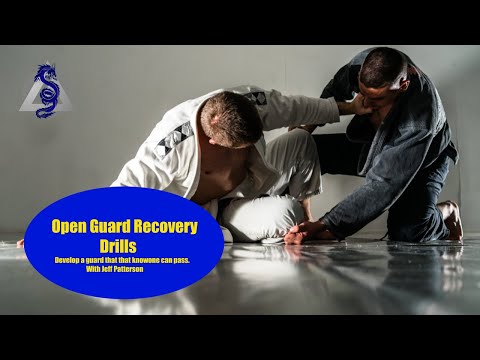
Northwest Fighting Arts — 11 Guard Recovery Drills in Learn How to Make your Guard Unbeatable: Detailed mechanical progressions of standard inversion recovery across five depth variations: basic leg displacement with frame and foot placement, shin frame with stripping motion, knee-on-floor entry, north-south position with bump and spin recovery, and shoulder stack variations with arm trapping.
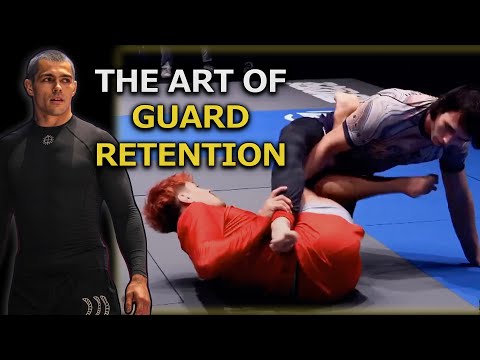
Less Impressed More Involved BJJ — A SIMPLE tip for ADVANCED Guard Retention - BJJ Analysis: Conceptual framework for guard retention emphasizing the priority of far-arm framing to prevent the opponent from establishing underhooks and pinning the back flat, establishing near-arm connection, and conditional use of lower-body positioning (low leg, lasso) to enable robust far-arm control—principles that inform recovery timing.
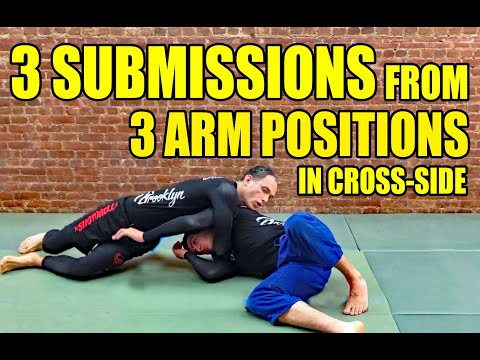
Brian Glick — 3 Arm Positions // 3 Submissions from Cross-Side (No Gi BJJ): Top-position context showing why maintaining tight knee positioning and preventing arm-positioning errors by the bottom player matters; underscores the importance of defender recovery before the passer can establish dominant submissions.
Learn This Technique
No instructional courses yet for this technique.
Sign in to suggest a course.
Ratings
Danger Rating
Risk of injury to the person this technique is applied to
2
Low2/10
Guard retention uses frames and hip movement; minimal direct injury risk
Difficulty
Skill level needed to execute this technique reliably
Intermediate
Competition Legality
Whether this technique is allowed under major competition rule sets
1Anticipate the Attack — read the opponent's intention through body cues
2Execute Defence — apply the specific defensive technique with proper timing
3Recover Stance — return to a balanced fighting position immediately
4Counter or Disengage — capitalize on the opening or create safe distance
Sources & References
Primary Source
Boxing (Edwin Haislet, 1940)
1BookBoxing (Dempsey, 1950)
Alias sources — [1] Jiu-Jitsu University (Ribeiro, 2008) [2] Fundamentals of Brazilian Jiu-Jitsu (Danaher, 2012) [3] Wrestling Coaching Manual (USA Wrestling, 2015)
2BookMuay Thai: The Art of Fighting (Kraitus, 2002)
Effectiveness sources — [1] Fundamentals of Brazilian Jiu-Jitsu (Danaher, 2012) [2] Jiu-Jitsu University (Ribeiro, 2008)
3OtherJapanese Combat Sports Katakana Convention
Standard katakana transliteration of Western martial arts terminology (外来語) — used in Japanese MMA, boxing, and BJJ communities
4CitationBoxing (Dempsey, 1950)
Alias sources — [1] Jiu-Jitsu University (Ribeiro, 2008) [2] Fundamentals of Brazilian Jiu-Jitsu (Danaher, 2012) [3] Wrestling Coaching Manual (USA Wrestling, 2015)
5CitationMuay Thai: The Art of Fighting (Kraitus, 2002)
Effectiveness sources — [1] Fundamentals of Brazilian Jiu-Jitsu (Danaher, 2012) [2] Jiu-Jitsu University (Ribeiro, 2008)
Community
Athletics
Requires
reaction speed, structural body mechanics, defensive awareness
Favours
quick reflexes and conditioned defensive surfaces
Key muscles
varies — forearms (blocking), legs (movement), core (stability)
Frequently Asked Questions
What's the key difference between my far arm and near arm when defending guard?
According to Less Impressed More Involved BJJ, your far arm's primary responsibility is framing to prevent your opponent from pinning you flat, while your near arm focuses on establishing an initial connection with your opponent.
How do I use a self-frame to protect my guard position?
Instead of framing against your opponent, frame against yourself by using your outside arm to support the structure of your own legs, making it difficult for your opponent to flatten you out and pass your guard.
What should I do if my opponent gets a strong grip on my pants during guard recovery?
According to Northwest Fighting Arts, wrap the opponent's wrist and pull it tight into your body so they can't easily pull their hand out, then place your foot in their hip—this creates opportunities for sweeps, submissions like triangles, or transitioning to the back.
How do I escape when my opponent is passing by pushing me to the side?
Northwest Fighting Arts recommends going with your opponent's momentum by coming up and pushing with your palm, then breaking free and grabbing them so you can establish guard or move to any position you want.
How does the Standard Inversion Recovery work?
The Standard Inversion Recovery executes the fundamental guard recovery inversion where the defender rolls onto the upper back, elevates the hips overhead, and uses the momentum to bring the legs back between themselves and the opponent. The movement begins with a shoulder bridge that elevates the hips, followed by a backward roll that brings the legs over the body and back to the opponent's front, re-establishing an open guard or half guard.
Where does the Standard Inversion Recovery come from?
The standard inversion recovery became a fundamental technique in modern BJJ competition, refined through the sport's evolution toward increasingly dynamic guard retention methods. It is now taught as a standard guard retention tool in BJJ academies worldwide.
Is the Standard Inversion Recovery legal in competition?
Danger rating 2/10. Low — guard retention uses frames and hip movement; minimal direct injury risk
How do I set up the Standard Inversion Recovery?
The standard setup chain: Anticipate the Attack → Execute Defence → Recover Stance → Counter or Disengage.
How do I defend against the Standard Inversion Recovery?
Standard counters include: Timing — attack when the defence is recovering or between movements / Feint — use deception to create openings in the defensive structure / Angle Change — attack from an unexpected angle that the defence does not cover.
What are the variants of the Standard Inversion Recovery?
Common variants: Standard defence (primary defensive technique from the most common position); Reactive defence (triggered by the opponent's attack, minimal movement for …); Proactive defence (anticipating the attack and positioning to neutralise it …); Counter defence (using the defensive movement to create an immediate count…).
How effective is the Standard Inversion Recovery in competition?
The Mendes brothers' use of inversions as both guard recovery and offensive tools was central to their combined 6 IBJJF World Championship gold medals.
What are common mistakes when doing the Standard Inversion Recovery?
Top errors to watch for: Inverting over the wrong shoulder — always invert over the shoulder closest to the opponent / Rolling too slowly — the inversion must be faster than the opponent's pass / Not controlling the leg placement after the roll — your legs must end up between you and the opponent / Over-rotating and ending up back in a bad position — stop the roll when your hips face the opponent.
What are other names for the Standard Inversion Recovery?
The Standard Inversion Recovery is also known as Sutandādo Inbājon Rikabarī, Basic Inversion, Granby Roll, Shoulder Roll Recovery.