The Real Boxing Techniques of Hajime No Ippo Explained - Review/Breakdown
0
Dempsey Roll·The Modern Martial Artist
Power of The Pros Book: http://www.modernmartialartist.com/downloads/power-of-the-pros/ Several months ago I made a vide…
Translation: Dempsey roll
The Dempsey Roll is an aggressive bob-and-weave variation named after heavyweight champion Jack Dempsey, characterised by a continuous figure-eight head movement pattern combined with alternating hooks. [1] The Dempsey Roll uses the momentum of the bob-and-weave to generate power in the counter-punches — as the fighter weaves to one side, they use the rising motion to load and deliver a hook, then immediately weave to the other side for the opposite hook. [1],[2] The technique transforms defensive head movement into a continuous offensive engine. [2],[3]
The Dempsey Roll is named after Jack Dempsey (1895-1983), the heavyweight champion whose aggressive, low-crouching style of continuous movement and punching defined an era of boxing. [1] Dempsey described his shifting body mechanics in his 1950 instructional book 'Championship Fighting,' and the technique was later popularised in Japanese manga and anime through the character Ippo Makunouchi. [2],[3]
The Dempsey Roll generates significant power by converting the pendular motion of the bob-and-weave into continuous hook punches, making it a devastatingly effective offensive-defensive combination at close range. [1] Dempsey described the technique's power generation through his 'falling step' principle, where body weight shifts add force to each punch. [1] The technique is vulnerable to uppercuts and well-timed straight punches delivered during the weaving motion. [2]
Developed by heavyweight champion Jack Dempsey (1895-1983), who described the underlying mechanics in Championship Fighting (1950). [1] Dempsey's trainer Jack 'Doc' Kearns helped refine the aggressive swarming style that incorporated continuous head movement and shifting weight. [1] The technique was further popularised internationally through the Japanese manga 'Hajime no Ippo' by George Morikawa (1989-present). [2]
Jack Dempsey used his rolling, shifting attack to devastating effect, most famously in his fourth-round knockout of Jess Willard for the heavyweight title (1919), where Willard suffered multiple fractures from Dempsey's continuous assault. [1]
No images yet for this technique.
Sign in to suggest an image.
Power of The Pros Book: http://www.modernmartialartist.com/downloads/power-of-the-pros/ Several months ago I made a vide…
Remember those illustrations from Jack Dempsey’s book “Championship Fighting: Explosive Punching and Aggressive Defense”…
7 basic defensive boxing drills to help you avoid damage in combat sports and put yourself into a better position to cou…
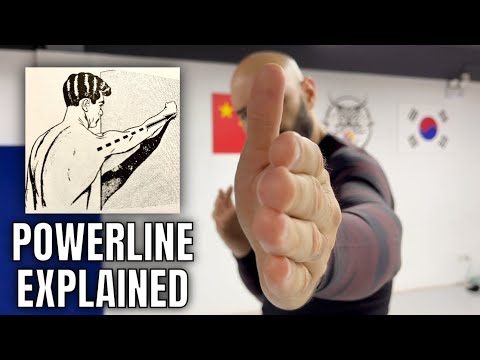
The Dempsey Roll, named after heavyweight champion Jack Dempsey and referred to in his book "Championship Fighting" as a "double shift," is a dynamic defensive-offensive technique that combines lateral footwork with simultaneous punching. According to The Modern Martial Artist, the move involves shifting forward defensively while throwing punches, and Dempsey originally employed it to chase down fleeing opponents while securing the heavyweight title against Jess Willard despite a significant size disadvantage. Ramsey Dewey emphasizes the biomechanical foundation underlying the technique: proper punch mechanics derived from Dempsey's "power line" principle, which prioritizes straight-line arm extension with the elbow down rather than flared outward, combined with a corkscrew shoulder rotation at the endpoint. Dewey stresses that footwork is critical to the roll's execution, involving weight transfer from the punching side to the non-punching side, and notes that the technique naturally emerges as a progression of integrated defensive and offensive movement training. Both instructors agree the Dempsey Roll is exceptionally devastating when properly executed, though The Modern Martial Artist highlights its inherent complexity, while Ramsey Dewey's defensive boxing drill instruction demonstrates how repetitive drilling of parrying, rolling, and footwork patterns creates the neurological foundation for spontaneous Dempsey Roll application during live sparring.
Synthesized from 3 instructors
No instructional courses yet for this technique.
Sign in to suggest a course.
Risk of injury to the person this technique is applied to
Evasion techniques avoid contact entirely; lowest injury risk of all techniques
Skill level needed to execute this technique reliably
Whether this technique is allowed under major competition rule sets
Boxing (Edwin Haislet, 1940)
Alias sources — [1] Championship Fighting (Dempsey, 1950) [2] Boxing Mastery (Hatmaker, 2004) [3] Fighter's Fact Book (Christensen, 2000)
Effectiveness sources — [1] Championship Fighting (Dempsey, 1950) [2] Boxing Mastery (Hatmaker, 2004)
Standard katakana transliteration of Western martial arts terminology (外来語) — used in Japanese MMA, boxing, and BJJ communities
Alias sources — [1] Championship Fighting (Dempsey, 1950) [2] Boxing Mastery (Hatmaker, 2004) [3] Fighter's Fact Book (Christensen, 2000)
Effectiveness sources — [1] Championship Fighting (Dempsey, 1950) [2] Boxing Mastery (Hatmaker, 2004)
neck flexibility, knee bend coordination, visual tracking
shorter stature for easier level changes, strong neck
neck muscles, quadriceps, obliques, calves
According to Ramsey Dewey, improper punching mechanics with flared elbows are less efficient and cause tendonitis and elbow damage that can shorten a boxing career. Switching to proper form with the elbow staying down and the hand traveling in a straight line can eliminate this pain within months.
Ramsey Dewey explains that the elbow should face the floor with the thumb facing up, and the hand should come out in a straight line without the elbow flaring up and out to the side. The hand travels down the center line, and you turn it as you squeeze the fist.
Ramsey Dewey notes that adding a small step or 'trigger step' with your feet—rather than just pivoting—helps fix elbow position and extends your reach when you fully extend the hip and twist it. This footwork adjustment is essential to proper Dempsey power-line mechanics.
The Dempsey Roll is an aggressive bob-and-weave variation named after heavyweight champion Jack Dempsey, characterised by a continuous figure-eight head movement pattern combined with alternating hooks. The Dempsey Roll uses the momentum of the bob-and-weave to generate power in the counter-punches — as the fighter weaves to one side, they use the rising motion to load and deliver a hook, then immediately weave to the other side for the opposite hook.
The Dempsey Roll is named after Jack Dempsey (1895-1983), the heavyweight champion whose aggressive, low-crouching style of continuous movement and punching defined an era of boxing. Dempsey described his shifting body mechanics in his 1950 instructional book 'Championship Fighting,' and the technique was later popularised in Japanese manga and anime through the character Ippo Makunouchi.
Unified MMA: legal — Legal defensive technique; WBC/Boxing: legal — Legal — blocking and evasion are core boxing skills; WKF: legal — Legal — blocking is a fundamental karate skill; Kyokushin: legal — Legal; WT: legal — Legal; WAKO: legal — Legal; K: legal — 1/GLORY — Legal; IFMA: legal — Legal
Danger rating 1/10. Low — evasion techniques avoid contact entirely; lowest injury risk of all techniques
The standard setup chain: Anticipate the Attack → Execute Defence → Recover Stance → Counter or Disengage.
Standard counters include: Timing — attack when the defence is recovering or between movements / Feint — use deception to create openings in the defensive structure / Angle Change — attack from an unexpected angle that the defence does not cover.
Common variants: Inside slip (moving the head to the inside of the incoming punch); Outside slip (moving the head to the outside of the incoming punch); Bob and weave (ducking under a hook and rising on the other side); Pull-back (leaning the head and torso backward to make the punch fal…).
Jack Dempsey used his rolling, shifting attack to devastating effect, most famously in his fourth-round knockout of Jess Willard for the heavyweight title (1919), where Willard suffered multiple fractures from Dempsey's continuous assault.
Top errors to watch for: Rolling in a predictable rhythm — the opponent times an uppercut to your lowest point; vary the tempo / Rolling without throwing — the Dempsey Roll is offensive; if you just bob and weave without punching, you waste it / Rolling into uppercuts — the down-motion of the bob exposes you to uppercuts; keep hands covering the chin / Bobbing too low — stay within punching range; going too deep limits your ability to throw at each rise.
The Dempsey Roll is also known as Denpushī Rōru, Falling Step Roll, Figure-Eight Bob, Continuous Weave.