Rear Headlock Defence
0
Standard Headlock Control·Academy Jiu Jitsu·Added by Admin
Translation: standard headlock control
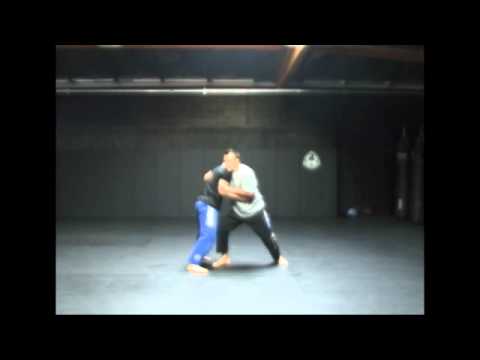
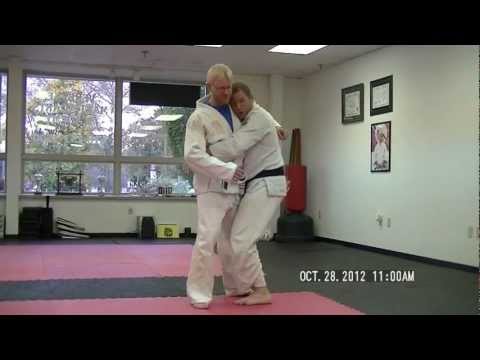
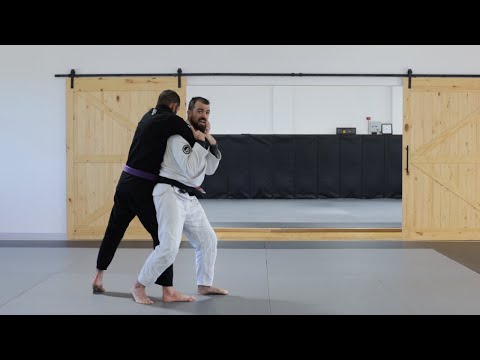
The Standard Headlock Control wraps one arm around the opponent's head from the side, securing the head against the attacker's ribcage, while the other arm controls the opponent's near arm to prevent escape or counter-attack. [1] The grip is typically secured by clasping the hands together or gripping the controlling arm's wrist, creating a locked headlock that is difficult to escape. [1],[2] From the standard headlock control, the attacker can execute hip throws (koshi-guruma), lateral drops, or transition to front headlock and guillotine positions. [2],[3]
The standard headlock is among the most ancient and universally recognised wrestling positions, appearing in virtually every culture's grappling tradition. [1] While considered a somewhat basic position in modern competition wrestling, the headlock remains an effective clinch control in self-defence and MMA contexts. [2],[3]
The standard headlock wraps one arm around the opponent's head, providing control for throws and ground work. [1]
A fundamental wrestling and judo technique. [1]
The standard headlock control is a common clinch grip in wrestling and MMA competition. In folkstyle wrestling, the headlock is a setup for lateral drops and headlock throws. [1]
No images yet for this technique.
Sign in to suggest an image.
From Issue #5 of JiuJitsu Magazine At the start of a match there's the immediate desire to hook up and get down to busi…
The Clinch
Standard headlock control involves securing an opponent's head and arm from behind or the side, typically following a clinch engagement. Academy Jiu Jitsu emphasizes establishing control through finger placement inside the attacker's arm and connecting the arm tightly to the shoulder, combined with a strong base stance that allows absorption of pushing and pulling forces. The escape involves elevating the opponent by lowering hips underneath theirs and scooping with hip drive to roll them forward, maintaining arm control throughout to prevent them from escaping or being injured. JiuJitsuMag approaches headlock control as part of broader clinch work, highlighting the importance of the deep underhook and proper hand positioning to control the opponent's arm and prevent reciprocal underhooks, particularly when an opponent pummels to establish their own clinch advantage. They note that headlock opportunities arise when an opponent pummels aggressively, allowing the controller to trap the arm and transition into a headlock submission or throw. SundarJiuJitsu frames clinch positioning defensively, teaching how to maintain proximity and control through hand placement across the back and wrist control, keeping hips close and using proper foot positioning to prevent escape. All three instructors agree that maintaining connection between one's own shoulder/body and the opponent's arm is critical, proper hip positioning is essential, and the technique functions both offensively as a control position and defensively as an escape mechanism. They differ slightly in emphasis: Academy Jiu Jitsu focuses on escape mechanics, JiuJitsuMag on clinch dominance and submission entries, and SundarJiuJitsu on defensive stability and distance management.
Synthesized from 3 instructors
No instructional courses yet for this technique.
Sign in to suggest a course.
Risk of injury to the person this technique is applied to
Head/neck control positions create cervical strain; Muay Thai plum is primary striking platform
Skill level needed to execute this technique reliably
Whether this technique is allowed under major competition rule sets
Mastering Jujitsu (Renzo Gracie & John Danaher, 2003)
Alias sources — [1] Wrestling Physical Conditioning Encyclopedia (Welker, 2010) [2] Clinch Fighting for MMA (Couture, 2011) [3] Kodokan Judo (Kano, 1986)
Effectiveness sources — [1] Wrestling Physical Conditioning Encyclopedia (Petrov, 1977)
Standard katakana transliteration of Western martial arts terminology (外来語) — used in Japanese MMA, boxing, and BJJ communities
Alias sources — [1] Wrestling Physical Conditioning Encyclopedia (Welker, 2010) [2] Clinch Fighting for MMA (Couture, 2011) [3] Kodokan Judo (Kano, 1986)
Effectiveness sources — [1] Wrestling Physical Conditioning Encyclopedia (Petrov, 1977)
downward pressure, grip strength, sprawl endurance
strong upper body, heavy chest for top pressure
deltoids, biceps, pectorals, core, hip extensors
The key to all clinch control is achieving a deep underhook—you want to place your fingers into the crease of your opponent's back while controlling the space between their legs, keeping pressure on their leg to prevent them from disengaging. According to JiuJitsu Magazine's clinch technique breakdown, this deep underhook positions you to set up follow-up moves and maintain control.
Use constant small movements—push, push, push, then pull—to keep your opponent off-balance and prevent them from creating distance. JiuJitsu Magazine emphasizes that when your opponent tries to push away, hold them tight so they have to push harder, which often creates the space you need to hit a takedown like a double leg.
Most people either keep their hips too far back to avoid engagement or position their leg forward in an uncomfortable way, which opens them up to takedowns. According to JiuJitsu Magazine's technique instruction, you need to engage with your hips forward and maintain pressure on your opponent's leg to control the clinch properly.
Yes—JiuJitsu Magazine confirms that the same clinch technique applies in wrestling, no-gi, MMA, and gi jiu-jitsu; the hand and arm positions remain consistent regardless of whether there's a jacket hiding the details.
The Standard Headlock Control wraps one arm around the opponent's head from the side, securing the head against the attacker's ribcage, while the other arm controls the opponent's near arm to prevent escape or counter-attack. The grip is typically secured by clasping the hands together or gripping the controlling arm's wrist, creating a locked headlock that is difficult to escape.
The standard headlock is among the most ancient and universally recognised wrestling positions, appearing in virtually every culture's grappling tradition. While considered a somewhat basic position in modern competition wrestling, the headlock remains an effective clinch control in self-defence and MMA contexts.
Unified MMA: legal — Legal — clinching is integral to MMA; IJF: legal — Legal — kumi-kata (grip fighting) is fundamental to judo; IBJJF: legal — Legal — standing grip fighting and clinch work permitted; IFMA: legal — Legal — the clinch is a core element of Muay Thai, clinch dominance is highly…; WBC/Boxing: restricted — Holding is technically a foul — referee breaks clinch, excessive holding resu…; K: restricted — 1/GLORY — One attack from clinch allowed, then referee breaks; WAKO: restricted — Clinch generally broken by referee — limited or no clinch fighting in most fo…; UWW: legal — Legal — clinch is fundamental to wrestling, the primary position in Greco-Roman
Danger rating 5/10. High — head/neck control positions create cervical strain; Muay Thai plum is primary striking platform
The standard setup chain: Close Distance → Establish Primary Grip → Position the Hips → Apply Pressure.
Standard counters include: Pummeling — fight for inside position by swimming arms under opponent's grips / Frame and Push — create distance using forearm frames against the chest or neck / Hand Fight — strip grips by peeling fingers or pushing the wrist away / Level Change — change levels to break the collar tie angle and attack the legs.
Common variants: Standard front headlock (arm wrapped around the head from the front); Front headlock with arm (controlling the head and one arm (head-and-arm position)); Short choke front headlock (tight headlock seeking a guillotine or snap-down).
The standard headlock control is a common clinch grip in wrestling and MMA competition. In folkstyle wrestling, the headlock is a setup for lateral drops and headlock throws.
Top errors to watch for: Wrapping the head loosely — the arm must be tight around the head with the head pulled into your body / Not making hip contact — without the hip, you can't throw and the opponent simply postures out / Squeezing only the neck instead of controlling the whole head — the headlock wraps the head, not the throat / Turning your back to the opponent without immediately throwing — back exposure is the risk; mitigate it by attacking ….
The Standard Headlock Control is also known as Sutandādo Heddo Rokku Kontorōru, Basic Standing Headlock, Standard Side Headlock, Fundamental Kubi-Gatame.