Introduction and No-Gi Demonstration Rationale
Kenny Johnson and Pedro Munoz demonstrate clinch techniques without grappling jackets to reveal precise hand and arm positioning that would otherwise be obscured by heavy material. This no-gi approach applies equally to wrestling, no-shirt MMA, and gi-based jiu-jitsu, making the fundamentals universally transferable across disciplines.
The Clinch Series Overview
The instruction covers proper clinch entry, movement mechanics within the clinch, effective takedown setups, and critical errors to avoid. Clinch proficiency remains underdeveloped in American wrestling due to its Greco-Roman origins, yet mastery of this position dramatically improves tactical control and takedown effectiveness.
The Deep Underhook: Foundation of Clinch Control
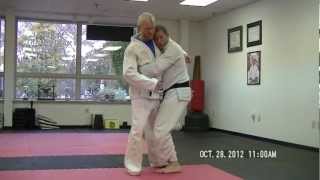
The deep underhook is the primary control mechanism in clinch work, requiring fingers positioned deep into the opponent's back at the shoulder blade level rather than at the sides. This grip, combined with the arm pulled tight to the opponent's body, creates superior positional dominance that counters the common misconception that external pressure equals control.
Shoulder Position and Level Control
The controlling wrestler's shoulder must position slightly below the opponent's shoulder for maximum leverage; positioning at equal height creates 50-50 exchanges, while excessive lowering compromises shoulder integrity and creates escape angles. Precise level management directly correlates to preventing opponent takedowns and maintaining structural advantage.
Lower Body Placement and Hip Engagement
The leg on the underhook side must control the space between the opponent's legs while maintaining forward hip pressure rather than retreating. Common errors—keeping hips back or positioning the opposite leg forward—create vulnerability to takedowns; proper positioning requires active pressure and engagement.
Countering the Opponent's Underhook
When the opponent establishes an underhook, reaching backward to defend breaks posture and invites knee-tap takedowns. Instead, the defender should pinch the opponent's wrist, lower level and retreat slightly to extend the arm, slip the thumb in, and shrug the arm back to the body while maintaining the deep underhook control.
Progressive Movement Strategy in the Clinch
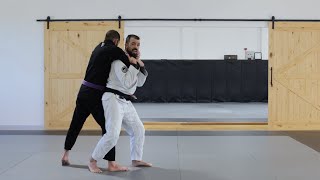
Rather than static holding or reactive pushing, effective clinch movement employs incremental one-inch advances: the wrestler pushes, detects the opponent's counterforce, steps outside with the leg controlling center, and pulls the opponent around this leg using the underhook. This cyclical pattern maintains constant pressure while creating takedown angles.
Exploiting the Underhook Drive Attempt
When the opponent drives an underhook by pushing forward, their hips automatically shift backward initially, then rise as they drive upward. The wrestler immediately exploits this hip elevation by dropping level and executing a double-leg takedown, with the neck positioned in the crook of the opponent's arm and hands securing the rear leg.
JiuJitsu Magazine: Technique Takedowns Working the Clinch
Key Takeaways
- •Introduction and No-Gi Demonstration Rationale
- •The Clinch Series Overview
- •The Deep Underhook: Foundation of Clinch Control
- •Shoulder Position and Level Control
From Issue #5 of JiuJitsu Magazine At the start of a match there's the immediate desire to hook up and get down to business. But what do you do when you get involved in a clinch situation? Sometimes nerves take over and fighters forget everything they've learned, or worse yet they've never really learned what to do in a clinch situation. Most jiu-jitsu schools only teach the standard Judo style takedowns, if that. So, Kenny Johnson is going to go over positioning in the clinch, how to move in the clinch, and some different moves of the clinch. These technique are useful in the gi, or without.
Frequently Asked Questions
What does this video teach about standard headlock control?
This video covers introduction and no-gi demonstration rationale, the clinch series overview, the deep underhook: foundation of clinch control. It provides detailed instruction from JiuJitsuMag.
How long does it take to learn standard headlock control?
The basic mechanics can be understood in a single session, but developing reliable execution requires consistent drilling over weeks of practice. This 8-part breakdown helps structure your training by isolating each phase of the technique.
What are the key details for finishing standard headlock control?
Rather than static holding or reactive pushing, effective clinch movement employs incremental one-inch advances: the wrestler pushes, detects the opponent's counterforce, steps outside with the leg controlling center, and pulls the opponent around this leg using the underhook. This cyclical pattern maintains constant pressure while creating takedown angles.
![Self Defense - The Clinch for Close Quarter Combat [Lesson 7]](https://img.youtube.com/vi/qOyK75ysdqo/mqdefault.jpg)