Attacks off a Sprawl
0
Standard Sprawl Headlock·Rocha Jiu Jitsu Oakland·Added by Admin
Translation: standard sprawl headlock
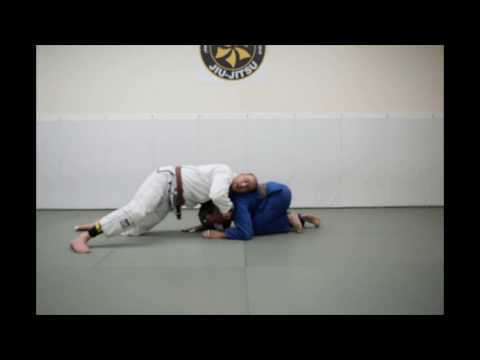
The Standard Sprawl Headlock executes the fundamental sprawl-to-headlock sequence where the defender sprawls on a takedown attempt, drives hips to the mat, and secures the opponent's head under the armpit with one arm wrapping the chin or neck. [1] The defender's weight is distributed forward through the chest onto the opponent's upper back, keeping them broken down while the headlock arm controls the head. [1],[2] From this position, the standard options are circling for a go-behind, snapping the opponent flat to the mat, or cinching the headlock deeper for a submission attempt. [2],[3]
The standard sprawl headlock is one of the most practised defensive sequences in wrestling, taught as a fundamental skill from youth through senior levels. [1] Its adaptation to MMA and submission grappling expanded the position's offensive options to include a full suite of front headlock chokes. [2],[3]
The sprawl headlock combines a sprawl defence with an immediate transition to front headlock control, making it one of the most effective reactive positions in wrestling and MMA. [1] Welker describes the sprawl-to-headlock as a fundamental chain that every wrestler must master, as it converts a defensive action into an offensive control position. [1]
A fundamental wrestling defensive position converted into offensive control. [1]
The standard sprawl to headlock transition is a baseline wrestling defensive technique used in freestyle, folkstyle, and MMA competition at all levels. [1]
No images yet for this technique.
Sign in to suggest an image.
Stage 4 Punch Block from Guard position
🔗 Links: Follow me on Instagram for more jiu-jitsu content: https://www.instagram.com/tarik_bjj/ Discover top-qualit…
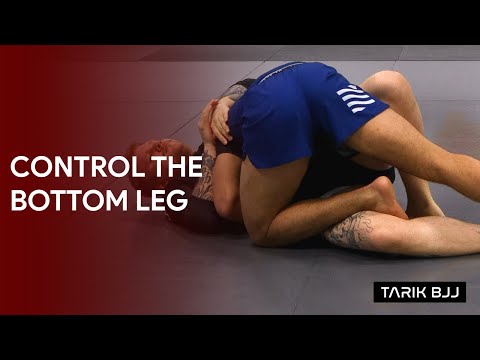
The standard sprawl headlock encompasses a family of head-control attacks executed after successfully sprawling a takedown attempt. Rocha Jiu Jitsu Oakland provides the most comprehensive instruction, detailing multiple progressions: breaking the opponent's grip on the leg, then transitioning through anaconda threats to guillotine chokes by walking the hips in and securing a shin across the opponent's back. Rocha emphasizes adaptive responses when the grip cannot be broken—using forearm control and knee-giving to prevent the opponent from climbing the hips, then executing Kimura attacks or crucifix-based chokes. Crucially, Rocha teaches that maintaining the position requires controlling the opponent's elbow within the loop structure, not just the forearm, and offers collar-based choke variations. The approach prioritizes higher-percentage familiar techniques (guillotine, Kimura) over lower-percentage options when the situation deteriorates. SundarJiuJitsu and Tarik BJJ address different contexts—guard-based punch defense and leg isolation passing respectively—and do not directly address sprawl headlock mechanics, making them tangential to this technique's instruction.
Synthesized from 3 instructors
No instructional courses yet for this technique.
Sign in to suggest a course.
Risk of injury to the person this technique is applied to
Head/neck control positions create cervical strain; Muay Thai plum is primary striking platform
Skill level needed to execute this technique reliably
Whether this technique is allowed under major competition rule sets
Freestyle Wrestling: A Complete Guide for Coaches and Wrestlers (Petrov, 1977)
Alias sources — [1] Wrestling Physical Conditioning Encyclopedia (Welker, 2010) [2] NCAA Wrestling Rules and Interpretations (NCAA, 2020) [3] Clinch Fighting for MMA (Couture, 2011)
Effectiveness sources — [1] Wrestling Physical Conditioning Encyclopedia (Welker, 2010)
Standard katakana transliteration of Western martial arts terminology (外来語) — used in Japanese MMA, boxing, and BJJ communities
Alias sources — [1] Wrestling Physical Conditioning Encyclopedia (Welker, 2010) [2] NCAA Wrestling Rules and Interpretations (NCAA, 2020) [3] Clinch Fighting for MMA (Couture, 2011)
Effectiveness sources — [1] Wrestling Physical Conditioning Encyclopedia (Welker, 2010)
downward pressure, grip strength, sprawl endurance
strong upper body, heavy chest for top pressure
deltoids, biceps, pectorals, core, hip extensors
Make sure to pinch and control the elbow itself, not just the forearm. Rocha Jiu Jitsu Oakland emphasizes bringing your knee in to pinch and control the elbow, ensuring it's included in the loop of your crucifix before proceeding with submissions like triangles or arm bars.
Keep higher percentage, more familiar attacks in mind as your primary options. Rocha Jiu Jitsu Oakland recommends returning to reliable techniques like the Kimura grip if things aren't going your way—you can let him go, smooth out, and put him on his side to reset.
The Standard Sprawl Headlock executes the fundamental sprawl-to-headlock sequence where the defender sprawls on a takedown attempt, drives hips to the mat, and secures the opponent's head under the armpit with one arm wrapping the chin or neck. The defender's weight is distributed forward through the chest onto the opponent's upper back, keeping them broken down while the headlock arm controls the head.
The standard sprawl headlock is one of the most practised defensive sequences in wrestling, taught as a fundamental skill from youth through senior levels. Its adaptation to MMA and submission grappling expanded the position's offensive options to include a full suite of front headlock chokes.
Unified MMA: legal — Legal — clinching is integral to MMA; IJF: legal — Legal — kumi-kata (grip fighting) is fundamental to judo; IBJJF: legal — Legal — standing grip fighting and clinch work permitted; IFMA: legal — Legal — the clinch is a core element of Muay Thai, clinch dominance is highly…; WBC/Boxing: restricted — Holding is technically a foul — referee breaks clinch, excessive holding resu…; K: restricted — 1/GLORY — One attack from clinch allowed, then referee breaks; WAKO: restricted — Clinch generally broken by referee — limited or no clinch fighting in most fo…; UWW: legal — Legal — clinch is fundamental to wrestling, the primary position in Greco-Roman
Danger rating 5/10. High — head/neck control positions create cervical strain; Muay Thai plum is primary striking platform
The standard setup chain: Close Distance → Establish Primary Grip → Position the Hips → Apply Pressure.
Standard counters include: Pummeling — fight for inside position by swimming arms under opponent's grips / Frame and Push — create distance using forearm frames against the chest or neck / Hand Fight — strip grips by peeling fingers or pushing the wrist away / Level Change — change levels to break the collar tie angle and attack the legs.
Common variants: Standard front headlock (arm wrapped around the head from the front); Front headlock with arm (controlling the head and one arm (head-and-arm position)); Short choke front headlock (tight headlock seeking a guillotine or snap-down).
The standard sprawl to headlock transition is a baseline wrestling defensive technique used in freestyle, folkstyle, and MMA competition at all levels.
Top errors to watch for: Sprawling late and ending up underneath the opponent — the sprawl must be immediate and explosive / Wrapping the head but not controlling the arm — the incomplete front headlock has escape routes / Not converting sprawl momentum to forward drive — you must shift from defending (backward) to attacking (forward) / Keeping hips high after the sprawl — drive hips into the mat to maintain low, heavy pressure.
The Standard Sprawl Headlock is also known as Sutandādo Supurōru Heddo Rokku, Basic Sprawl Headlock, Fundamental Sprawl Front Chancery, Sprawl-And-Snap Headlock.