Introduction to Post-Sprawl Attacks
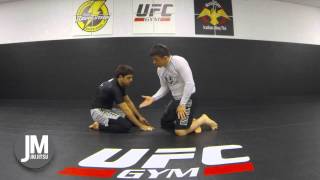
When an opponent shoots and the defender sprawls, immediate counter-attacks using head-and-arm control become available. This instructional series covers multiple submission options that capitalize on the opponent's committed position.
Grip Breaking and Initial Setup
As the opponent reaches to secure the leg during a sprawl, the defender's first priority is breaking this grip. The defender establishes control by securing either a head-and-arm loop or a chin-strap grip using the tricep and chin.
Anaconda Transition to Guillotine
After breaking the opponent's leg grip, the defender switches positioning and shoots the arms through to threaten an anaconda choke. When the opponent clears the elbow to escape the anaconda, the defender releases the arm and transitions directly to a neck guillotine.
Finishing the Guillotine Choke
From the guillotine position, the defender walks the legs in tight, places the shin across the opponent's hips, and applies downward pressure while biting into the opponent's back. This execution finishes the submission with maximum control and mechanical advantage.
Defending Against Persistent Leg Control
When the opponent maintains a tight grip on the leg and begins climbing toward the back, the defender must transition rather than continue sprawling. The defender swims an arm through to grip the opponent's forearm while offering the knee to relieve hip connection.
Kimura Setup from Leg Defense
Once the opponent is controlling the offered knee, the defender makes a femoral grip and takes a large step forward. As the opponent maintains pressure, the defender sits through and scoops the head with the lap, breaking the grip and establishing the Kimura attack series.
Crucifix Control Against Double Leg Grip
If the opponent secures both legs during the back-take attempt, the defender isolates the crucifix position by pinching the opponent's elbow with the knee. The defending arm swims through to control the forearm while the opposite hand secures the collar for a choke.
Crucifix Finish and Fallback Options
From the crucifix position, the defender sits through and pulls the opponent to the chest, establishing a collar choke. If the position becomes compromised, the defender can revert to a Kimura grip as a higher-percentage familiar attack.
Collar Choke from Leg Capture
When the opponent grabs the leg near their head, the defender captures and separates the elbow before swimming the other arm through to control the forearm. The defender then applies a cross-collar or traditional collar choke by sitting through and pulling the opponent onto their hip.
Kimura Conversion and Reactive Counters
From the collar choke position, the defender maintains the option to transition to a Kimura grip by releasing the arm and repositioning to the knees. If the opponent begins spinning to face the defender, additional counter-attack series become available to maintain control.
Attacks off a Sprawl
Key Takeaways
- •Introduction to Post-Sprawl Attacks
- •Grip Breaking and Initial Setup
- •Anaconda Transition to Guillotine
- •Finishing the Guillotine Choke
Frequently Asked Questions
What does this video teach about standard sprawl headlock?
This video covers introduction to post-sprawl attacks, grip breaking and initial setup, anaconda transition to guillotine. It provides detailed instruction from Rocha Jiu Jitsu Oakland.
How long does it take to learn standard sprawl headlock?
The basic mechanics can be understood in a single session, but developing reliable execution requires consistent drilling over weeks of practice. This 10-part breakdown helps structure your training by isolating each phase of the technique.
What are the key details for finishing standard sprawl headlock?
When the opponent grabs the leg near their head, the defender captures and separates the elbow before swimming the other arm through to control the forearm. The defender then applies a cross-collar or traditional collar choke by sitting through and pulling the opponent onto their hip.
Related videos
Bodylock Passing Stapling One Leg
Tarik BJJ
L8S4_Stage 4 Punch Block from Guard position
SundarJiuJitsu
Front Headlock Attack System Your Coach Wont Show You
Josh Saunders
Safe And Effective Football Front Headlock From 2x NCAA Champ
Earn Your Gold Medal
Guillotine/Marcelotine vs front headlock/sprawl
JM Modern Jiu Jitsu