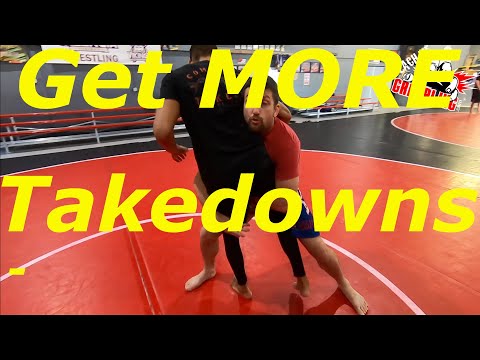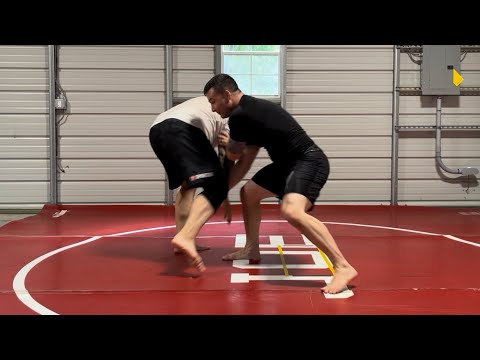
#27 Hand fighting/takedown set ups: it’s all about elbow control
0
Inside Elbow Control·Breza-Grappling
Watch any high level wrestlers and you will see they control at the elbow during “hand fighting.” Most BJJ professors ar…
Translation: inside elbow control
The Inside Elbow Control subfamily covers positions where the attacker controls the opponent's elbow from the inside line, cupping or gripping the inner elbow to prevent the opponent from establishing underhooks or closing distance. [1] Inside elbow control acts as a frame that maintains distance and denies the opponent access to the attacker's body, making it a key defensive and transitional position. [1],[2] From inside elbow control, the attacker can transition to underhooks, arm drags, or two-on-one positions. [2],[3]
Inside elbow control developed as a natural component of clinch fighting across wrestling and judo, where controlling the inside space between fighters is the primary battleground for positional dominance. [1] Modern MMA coaches emphasise inside elbow control as a foundational clinch defence skill. [2],[3]
Inside elbow control places the controlling hand on the inside of the opponent's elbow, allowing the controller to steer the arm and create angles for attacks while maintaining inside position. [1]
Inside elbow control is taught in judo, wrestling, and Muay Thai as a positional advantage that limits the opponent's offensive capacity. [1]
Inside elbow control is a fundamental positional tactic in judo competition. [1]
No images yet for this technique.
Sign in to suggest an image.
Watch any high level wrestlers and you will see they control at the elbow during “hand fighting.” Most BJJ professors ar…
PLEASE Click this link to SUPPORT the TeachMeGrappling Channel!!! https://www.patreon.com/TeachMeGrappling or https:/…
Inside elbow control represents a foundational hand-fighting principle in standing grappling and clinch work, characterized by controlling an opponent's elbow from a position interior to their arm—typically when both competitors are vying for collar or head control. This control mechanism is valued across wrestling and jiu-jitsu contexts because the elbow joint, with its narrow articulation between radius and ulna, offers a natural pressure point that restricts arm mobility and creates positional advantage with minimal muscular effort. Breza-Grappling emphasizes that inside elbow control is inherently offensive: by pulling the opponent's elbow downward and backward, the controlling athlete simultaneously prevents the opponent from posting or defending while creating space for level changes and subsequent takedown attacks such as double legs or high crotches. TeachMeGrappling Coach Brian contrasts inside elbow control with the post-based high crotch setup, noting that elbow control is preferable when an opponent maintains a low stance—where superior leverage and rotational mechanics overcome postural strength—while the post method suits higher, more upright positions. Both instructors stress that effective inside elbow control depends on positioning the controlling athlete underneath the opponent's elbow rather than pulling laterally across the body, and on maintaining distance to prevent the opponent from closing the gap or securing a tight clinch. The technique's utility stems from its simplicity: it requires no wrist fighting or strength-based competition, instead using skeletal mechanics and level changes to progressively destabilize and control the opponent's offensive capability.
Synthesized from 2 instructors
No instructional courses yet for this technique.
Sign in to suggest a course.
Risk of injury to the person this technique is applied to
Arm control positions limit opponent's offense; low direct injury risk
Skill level needed to execute this technique reliably
Whether this technique is allowed under major competition rule sets
Freestyle Wrestling: A Complete Guide for Coaches and Wrestlers (Petrov, 1977)
Alias sources — [1] Wrestling Physical Conditioning Encyclopedia (Welker, 2010) [2] NCAA Wrestling Rules and Interpretations (NCAA, 2020) [3] Clinch Fighting for MMA (Couture, 2011)
Effectiveness sources — [1] Kodokan Judo (Kano, 1986)
Established Japanese martial arts naming convention — native Japanese term (和語/漢語)
Alias sources — [1] Wrestling Physical Conditioning Encyclopedia (Welker, 2010) [2] NCAA Wrestling Rules and Interpretations (NCAA, 2020) [3] Clinch Fighting for MMA (Couture, 2011)
Effectiveness sources — [1] Kodokan Judo (Kano, 1986)
swimming speed for inside position, shoulder drive, hip pressure
strong shoulders and low centre of gravity
deltoids, pectorals, core, quadriceps
Every move, in any martial art, shares a few universal traits. Mix and match below to pinpoint the right tool — or compare equivalents across styles.
Coach Brian emphasizes grabbing near the elbow itself, not way up on the arm, because this gives you better control when you rotate your shoulders and torso.
Coach Brian explains that elbow control is preferred when the opponent is in a low stance because you can't push their arm up effectively from that position, making the control more practical.
Coach Brian stresses that you want the opponent's elbow on your shoulder, not in your chest—bring your shoulder forward with a slight shrug to achieve this positioning before grabbing the elbow.
Coach Brian notes that you need some distance so the opponent's elbow is not touching your chest, which allows you to brace and control their arm more effectively when they try to pull you in.
The Inside Elbow Control subfamily covers positions where the attacker controls the opponent's elbow from the inside line, cupping or gripping the inner elbow to prevent the opponent from establishing underhooks or closing distance. Inside elbow control acts as a frame that maintains distance and denies the opponent access to the attacker's body, making it a key defensive and transitional position.
Inside elbow control developed as a natural component of clinch fighting across wrestling and judo, where controlling the inside space between fighters is the primary battleground for positional dominance. Modern MMA coaches emphasise inside elbow control as a foundational clinch defence skill.
Unified MMA: legal — Legal — clinching is integral to MMA; IJF: legal — Legal — kumi-kata (grip fighting) is fundamental to judo; IBJJF: legal — Legal — standing grip fighting and clinch work permitted; IFMA: legal — Legal — the clinch is a core element of Muay Thai, clinch dominance is highly…; WBC/Boxing: restricted — Holding is technically a foul — referee breaks clinch, excessive holding resu…; K: restricted — 1/GLORY — One attack from clinch allowed, then referee breaks; WAKO: restricted — Clinch generally broken by referee — limited or no clinch fighting in most fo…; UWW: legal — Legal — clinch is fundamental to wrestling, the primary position in Greco-Roman
Danger rating 3/10. Moderate — arm control positions limit opponent's offense; low direct injury risk
The standard setup chain: Close Distance → Establish Primary Grip → Position the Hips → Apply Pressure.
Standard counters include: Pummeling — fight for inside position by swimming arms under opponent's grips / Frame and Push — create distance using forearm frames against the chest or neck / Grip Break — systematically strip the opponent's controlling grips / Posture Up — straighten the spine and drive the hips forward to break clinch control.
Common variants: Single underhook (one arm inside for angle and control); Double underhooks (both arms inside for maximum inside position); Underhook with collar tie (combining the underhook with head control).
Inside elbow control is a fundamental positional tactic in judo competition.
Top errors to watch for: Cupping too deep into the elbow joint — grip the inside of the bicep/forearm area, not the joint itself / Not using the other hand — inside elbow control is one hand; the other must be active (collar tie, post, or strike) / Pushing the opponent's arm straight out — redirect it across their body, not just away / Allowing the opponent to circle their arm free — follow the rotation to maintain the cup.
The Inside Elbow Control is also known as Uchi Hiji Seigyo, Inside Elbow Cup, Inside Elbow Tie, Elbow Block.