Structured rapier thrust
0
Rapier Thrust·swordpals
Sara Lewis demonstrates how to identify and engage the right muscles to hold a rapier and complete a thrusting attack wi…
Перевод: rapier thrust
The Rapier Thrust subfamily covers the thrusting techniques that form the core offensive repertoire of rapier fencing, the rapier being designed primarily as a thrusting weapon. [1] Italian rapier masters identified the straight thrust (stoccata), the disengage thrust (cavazione), and the counter-thrust as the primary offensive actions, supplemented by body-evasion techniques such as the lunge and the passata sotto. [1],[2] The lunge — extending the front foot while pushing off the rear — was developed as the primary delivery system for rapier thrusts and remains the foundational offensive movement in all modern fencing. [2],[3]
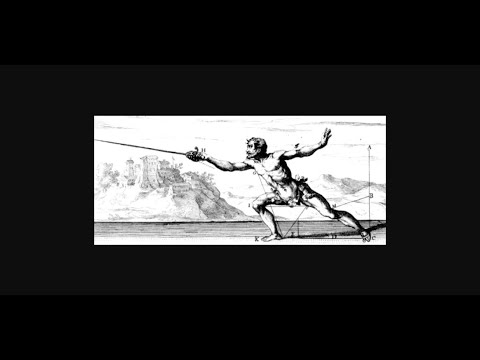
Rapier thrusting technique was extensively documented by Italian masters from the mid-sixteenth century, with Salvator Fabris and Capoferro providing the most detailed biomechanical analyses. [1] Capoferro's Gran Simulacro (1610) includes precise geometric demonstrations of thrust mechanics and reach optimisation. [2],[3]
The emphasis on thrusting developed in Italian fencing schools during the 15th–16th centuries, culminating in the rapier's design as a dedicated thrusting weapon. [1]
The thrust is the primary scoring action in HEMA rapier competition, typically scoring highest under most rule sets. [1]
Изображений для этой техники пока нет.
Войдите, чтобы предложить изображение.
Sara Lewis demonstrates how to identify and engage the right muscles to hold a rapier and complete a thrusting attack wi…
In this fourth video in our series on Capoferro's Italian rapier system I examine the main attack form, the stoccata thr…
Учебных курсов по этой технике пока нет.
Войдите, чтобы предложить курс.
Риск травмы для человека, к которому применяется техника
Edged weapons cause fatal lacerations; historical battlefield mortality rates >30% (Amberger 1999)
Уровень мастерства, необходимый для надёжного выполнения техники
Разрешена ли техника по основным соревновательным правилам
The Art of Fencing (Luigi Barbasetti, 1932)
Alias sources — [1] The Sword and the Centuries (Castle, 1901) [2] Classical Fencing (Rogers, 2014) [3] Classical Fencing (Rogers, 2014)
Effectiveness sources — [1] The Martial Arts of Renaissance Europe (Anglo, 2000) [2] The Swordsman's Companion (Windsor, 2004)
Mixed Japanese-Western terminology — combines traditional Japanese terms with katakana loanwords
Alias sources — [1] The Sword and the Centuries (Castle, 1901) [2] Classical Fencing (Rogers, 2014) [3] Classical Fencing (Rogers, 2014)
Effectiveness sources — [1] The Martial Arts of Renaissance Europe (Anglo, 2000) [2] The Swordsman's Companion (Windsor, 2004)
wrist control for edge alignment, grip endurance, footwork precision
quick wrists, strong forearms, good posture
forearm extensors/flexors, deltoids, core, calves
Каждое движение в любом боевом искусстве обладает рядом универсальных свойств. Комбинируйте параметры ниже, чтобы найти нужный инструмент или сравнить аналоги из разных стилей.
The Counter Thrust is a defensive-offensive action in rapier fencing where the fencer parries or evades an incoming attack and delivers an immediate thrust in response, embodying the principle of a single-tempo defence and attack. [1] The most effective counter-thrusts combine a blade displacement (parry) with a simultaneous extension of the point toward the opponent's exposed target, achieving both defence and offence in one motion. [1,2] Italian masters term this the contratempo (counter-time), considered the highest expression of rapier skill. [2,3]
The Direct Thrust (stoccata) drives the rapier point straight forward along the centreline toward the opponent's chest, throat, or face, initiated by extending the sword arm and followed by the body advancing via a lunge or pass. [1] Italian rapier masters teach that the arm must extend before the body moves, ensuring that the point threatens the opponent throughout the action. [1,2] The stoccata can be delivered in any of the four hand positions (prima through quarta), each targeting a different line. [2,3]
The Disengage Thrust (cavazione) is a rapier attack that deceives the opponent's parry by passing the blade under or over the opponent's guard to thrust into the newly opened line. [1] The cavazione is executed by dropping the point under the opponent's blade with a small circular motion of the wrist and extending into the opposite line in a single tempo. [1,2] This technique exploits an opponent who relies too heavily on a single parry, and it is the foundation of the modern fencing disengage. [2,3]
Start from the ground up by tucking your pelvis and engaging your glutes, psoas, oblique abdominals, lats, and traps while bringing the sword online. Swordpals emphasizes engaging your obliques to bring your torso in line with the thrust, which drives the sword forward more effectively, and squeezing your traps to complete the movement.
Keep your weight down in a low driving attack, maintaining as close to a level line as possible rather than pushing up with the back leg in an arc. Edinburgh Renaissance Fencing Academy notes you want to drive forwards into the target while keeping your weight trajectory horizontal.
You'll experience strain across the top shoulder and in the armpit because your lats will work far too hard to compensate. Swordpals warns that proper pelvis engagement is essential to distribute the muscular load correctly.
In Capoferro fencing, you can employ a counter-time stoccata to defend by attacking into your opponent's attack—interrupting their thrust, cut, or other movements by launching a quick thrust while angling your quillons and blade edge. Edinburgh Renaissance Fencing Academy explains this technique can also interrupt an opponent's disengagement or freeing of the sword.
The Rapier Thrust subfamily covers the thrusting techniques that form the core offensive repertoire of rapier fencing, the rapier being designed primarily as a thrusting weapon. Italian rapier masters identified the straight thrust (stoccata), the disengage thrust (cavazione), and the counter-thrust as the primary offensive actions, supplemented by body-evasion techniques such as the lunge and the passata sotto.
Rapier thrusting technique was extensively documented by Italian masters from the mid-sixteenth century, with Salvator Fabris and Capoferro providing the most detailed biomechanical analyses. Capoferro's Gran Simulacro (1610) includes precise geometric demonstrations of thrust mechanics and reach optimisation.
FIE: разрешён — Legal fencing technique — governed by FIE rules for foil, épée, and sabre; HEMA: разрешён — Legal in historical fencing competition
Оценка опасности 9/10. Extreme — edged weapons cause fatal lacerations; historical battlefield mortality rates >30% (Amberger 1999)
Стандартная цепочка подготовки: En Garde → Advance/Lunge Preparation → Attack → Recovery.
Стандартные контрприёмы: Beat Parry — deflect the blade with a sharp lateral beat before it reaches target / Displacement — move the body off the line while threatening with the point / Counter-Thrust — extend into the attacker's line during their advance.
Распространённые варианты: Standard cut (primary cutting angle from the ready stance); Thrust (tsuki) (straight thrust targeting the throat, chest, or face); Rising cut (kiri-age) (upward diagonal cut from low to high); Diagonal cut (kesa-giri) (downward diagonal cut following the kimono line).
The thrust is the primary scoring action in HEMA rapier competition, typically scoring highest under most rule sets.
Основные ошибки, на которые стоит обратить внимание: Lunging before extending the arm — the arm must be extended first to establish the point in line / Thrusting without proper point alignment — the point must be directed precisely at the target throughout the extension / Pulling the arm back before thrusting (telegraphing) — the thrust should begin from the guard position without a prep… / Not recovering after the lunge — the lunge must be followed by a recovery to guard, either forward or backward.
Rapier Thrust также известен как Reipia Tsuki, Stoccata, Rapier Lunge, Thrust — Rapier.