Knife Defense Simplified: Essential Techniques For Everyday Safety
0
Disengage Thrust·Funker Tactical - Fight Training Videos
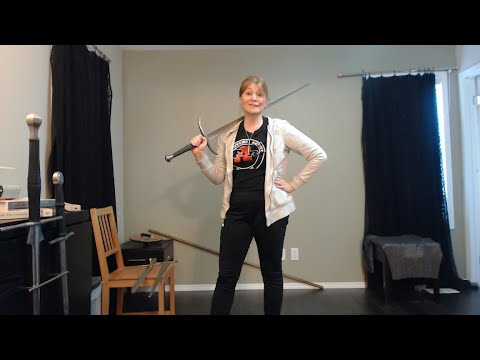
Let's go over essential basics and develop safety skills for the every day non-ninja, non-commando regular average perso…
Перевод: disengage thrust
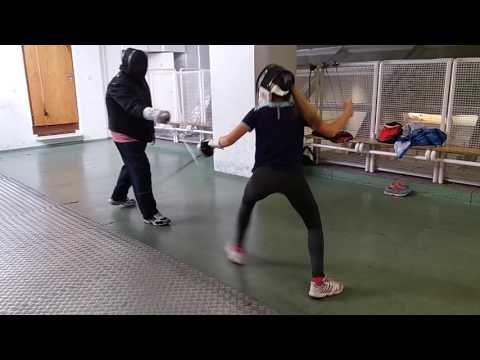
The Disengage Thrust (cavazione) is a rapier attack that deceives the opponent's parry by passing the blade under or over the opponent's guard to thrust into the newly opened line. [1] The cavazione is executed by dropping the point under the opponent's blade with a small circular motion of the wrist and extending into the opposite line in a single tempo. [1],[2] This technique exploits an opponent who relies too heavily on a single parry, and it is the foundation of the modern fencing disengage. [2],[3]
The disengage was formalised in French fencing as dégagement and in Italian fencing as cavazione, both describing the same blade evasion principle. [1]
Disengage attacks are among the most common scoring actions in Olympic foil and épée, particularly effective against opponents with predictable parry patterns. [1]
Изображений для этой техники пока нет.
Войдите, чтобы предложить изображение.
Let's go over essential basics and develop safety skills for the every day non-ninja, non-commando regular average perso…
What is a guard and why do we stand that way? Today it's an overview of guard positions, also called wards, stances, cus…
Honved .FIE coaching 17
The provided transcripts do not contain substantive instructional material on the disengage thrust technique in rapier fencing. Sandra Egginton's video transcript consists largely of blank audio and inaudible segments with minimal commentary on technique execution. Lauren Danger Shaw's extensive video focuses on guard positions and stance work across multiple weapons systems (sword and buckler, longsword, messer, staff) but does not address the disengage thrust specifically—her content emphasizes foundational positioning, guard transitions, and footwork rather than thrust mechanics or disengagement principles. Funker Tactical's video addresses knife defense and threat management, covering distance management, positioning, and interception strategies that are contextually incompatible with rapier fencing pedagogy. None of the three instructors provide coherent, comparable instruction on the disengage thrust as a rapier technique, its mechanics, timing, or application. The material does not support synthesis of collective teaching on this specific thrust variation.
Сформировано на основе 3 инструкторов
Учебных курсов по этой технике пока нет.
Войдите, чтобы предложить курс.
Риск травмы для человека, к которому применяется техника
Edged weapons cause fatal lacerations; historical battlefield mortality rates >30% (Amberger 1999)
Уровень мастерства, необходимый для надёжного выполнения техники
Разрешена ли техника по основным соревновательным правилам
The Art of Fencing (Luigi Barbasetti, 1932)
Alias sources — [1] The Sword and the Centuries (Castle, 1901) [2] Classical Fencing (Rogers, 2014) [3] Classical Fencing (Rogers, 2014)
Effectiveness sources — [1] The Art and Science of Fencing (Evangelista, 1996) [2] FIE technical guidelines
Mixed Japanese-Western terminology — combines traditional Japanese terms with katakana loanwords
Alias sources — [1] The Sword and the Centuries (Castle, 1901) [2] Classical Fencing (Rogers, 2014) [3] Classical Fencing (Rogers, 2014)
Effectiveness sources — [1] The Art and Science of Fencing (Evangelista, 1996) [2] FIE technical guidelines
wrist control for edge alignment, grip endurance, footwork precision
quick wrists, strong forearms, good posture
forearm extensors/flexors, deltoids, core, calves
According to Funker Tactical, priority one is to disengage, leave, and run if you have to—positioning yourself away from the threat is the primary defense strategy.
Funker Tactical recommends positioning and proximity management as initial defenses, since a good majority of knife attacks happen from indexed positions where the attacker grabs and then stabs.
Parrying is defined as swatting an incoming threat away from hitting its target, and while it's a natural defense we can develop, it requires incredibly precise timing and accuracy to be reliable.
The Disengage Thrust (cavazione) is a rapier attack that deceives the opponent's parry by passing the blade under or over the opponent's guard to thrust into the newly opened line. The cavazione is executed by dropping the point under the opponent's blade with a small circular motion of the wrist and extending into the opposite line in a single tempo.
The cavazione is described in all major Italian rapier manuals as the primary means of circumventing an opponent's defence. Capoferro and Fabris both analyse the geometry and timing of the disengage in detail, establishing principles that remain central to modern fencing.
FIE: разрешён — Legal fencing technique — governed by FIE rules for foil, épée, and sabre; HEMA: разрешён — Legal in historical fencing competition
Оценка опасности 9/10. Extreme — edged weapons cause fatal lacerations; historical battlefield mortality rates >30% (Amberger 1999)
Стандартная цепочка подготовки: En Garde → Advance/Lunge Preparation → Attack → Recovery.
Стандартные контрприёмы: Parry (Absetzen) — deflect the incoming blade with a counter-displacement / Void (Step Back) — withdraw from measure to avoid the cutting arc / Counter-Cut (Nachreisen) — strike into the opponent's opening during their attack.
Распространённые варианты: Standard cut (primary cutting angle from the ready stance); Thrust (tsuki) (straight thrust targeting the throat, chest, or face); Rising cut (kiri-age) (upward diagonal cut from low to high); Diagonal cut (kesa-giri) (downward diagonal cut following the kimono line).
Disengage attacks are among the most common scoring actions in Olympic foil and épée, particularly effective against opponents with predictable parry patterns.
Основные ошибки, на которые стоит обратить внимание: Making the disengage too large — the circle of the point must be minimal; large disengages are slow / Disengaging without the arm extension — the disengage occurs during the extension, not before it / Not timing the disengage to the opponent's parry — the disengage must happen as they commit to blocking / Disengaging when the line is already open — if the line is open, use the direct thrust; disengage only when needed.
Disengage Thrust также известен как Degaje Tsuki, Cavazione, Disengage, Thrust by Disengagement.