The 4 Layers of Striking Defense | Effective Martial Arts
0
Standard Bo Block·Grappling SMARTY
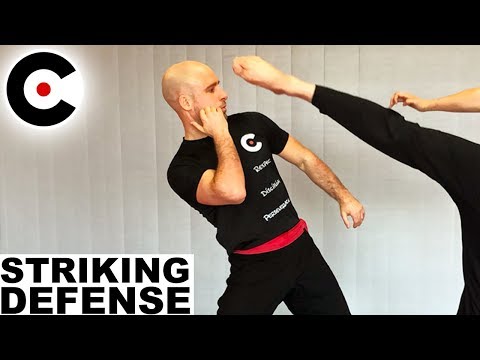
Being able to effectively defend against strikes is an essential part of a complete martial arts education. We will use …
Перевод: Basic Staff Block
Fundamental blocking technique using the shaft of the bo to intercept an incoming strike at mid-range.
The standard bo block (bo uke) represents the foundational receiving technique in bojutsu, appearing in all major Okinawan kobudo traditions. [1] Its mechanics — meeting an incoming strike with the middle third of the staff held in a two-handed grip — reflect principles shared with Japanese jojutsu and medieval European staff fighting, suggesting convergent development across cultures. [2] The technique is preserved in kata such as Shushi no Kon and Choun no Kon, which encode both the block and its immediate counter-attack response as an integrated sequence. [1]
The standard bō block is the fundamental defensive technique using the staff to intercept incoming strikes. [1]
Standard bō blocking was codified in both Okinawan and Japanese staff-fighting traditions. [1]
Standard bō blocks are fundamental components of kobudō kata performed in competition. [1]
Изображений для этой техники пока нет.
Войдите, чтобы предложить изображение.
Being able to effectively defend against strikes is an essential part of a complete martial arts education. We will use …
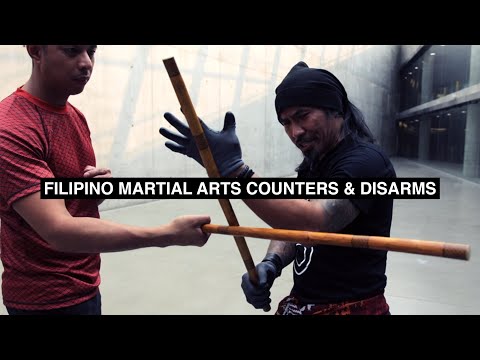
Learn More About The Filipino Martial Art Pintados: https://budobrothers.tv/pages/pintados The best defense is offense …
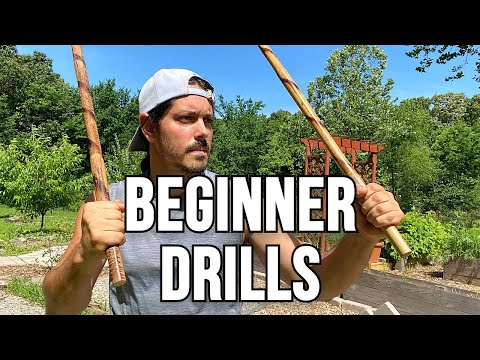
Join my online school and purchase Kali gear today at: https://www.kalicenter.com/ Join my online Kali school and start…
The standard bo block represents a foundational defensive technique in staff-based martial arts, serving multiple functions across different distance ranges and attack angles. Budo Brothers emphasizes the biomechanical principle of controlling the opponent's weapon after initial contact, detailing how palm-up positioning along various angles—high, middle, and low—enables practitioners to neutralize strikes and thrusts while preventing weapon withdrawal. This control facilitates follow-up disarms or counterstrikes. The instruction stresses body weight management and positional awareness, noting that stepping mechanics and stance adjustments determine defensive success across all four corner angles of the staff's reach. Grappling SMARTY presents blocking within a broader defensive framework, positioning it as part of four layered striking defense strategies alongside avoidance, deviation, and head movement. Their turtle block variant—using palms or knuckles in close range—represents the final defensive layer when distance cannot be maintained, applicable to both linear strikes and kicks with emphasis on controlled partner training for safety. Kali Center's approach focuses on double-stick broken strike mechanics, where strikes retract to their originating side, contrasting with fluid strikes that pass through the centerline. While not explicitly addressing blocking mechanics, their systematic drilling methodology demonstrates foundational weapon handling that underpins blocking competency. All three instructors converge on the principle that proper blocking requires understanding attack angles, maintaining structural integrity, and positioning for counter-action.
Сформировано на основе 3 инструкторов
Учебных курсов по этой технике пока нет.
Войдите, чтобы предложить курс.
Риск травмы для человека, к которому применяется техника
Staff/bo/jo weapons generate significant blunt force; fracture risk
Уровень мастерства, необходимый для надёжного выполнения техники
Разрешена ли техника по основным соревновательным правилам
The Essence of Okinawan Karate-Do (Shoshin Nagamine, 1976)
Alias sources — [1] Kobudo: Okinawan Weapons (Demura, 1976) [2] Comprehensive Asian Fighting Arts (Draeger & Smith, 1969) [3] Comprehensive Asian Fighting Arts (Draeger & Smith, 1969)
History sources — [1] Bishop, M., Okinawan Kobudo (Tuttle, 1999) [2] Draeger, D. & Smith, R., Comprehensive Asian Fighting Arts (Kodansha, 1969)
Established Japanese martial arts naming convention — native Japanese term (和語/漢語)
Alias sources — [1] Kobudo: Okinawan Weapons (Demura, 1976) [2] Comprehensive Asian Fighting Arts (Draeger & Smith, 1969) [3] Comprehensive Asian Fighting Arts (Draeger & Smith, 1969)
History sources — [1] Bishop, M., Okinawan Kobudo (Tuttle, 1999) [2] Draeger, D. & Smith, R., Comprehensive Asian Fighting Arts (Kodansha, 1969)
wrist snap speed, sliding grip coordination, hip rotation
long reach and strong wrists for staff manipulation
forearms, wrist rotators, core rotators, shoulders
According to Grappling SMARTY, at long range you have two main options: use mobility to stay outside of range by moving at angles rather than straight back, or block and deviate with minimal movement while keeping your hands in front. Both strategies should set you up to counter when the opportunity arises.
Grappling SMARTY explains that blocking or deviating happens at long range while standing your ground, whereas head movement like slipping, leaning back, and ducking is used at closer range to avoid strikes and create openings for counter strikes.
Grappling SMARTY describes turtle blocks or close-range blocks as arguably the most important last line of defense—a solid, reliable way to protect your face, body, and chin when all other defensive strategies fail.
According to Grappling SMARTY, start with slow strikes and build speed gradually as your partner gets comfortable. Aim for an 80% success rate (about one in five punches landing) once they improve, and always prioritize safety over power—your partner should help you get better, not knock you out.
Fundamental blocking technique using the shaft of the bo to intercept an incoming strike at mid-range.
The standard bo block (bo uke) represents the foundational receiving technique in bojutsu, appearing in all major Okinawan kobudo traditions. Its mechanics — meeting an incoming strike with the middle third of the staff held in a two-handed grip — reflect principles shared with Japanese jojutsu and medieval European staff fighting, suggesting convergent development across cultures.
Traditional martial arts: разрешён — Practiced in traditional kata/forms and weapon-specific competition under var…; IWUF: разрешён — Legal in wushu taolu if applicable; HEMA: разрешён — Legal in applicable historical weapon categories
Оценка опасности 7/10. Very High — staff/bo/jo weapons generate significant blunt force; fracture risk
Стандартная цепочка подготовки: Ready Position → Distance Control → Execute Technique → Return to Guard.
Стандартные контрприёмы: Guard Position — return to a defensive ready stance / Distance Management — control the measure to avoid being in range / Counter-Attack — strike during the opponent's recovery or between movements.
Распространённые варианты: Overhead strike (bringing the staff down from above in a vertical arc); Lateral strike (horizontal sweep targeting the ribs or head); Thrust (straight thrust with the end of the staff); Butt-end strike (striking with the rear end of the staff at close range).
Standard bō blocks are fundamental components of kobudō kata performed in competition.
Основные ошибки, на которые стоит обратить внимание: Blocking too late — catching a strike at full speed is jarring; intercept early when the attack is still developing / Not angling the staff for deflection — a flat block absorbs all the force; a 45-degree angle redirects it / Keeping the rear hand passive — the rear hand must be active, ready to drive the counter-strike / Standing flat-footed during the block — the feet must shift to support the blocking angle.
Standard Bo Block также известен как Jodan Bo Uke, Basic Staff Block, Standard Bo Defence.