BO STAFF - Real Fight
0
Staff Weapon·Kung Fu & Tai Chi Center w/ Jake Mace
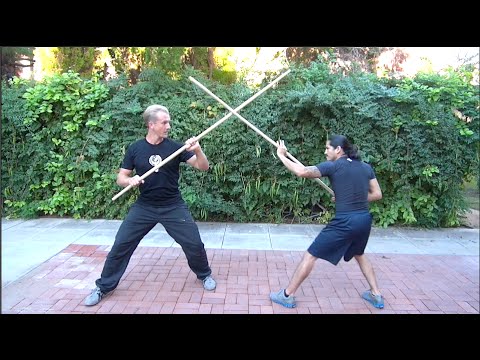
BO STAFF - Real Fight. This is how we train for fighting with the Chinese Bo Staff. This is a short clip from our Bran…
Перевод: staff weapon
Staff weapons are among the oldest and most universal implements of combat, with evidence of organised staff fighting in ancient Egypt, China, India, and Europe predating written military treatises. [1] In East Asia, the bo (long staff) and jo (short staff) became central weapons in Okinawan kobudo and Japanese koryu bujutsu, formalised into systematic curricula by the Edo period (1603–1868). [2] In medieval Europe, the quarterstaff was widely regarded as the common man's weapon and was documented in English and German fight manuals from the 15th century onward, with George Silver declaring it superior to the sword in his 1599 treatise. [3] Staff weapons persist in modern martial arts practice through jodo (adopted by the All Japan Kendo Federation in 1968), kobudo tournaments, and HEMA quarterstaff reconstruction. [2],[3]
Staff weapons are among the most accessible and effective weapons across all cultures, offering excellent reach, versatility, and defensive capability with minimal training time. [1]
Staff weapon competition exists in multiple formats: kobudō kata (WKF), AJKF jōdō, HEMA quarterstaff, and South African Zulu stick fighting (nguni). [1]
Изображений для этой техники пока нет.
Войдите, чтобы предложить изображение.
BO STAFF - Real Fight. This is how we train for fighting with the Chinese Bo Staff. This is a short clip from our Bran…
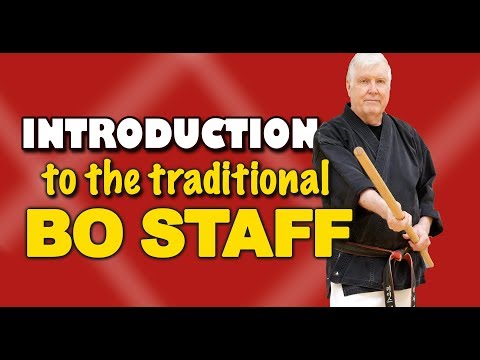
The bo from modern tournaments isn't the traditional staff from Okinawan Kobudo. Here's a brief introduction to the real…
Учебных курсов по этой технике пока нет.
Войдите, чтобы предложить курс.
Риск травмы для человека, к которому применяется техника
Staff/bo/jo weapons generate significant blunt force; fracture risk
Уровень мастерства, необходимый для надёжного выполнения техники
Разрешена ли техника по основным соревновательным правилам
The Essence of Okinawan Karate-Do (Shoshin Nagamine, 1976)
Alias sources — [1] MMA Instruction Manual (UFC, 2008) [2] MMA Instruction Manual (UFC, 2008) [3] MMA Instruction Manual (UFC, 2008)
History sources — [1] Draeger, D. & Smith, R., Comprehensive Asian Fighting Arts (Kodansha, 1969) [2] Draeger, D., Classical Bujutsu (Weatherhill, 1973) [3] Anglo, S., The Martial Arts of Renaissance Europe (Yale University Press, 2000)
Established Japanese martial arts naming convention — native Japanese term (和語/漢語)
Alias sources — [1] MMA Instruction Manual (UFC, 2008) [2] MMA Instruction Manual (UFC, 2008) [3] MMA Instruction Manual (UFC, 2008)
History sources — [1] Draeger, D. & Smith, R., Comprehensive Asian Fighting Arts (Kodansha, 1969) [2] Draeger, D., Classical Bujutsu (Weatherhill, 1973) [3] Anglo, S., The Martial Arts of Renaissance Europe (Yale University Press, 2000)
wrist snap speed, sliding grip coordination, hip rotation
long reach and strong wrists for staff manipulation
forearms, wrist rotators, core rotators, shoulders
Каждое движение в любом боевом искусстве обладает рядом универсальных свойств. Комбинируйте параметры ниже, чтобы найти нужный инструмент или сравнить аналоги из разных стилей.
Japanese long staff (rokushakubo, approximately 6 feet) techniques including strikes, blocks, and sweeps from Okinawan kobudo and mainland traditions.
Japanese short staff (jo, approximately 4 feet) techniques blending striking, thrusting, and sweeping, notably systematized in Shinto Muso-ryu.
European quarterstaff fighting using a 6-8 foot hardwood staff, documented in English and German fight manuals from the medieval period onward.
Staff weapons — bo (6-foot), jo (4-foot), quarterstaff — are the most universally available weapons in history. Quarterstaff appears in 47 passages across 17 books. Silver's Paradoxes of Defence (1599) ranks the staff as the supreme weapon above the sword. (17+ books; Silver, Paradoxes of Defence; Draeger, Classical Budo)
Hold the staff about one-third of the way through the middle, with one palm up and one palm down. This grip gives you control and allows you to twirl it effectively by dipping to one side and then the other. Keith Yates emphasizes keeping your index knuckle on top of the staff so you don't lose it on impact.
Use a narrow stance with your feet flat rather than a traditional forward stance, which prevents you from being able to twirl the staff side to side effectively. Keith Yates notes this narrow stance is essential for maintaining control during rotations and strikes.
Keep your elbows down and in close to your body when striking—avoid raising them away from your torso as this causes loss of control. Lock the staff into your hip and come straight down with strikes to maintain stability and power.
When reversing your grip, keep your hand and flesh in contact with the wood of the weapon rather than letting it slide away from your body. This maintains control and prevents the staff from becoming unstable during the grip transition.
Techniques using long and short staff weapons, spanning Japanese bojutsu and jojutsu as well as European quarterstaff traditions.
Staff weapons are among the oldest and most universal implements of combat, with evidence of organised staff fighting in ancient Egypt, China, India, and Europe predating written military treatises. In East Asia, the bo (long staff) and jo (short staff) became central weapons in Okinawan kobudo and Japanese koryu bujutsu, formalised into systematic curricula by the Edo period (1603–1868).
Traditional martial arts: разрешён — Practiced in traditional kata/forms and weapon-specific competition under var…; IWUF: разрешён — Legal in wushu taolu if applicable; HEMA: разрешён — Legal in applicable historical weapon categories
Оценка опасности 7/10. Very High — staff/bo/jo weapons generate significant blunt force; fracture risk
Стандартная цепочка подготовки: Grip and Stance → Chamber → Strike → Recovery.
Стандартные контрприёмы: Guard Position — return to a defensive ready stance / Distance Management — control the measure to avoid being in range / Counter-Attack — strike during the opponent's recovery or between movements.
Распространённые варианты: Overhead strike (bringing the staff down from above in a vertical arc); Lateral strike (horizontal sweep targeting the ribs or head); Thrust (straight thrust with the end of the staff); Butt-end strike (striking with the rear end of the staff at close range).
Staff weapon competition exists in multiple formats: kobudō kata (WKF), AJKF jōdō, HEMA quarterstaff, and South African Zulu stick fighting (nguni).
Основные ошибки, на которые стоит обратить внимание: Gripping the staff too tightly — a relaxed grip allows faster weapon manipulation and reduces fatigue / Using only one end of the staff — both ends should be used for attacks and blocks / Standing too close to the opponent — the staff's advantage is reach; maintain distance to exploit it / Not using the staff's leverage — the staff creates mechanical advantage; use it for sweeps, locks, and deflections.
Staff Weapon также известен как Bō-jutsu, Staff Arts, Stick Fighting — Long, Bojutsu-Jojutsu.