Spear damage | The Impaling Thrust
0
Spear Thrust·Gates of Valhalla
Перевод: Spear Thrust
The Spear Thrust subfamily covers the primary offensive technique in sojutsu — the straight thrust of the yari blade into the opponent's body, which is the defining attack of spear combat worldwide. [1] The spear thrust exploits the weapon's greatest advantage: range — the yari's length (typically 6-9 feet) allows the practitioner to attack from outside the effective range of swords, naginata, and other shorter weapons. [1],[2] Sojutsu thrusting technique emphasises rapid, snapping thrusts that retract immediately after contact, rather than committed lunges, allowing the practitioner to maintain distance and deliver multiple thrusts in rapid succession. [2],[3]
The straight thrust has been the defining technique of spear combat in every culture, and Japanese sojutsu refined it to a high art during the centuries of active warfare in the Sengoku period. [1] The Hozoin-ryu school's jumonji-yari (cross-bladed spear) added the ability to hook and trap after the thrust, expanding the thrust's tactical applications beyond simple penetration. [2],[3]
The spear thrust is the primary attack with any spear-type weapon, using the weapon's extreme reach to engage targets from the greatest possible distance. [1]
Spear thrusting is competed in Chinese wushu (gun-shu), naginata competition (tsuki), and demonstrated in sōjutsu at koryū events. [1]
Изображений для этой техники пока нет.
Войдите, чтобы предложить изображение.
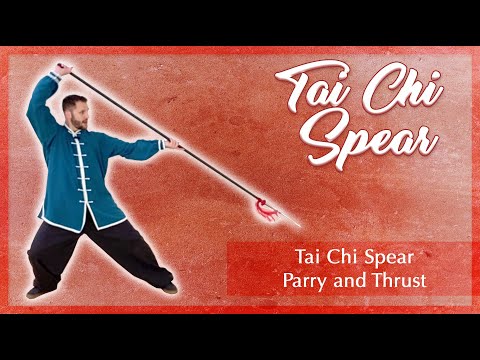
https://lkchensword.com/gourd-shape-spear In this video we cover one of the most important fundamental spear techniques…
Учебных курсов по этой технике пока нет.
Войдите, чтобы предложить курс.
Риск травмы для человека, к которому применяется техника
Spears, halberds, and naginata; maximum reach with lethal cutting/thrusting capability
Уровень мастерства, необходимый для надёжного выполнения техники
Разрешена ли техника по основным соревновательным правилам
Chinese Martial Arts Training Manuals (Brian Kennedy & Elizabeth Guo, 2005)
Alias sources — [1] Japanese Swordsmanship (Warner & Draeger, 1982) [2] Comprehensive Asian Fighting Arts (Draeger & Smith, 1969) [3] Secrets of the Samurai (Ratti & Westbrook, 1973)
Effectiveness sources — [1] Comprehensive Asian Fighting Arts (Draeger & Smith, 1969)
Established Japanese martial arts naming convention — native Japanese term (和語/漢語)
Alias sources — [1] Japanese Swordsmanship (Warner & Draeger, 1982) [2] Comprehensive Asian Fighting Arts (Draeger & Smith, 1969) [3] Secrets of the Samurai (Ratti & Westbrook, 1973)
Effectiveness sources — [1] Comprehensive Asian Fighting Arts (Draeger & Smith, 1969)
wrist control for edge alignment, grip endurance, footwork precision
quick wrists, strong forearms, good posture
forearm extensors/flexors, deltoids, core, calves
Каждое движение в любом боевом искусстве обладает рядом универсальных свойств. Комбинируйте параметры ниже, чтобы найти нужный инструмент или сравнить аналоги из разных стилей.
According to the Chinese martial arts maxim 'front hand loop, back hand lock,' your front hand should guide and aim the spear with a loose, looping grip, while your back hand grips tightly at the base of the spear to generate power. Sifu Kuttel emphasizes keeping your back hand all the way at the base with no extra spear behind it for full extension.
Your front hand is used for aiming and guiding the spear, while your back hand is locked in position to generate the power for the thrust. Sifu Kuttel notes that the front hand should maintain a loose grip so you can slide the spear back and forth.
Step back with your rear foot and shift your weight back to block an incoming thrust (high or low), then shift forward slightly while pressing and thrusting. Sifu Kuttel notes the importance of keeping the spear up throughout the technique rather than focusing only on the forward thrust.
The Spear Thrust subfamily covers the primary offensive technique in sojutsu — the straight thrust of the yari blade into the opponent's body, which is the defining attack of spear combat worldwide. The spear thrust exploits the weapon's greatest advantage: range — the yari's length (typically 6-9 feet) allows the practitioner to attack from outside the effective range of swords, naginata, and other shorter weapons.
The straight thrust has been the defining technique of spear combat in every culture, and Japanese sojutsu refined it to a high art during the centuries of active warfare in the Sengoku period. The Hozoin-ryu school's jumonji-yari (cross-bladed spear) added the ability to hook and trap after the thrust, expanding the thrust's tactical applications beyond simple penetration.
FIE: разрешён — Legal thrusting technique — primary scoring method in foil and épée; FIK Kendo: разрешён — Tsuki (throat thrust) is a valid target; HEMA: разрешён — Legal in applicable weapon categories
Оценка опасности 9/10. Extreme — spears, halberds, and naginata; maximum reach with lethal cutting/thrusting capability
Стандартная цепочка подготовки: Assume Guard (Kamae/Hut) → Measure Distance (Ma-ai) → Initiate Cut/Thrust → Follow Through (Zanshin).
Стандартные контрприёмы: Parry (Absetzen) — deflect the incoming blade with a counter-displacement / Void (Step Back) — withdraw from measure to avoid the cutting arc / Counter-Cut (Nachreisen) — strike into the opponent's opening during their attack.
Распространённые варианты: Standard cut (primary cutting angle from the ready stance); Thrust (tsuki) (straight thrust targeting the throat, chest, or face); Rising cut (kiri-age) (upward diagonal cut from low to high); Diagonal cut (kesa-giri) (downward diagonal cut following the kimono line).
Spear thrusting is competed in Chinese wushu (gun-shu), naginata competition (tsuki), and demonstrated in sōjutsu at koryū events.
Основные ошибки, на которые стоит обратить внимание: Over-committing to the thrust — extend and retract; a fully committed thrust that stays extended invites the opponent… / Thrusting with arm power only — the legs and hips drive the thrust; arm-only thrusts lack reach and penetration / Not retracting immediately — the extended spear is vulnerable to being grabbed, pushed aside, or used to pull the fig… / Telegraphing with the shoulders — the thrust should initiate from the hands with minimal body preparation.
Spear Thrust также известен как Yari Tsuki, Spear Jab, Sojutsu Thrust.