Japanese Spear Fighting: Sojutsu
0
Sojutsu — Spear·Ronin Dave
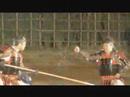
Here's a collection of a few demonstrations of Sojutsu - Japanese spear fighting. The spear not the sword was the mai…
Перевод: Spear Art
The Sojutsu (Spear) family covers Japanese spear fighting techniques using the yari, a straight-bladed spear that became the dominant battlefield weapon of the Sengoku period (1467-1615), surpassing the sword and naginata in military importance. [1] Sojutsu emphasises the thrust as the primary attack, exploiting the spear's superior reach and the penetrating power of the straight blade, but also includes sweeping, deflecting, and striking techniques using the shaft. [1],[2] The yari comes in numerous blade configurations — su-yari (straight blade), jumonji-yari (cross-shaped blade), and kata-kama-yari (single-hooked blade) — each offering different tactical possibilities. [2],[3] Sojutsu is preserved in several koryu bujutsu schools including Hozoin-ryu (founded at Hozoin temple in Nara) and Saburi-ryu, and remains one of the most revered classical Japanese weapon arts. [3]
The yari became Japan's most important battlefield weapon during the Sengoku period, when massed spear formations proved devastatingly effective in large-scale warfare. [1] The legendary warrior monk Hozoin In'ei (1521-1607) founded Hozoin-ryu sojutsu, developing the cross-bladed jumonji-yari technique that became one of the most famous spear schools in Japanese history. [2],[3] As firearms rendered the spear obsolete on the battlefield after the unification of Japan under the Tokugawa shogunate, sojutsu continued as a martial art practiced in koryu traditions. [3]
The spear (yari) was the most widely used battlefield weapon in Japan, valued above the sword for its reach, ease of training, and effectiveness in formation combat. [1] Draeger notes that the spear was the primary weapon of the ashigaru (foot soldiers) and that even elite samurai considered sojutsu essential for battlefield conditions. [2]
Major sojutsu schools include the Hozoin-ryu (founded by Hozoin In'ei, 16th century, famous for the cross-bladed kamayari), and sojutsu curricula within comprehensive schools such as Tenshin Shoden Katori Shinto-ryu and Takenouchi-ryu. [1]
Sōjutsu (spear art) is practised within classical Japanese martial arts schools and demonstrated at koryū embu events. The Hōzōin-ryū and Saburi-ryū are among the most notable surviving spear traditions. [1]
Изображений для этой техники пока нет.
Войдите, чтобы предложить изображение.
Here's a collection of a few demonstrations of Sojutsu - Japanese spear fighting. The spear not the sword was the mai…
Учебных курсов по этой технике пока нет.
Войдите, чтобы предложить курс.
Риск травмы для человека, к которому применяется техника
Spears, halberds, and naginata; maximum reach with lethal cutting/thrusting capability
Уровень мастерства, необходимый для надёжного выполнения техники
Разрешена ли техника по основным соревновательным правилам
Chinese Martial Arts Training Manuals (Brian Kennedy & Elizabeth Guo, 2005)
Alias sources — [1] Kodokan Judo (Kano, 1986) [2] Kodokan Judo (Kano, 1986) [3] Kodokan Judo (Kano, 1986)
Effectiveness sources — [1] Draeger, D., Classical Bujutsu (Weatherhill, 1973) [2] Draeger, D. & Smith, R., Comprehensive Asian Fighting Arts (Kodansha, 1969)
Established Japanese martial arts naming convention — native Japanese term (和語/漢語)
Alias sources — [1] Kodokan Judo (Kano, 1986) [2] Kodokan Judo (Kano, 1986) [3] Kodokan Judo (Kano, 1986)
Effectiveness sources — [1] Draeger, D., Classical Bujutsu (Weatherhill, 1973) [2] Draeger, D. & Smith, R., Comprehensive Asian Fighting Arts (Kodansha, 1969)
wrist control for edge alignment, grip endurance, footwork precision
quick wrists, strong forearms, good posture
forearm extensors/flexors, deltoids, core, calves
Каждое движение в любом боевом искусстве обладает рядом универсальных свойств. Комбинируйте параметры ниже, чтобы найти нужный инструмент или сравнить аналоги из разных стилей.
The Spear Sweep subfamily covers techniques that use the shaft of the yari in sweeping arcs to strike, deflect, or unbalance the opponent, employing the weapon as a staff rather than using the blade to thrust. [1] Sweeping techniques are an important secondary application of the spear, used when the opponent has closed inside thrusting range or when the practitioner needs to create distance by sweeping the opponent's weapon or body. [1,2] The spear sweep uses the butt end (ishizuki) or the middle of the shaft to strike the opponent's legs, arms, or weapon, or to push the opponent off balance. [2,3]
The Spear Thrust subfamily covers the primary offensive technique in sojutsu — the straight thrust of the yari blade into the opponent's body, which is the defining attack of spear combat worldwide. [1] The spear thrust exploits the weapon's greatest advantage: range — the yari's length (typically 6-9 feet) allows the practitioner to attack from outside the effective range of swords, naginata, and other shorter weapons. [1,2] Sojutsu thrusting technique emphasises rapid, snapping thrusts that retract immediately after contact, rather than committed lunges, allowing the practitioner to maintain distance and deliver multiple thrusts in rapid succession. [2,3]
The Japanese spear (yari) appears extensively in our corpus alongside naginata and other polearms. Sojutsu (spear art) was one of the major battlefield arts of the samurai — the spear had greater reach than the sword and was considered the primary infantry weapon. (Draeger, Classical Budo; Japanese martial arts texts)
The Sojutsu (Spear) family covers Japanese spear fighting techniques using the yari, a straight-bladed spear that became the dominant battlefield weapon of the Sengoku period (1467-1615), surpassing the sword and naginata in military importance. Sojutsu emphasises the thrust as the primary attack, exploiting the spear's superior reach and the penetrating power of the straight blade, but also includes sweeping, deflecting, and striking techniques using the shaft.
The yari became Japan's most important battlefield weapon during the Sengoku period, when massed spear formations proved devastatingly effective in large-scale warfare. The legendary warrior monk Hozoin In'ei (1521-1607) founded Hozoin-ryu sojutsu, developing the cross-bladed jumonji-yari technique that became one of the most famous spear schools in Japanese history.
Traditional martial arts: разрешён — Practiced in traditional kata/forms and weapon-specific competition under var…; IWUF: разрешён — Legal in wushu taolu if applicable; HEMA: разрешён — Legal in applicable historical weapon categories
Оценка опасности 9/10. Extreme — spears, halberds, and naginata; maximum reach with lethal cutting/thrusting capability
Стандартная цепочка подготовки: Assume Guard (Kamae/Hut) → Measure Distance (Ma-ai) → Initiate Cut/Thrust → Follow Through (Zanshin).
Стандартные контрприёмы: Parry (Absetzen) — deflect the incoming blade with a counter-displacement / Void (Step Back) — withdraw from measure to avoid the cutting arc / Counter-Cut (Nachreisen) — strike into the opponent's opening during their attack.
Распространённые варианты: Standard cut (primary cutting angle from the ready stance); Thrust (tsuki) (straight thrust targeting the throat, chest, or face); Rising cut (kiri-age) (upward diagonal cut from low to high); Diagonal cut (kesa-giri) (downward diagonal cut following the kimono line).
Sōjutsu (spear art) is practised within classical Japanese martial arts schools and demonstrated at koryū embu events. The Hōzōin-ryū and Saburi-ryū are among the most notable surviving spear traditions.
Основные ошибки, на которые стоит обратить внимание: Using the spear as a pole — the spear is a precision weapon; random sweeping wastes its primary advantage of the point / Standing too close — the spear's advantage is reach; allowing opponents inside the point's range negates the weapon / Neglecting the shaft — the shaft (nagae) is used for blocking, sweeping, and butt-end strikes; it is not merely a handle / Thrusting slowly — the spear thrust must be extremely fast; a slow thrust is easily deflected.
Sojutsu — Spear также известен как Yarijutsu, Spear Fighting, Japanese Spear Art.