The Right Way to Fight with a Katana
0
Standard Naginata Thrust·Let's ask Shogo | Your Japanese Friend in Kyoto
▼The BEST online katana shop for martial arts (Iaido, Kendo, etc.): Tozando▼ https://tozandoshop.com/letsaskshogo *This …
Перевод: Basic Naginata Thrust
The Standard Naginata Thrust executes the straight thrusting attack by driving the naginata forward along its longitudinal axis, directing the kissaki (blade point) at the opponent's tsuki (throat) target. [1] The thrust is delivered by extending both arms forward while driving with the rear hip and stepping forward, keeping the blade aligned with the centreline. [1],[2] The standard thrust requires compensating for the naginata's curved blade, which offsets the point from the shaft's centreline — the practitioner must angle the shaft slightly to align the kissaki with the intended target. [2],[3]
The standard naginata thrust is a direct forward thrust targeting the throat, using the weapon's full reach. [1]
Standard naginata thrusting was codified in modern atarashii naginata from classical naginatajutsu technique. [1]
Standard naginata thrusts are scored in competition at all levels. [1]
Изображений для этой техники пока нет.
Войдите, чтобы предложить изображение.
▼The BEST online katana shop for martial arts (Iaido, Kendo, etc.): Tozando▼ https://tozandoshop.com/letsaskshogo *This …
Join my Online Kali School and buy training gear here: https://www.kalicenter.com/ Subscribe to My NEW Kali Center Vlog…
🎫Purchase Your Ticket to the Annual Asayama Ichiden Ryu Training Camp in Japan: https://asayamaichidenryu.shop/products…
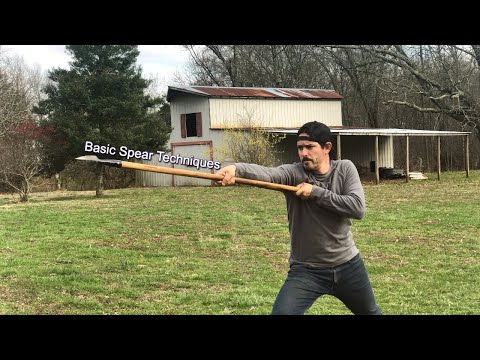
The standard naginata thrust is fundamentally a linear penetrating attack executed from a guarded stance, emphasizing range and center-line protection. Kali Center's Paul Ingram describes two primary thrust variations: the short thrust, executed with minimal hand extension while keeping the rear hand near the plexus, and the long-range thrust, where the rear hand extends beneath the forward armpit for extended reach. Both maintain the weapon's tip at eye level to simultaneously threaten the opponent's head and defend the user's face. Ingram emphasizes that the thrust is the primary tactical application of polearms, with the weapon's length functioning as offensive reach and defensive barrier. The stance features one foot forward with the opposite hand chambered at the hip, and the rear hand controls the mid-section. Critically, practitioners must avoid dropping the tip after thrust completion, as this exposes the face. While Shogo's katana instruction addresses sword mechanics rather than polearms directly, his emphasis on power distribution—with the rear hand providing primary force—parallels polearm mechanics. The standard naginata thrust differs from slashing techniques, which Ingram presents as secondary recovery movements used to close the center line after thrusts are parried, rather than primary offensive tactics.
Сформировано на основе 3 инструкторов
Учебных курсов по этой технике пока нет.
Войдите, чтобы предложить курс.
Риск травмы для человека, к которому применяется техника
Spears, halberds, and naginata; maximum reach with lethal cutting/thrusting capability
Уровень мастерства, необходимый для надёжного выполнения техники
Разрешена ли техника по основным соревновательным правилам
Kodokan Judo (Jigoro Kano, 1986)
Alias sources — [1] Japanese Swordsmanship (Warner & Draeger, 1982) [2] Comprehensive Asian Fighting Arts (Draeger & Smith, 1969) [3] Comprehensive Asian Fighting Arts (Draeger & Smith, 1969)
Effectiveness sources — [1] Classical Bujutsu (Draeger, 1973)
Established Japanese martial arts naming convention — native Japanese term (和語/漢語)
Alias sources — [1] Japanese Swordsmanship (Warner & Draeger, 1982) [2] Comprehensive Asian Fighting Arts (Draeger & Smith, 1969) [3] Comprehensive Asian Fighting Arts (Draeger & Smith, 1969)
Effectiveness sources — [1] Classical Bujutsu (Draeger, 1973)
two-handed coordination, hip rotation for power, distance management
tall reach, strong shoulders for extended weapon handling
shoulders, core rotators, forearms, quadriceps
Keep your left hand near the hip and your right hand around the plexus area, with the weapon tip positioned between your opponent's eyes. When you thrust, bring your left hand up to plexus level, then return it to the hip as you retract—never drop the tip of the spear after thrusting, as this opens your face.
Keeping the tip high protects your head and allows you to defend your lower body if needed, while keeping your face protected. If the tip is low, your face becomes exposed and you won't have time to bring the weapon back up in defense.
The short thrust uses minimal hand extension with the left hand stopping at plexus level, while the long range thrust extends further, driving from the armpit. In both cases, the tip should never leave eye level and should be brought back to ready position without dropping.
The Standard Naginata Thrust executes the straight thrusting attack by driving the naginata forward along its longitudinal axis, directing the kissaki (blade point) at the opponent's tsuki (throat) target. The thrust is delivered by extending both arms forward while driving with the rear hip and stepping forward, keeping the blade aligned with the centreline.
Standard naginata thrusting is one of the core techniques in both koryu naginata systems and modern competitive naginata. The thrust provides a critical complement to the naginata's dominant cutting game, giving the practitioner a linear attack option at maximum range.
FIE: разрешён — Legal thrusting technique — primary scoring method in foil and épée; FIK Kendo: разрешён — Tsuki (throat thrust) is a valid target; HEMA: разрешён — Legal in applicable weapon categories
Оценка опасности 9/10. Extreme — spears, halberds, and naginata; maximum reach with lethal cutting/thrusting capability
Стандартная цепочка подготовки: Ready Position → Distance Control → Execute Technique → Return to Guard.
Стандартные контрприёмы: Parry (Absetzen) — deflect the incoming blade with a counter-displacement / Void (Step Back) — withdraw from measure to avoid the cutting arc / Counter-Cut (Nachreisen) — strike into the opponent's opening during their attack.
Распространённые варианты: Standard technique (primary execution from the most common grip and stance); Competition variation (adapted for sport-specific rules and scoring); Traditional variation (classical execution as taught in the traditional art); Combination variation (chained with preceding or following techniques in a flow).
Standard naginata thrusts are scored in competition at all levels.
Основные ошибки, на которые стоит обратить внимание: Pushing forward with the whole body — the thrust extends the arms; the body stays centred over the feet for balance / Not sliding the rear hand — the sliding technique adds critical reach; without it, the thrust falls short / Deviating from the straight line — the point must travel directly to the target; curved paths slow the thrust and miss / Not retracting after the thrust — the extended position is vulnerable; snap the naginata back immediately.
Standard Naginata Thrust также известен как Straight Naginata Thrust, Naginata Tsuki Waza, Basic Glaive Thrust.