Osoto Gari's Most Important Detail
0
Standard O Soto Gari·Shintaro Higashi
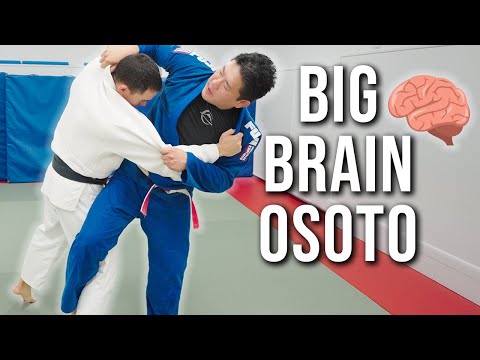
Osoto gari is a thinker's move. Use this new knowledge to out maneuver your opponents. Check out the Instructionals belo…
Перевод: major outer reap
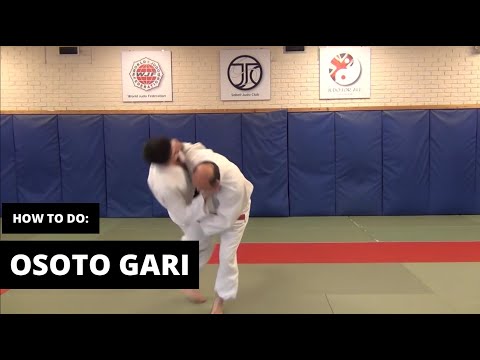
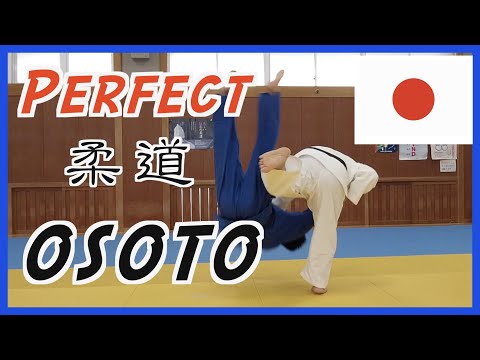
Standard O Soto Gari executes the classical major outer reap where the thrower steps alongside the opponent, drives the upper body backward with the hands, and reaps the opponent's near leg from behind with a powerful backward sweep of the calf against the opponent's calf. [1] The reaping leg swings through in an arc, making contact behind the opponent's knee or calf and driving the leg forward while the opponent falls backward. [1],[2] The technique requires strong kuzushi to the rear corner, loading the opponent's weight onto the leg that is about to be reaped. [2],[3]
O soto gari is one of the most powerful throws in judo, generating high impact force through the combination of a strong rearward upper-body drive and a sweeping reap of the opponent's leg. [1] Inokuma and Sato rate it among the highest-percentage throws for ippon, particularly effective against opponents who adopt a defensive upright posture. [2] The technique's directness — attacking in a straight line to the rear — makes it one of the most reliable throws for scoring in both judo and MMA. [3]
O soto gari was included in Jigoro Kano's original 1895 gokyo no waza as a first-set technique, making it one of the foundational throws of Kodokan judo. [1] It has been transmitted through every Kodokan-lineage school worldwide and is universally taught as one of the first throwing techniques to beginners. [2] The technique also appears in sambo (as podnozhka) and in traditional wrestling systems across multiple cultures. [3]
O soto gari is consistently among the top five most frequently scored throws at IJF World Championships and Olympic Games. [1] Yasuhiro Yamashita (JPN), who won 203 consecutive matches including the 1984 Olympic gold at heavyweight, used o soto gari as one of his primary weapons. [2] Teddy Riner (FRA), the most decorated heavyweight judoka in history with 10 World Championship titles and 3 Olympic golds, employs o soto gari as a signature technique. [3]
Изображений для этой техники пока нет.
Войдите, чтобы предложить изображение.
Osoto gari is a thinker's move. Use this new knowledge to out maneuver your opponents. Check out the Instructionals belo…
How to do Osoto Gari. In this tutorial Sampson Sampson will show you how to do O Soto Gari in depth, covering 4 key pr…
Learn the fundamentals of osoto and apply it do your randori #judo #sports #osotogari #дзюдо
Standard O Soto Gari is executed through coordinated control of the opponent's balance, stepping mechanics, and leg placement. All three instructors emphasize breaking the opponent's balance (kuzushi) using both hands in a specific direction before the throw executes. Shintaro Higashi stresses head control via the lapel/collar hand as the most overlooked yet critical detail—the hand must prevent the opponent from shifting their head away, achieved by creating tightness across the face and controlling the chin. Sampson Judo outlines four key elements: precise stepping forward (roughly one foot distance, with the stepping foot positioned between both fighters' legs), directing the lapel grip to break balance to the side, positioning the other arm underneath the lapel to amplify kuzushi, and avoiding premature foot placement before executing the sweep. FLUID JUDO JAPAN emphasizes taking a big step, raising the throwing leg high, and using momentum to sweep decisively while maintaining balance. All instructors agree that the opponent's weight must be committed to one leg before the reap executes. FLUID JUDO JAPAN and Sampson Judo stress landing on the balls of the feet rather than heels to maintain stability. Timing is crucial—Sampson Judo notes the throw is executed on the supporting leg with the opponent landing in front of the thrower, while FLUID JUDO JAPAN identifies effective openings when the opponent steps backward or when their weight naturally shifts onto the target leg.
Сформировано на основе 3 инструкторов
Учебных курсов по этой технике пока нет.
Войдите, чтобы предложить курс.
Риск травмы для человека, к которому применяется техника
O-Soto-Gari is one of judo's most dangerous throws; direct backward fall onto head/spine (Mifune 1956)
Уровень мастерства, необходимый для надёжного выполнения техники
Разрешена ли техника по основным соревновательным правилам
Kodokan Judo — Official Nage-waza Classification
Traditional Judo throwing technique terminology (Kodokan Institute)
Official Kodokan ground technique classification system
Standard Japanese martial arts terminology (kanji/hiragana)
Established Japanese martial arts naming convention — native Japanese term (和語/漢語)
Traditional Judo throwing technique terminology (Kodokan Institute)
precise timing, ankle coordination, upper body kuzushi ability
excellent balance and quick reflexes
tibialis anterior, calves, hip rotators, forearms (grip)
According to Sampson Judo, you should step at a natural distance—not too far away, which prevents you from reaching with your leg and makes the technique weak, and not too close, which restricts leg movement and makes you vulnerable. All three legs should be approximately the same length when you draw a line with the back of your heel.
Head control with the lapel hand is the most important overlooked detail, according to Shintaro Higashi. This collar hand must control your opponent's head throughout the throw; if it's released or your opponent can turn their head away, the technique becomes much more difficult to complete.
Sampson Judo emphasizes that your hand should go underneath the opponent's lapel as you step in, which both breaks their balance and allows you to push them to the side, establishing control before the leg sweep.
FLUID JUDO JAPAN identifies several critical elements: take a big step, raise your throwing leg high, use momentum to cut strongly, maintain your own balance, use both hands to break the opponent's balance, and ensure the opponent's weight is on one leg before executing the sweep.
Standard O Soto Gari executes the classical major outer reap where the thrower steps alongside the opponent, drives the upper body backward with the hands, and reaps the opponent's near leg from behind with a powerful backward sweep of the calf against the opponent's calf. The reaping leg swings through in an arc, making contact behind the opponent's knee or calf and driving the leg forward while the opponent falls backward.
The standard form of o soto gari is the original technique as codified in the Kodokan gokyo, unchanged in its fundamental mechanics for over a century. It is one of the first throws taught to judo beginners worldwide.
IJF: разрешён — Legal throwing technique; IBJJF: разрешён — Legal at all belt levels; UWW: ограничен — Legal in freestyle, banned in Greco-Roman (no leg attacks below waist); Unified MMA: разрешён — Legal throwing technique; ADCC: разрешён — Legal; FIAS Sport Sambo: разрешён — Legal; FIAS Combat Sambo: разрешён — Legal
Оценка опасности 7/10. Very High — O-Soto-Gari is one of judo's most dangerous throws; direct backward fall onto head/spine (Mifune 1956)
Стандартная цепочка подготовки: Grip Setup (Kumi-kata) → Off-Balance (Kuzushi) → Entry (Tsukuri) → Execution (Kake).
Стандартные контрприёмы: Lower Centre of Gravity — bend knees and drop hips to make the throw harder to execute / Lift the Targeted Leg — raise the foot being attacked above the sweeping action / Counter-Throw — exploit the attacker's committed weight to throw them instead / Grip Break — deny the thrower their preferred gripping configuration.
Распространённые варианты: Forward sweep (sweeping the foot in the direction the opponent is stepping); Rear sweep (sweeping the foot backward as the opponent retreats); Combination sweep (chaining sweeps to both feet); Counter sweep (timing the sweep as the opponent initiates their own attack).
O soto gari is consistently among the top five most frequently scored throws at IJF World Championships and Olympic Games. Yasuhiro Yamashita (JPN), who won 203 consecutive matches including the 1984 Olympic gold at heavyweight, used o soto gari as one of his primary weapons.
Основные ошибки, на которые стоит обратить внимание: Stepping beside the wrong foot — your lead foot must be next to the opponent's lead foot, on the outside / Not driving the opponent backward before reaping — they must be off-balance to the rear first / Reaping with a small, weak leg swing instead of a full, committed arc / Leaning backward during the throw instead of driving chest-forward into the opponent.
Standard O Soto Gari также известен как O Soto Gari, Classical Major Outer Reaping Throw, Standard Large Outer Reap, Standard Outside Leg Reap.