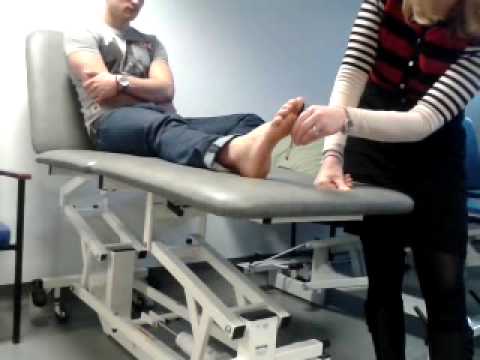
Ankle torsion
0
Supination-Pronation-Torsion·Taushif Patel
This video was uploaded from an Android phone.
Перевод: supination-pronation-torsion
Supination-pronation torsion locks twist the forearm along its longitudinal axis, rotating the radius around the ulna and stressing the radioulnar joints and associated ligaments. [1],[2] Sankyo (三教, third teaching) in aikido is the classic rotational wrist lock that combines pronation with downward pressure. [3],[4],[5]
Supination-pronation torsion locks rotate the forearm against its natural range, attacking the wrist and elbow simultaneously. [1]
Rotational wrist/forearm locks appear in aikido (nikyo, sankyo), jūjutsu, and classical Japanese martial arts. [1]
Rotational wrist locks are used as submissions in BJJ (at brown/black belt) and occasionally in MMA. [1]
Изображений для этой техники пока нет.
Войдите, чтобы предложить изображение.
This video was uploaded from an Android phone.
Учебных курсов по этой технике пока нет.
Войдите, чтобы предложить курс.
Риск травмы для человека, к которому применяется техника
Wrist lock variant targeting carpal and radioulnar joints through forced deviation or torsion
Уровень мастерства, необходимый для надёжного выполнения техники
Разрешена ли техника по основным соревновательным правилам
Aikido — Sankyo (三教); Daito-ryu Aiki-jujutsu
Japanese terminology sourced from Aikido — Sankyo (三教); Daito-ryu Aiki-jujutsu
Classical aiki-jujutsu tradition
Aikido technique naming conventions
Standard Japanese martial arts terminology (kanji/hiragana)
Established Japanese martial arts naming convention — native Japanese term (和語/漢語)
Japanese terminology sourced from Aikido — Sankyo (三教); Daito-ryu Aiki-jujutsu
fine motor control, grip sensitivity, quick hand transitions
dexterous hands with strong fingers
forearm flexors and extensors, intrinsic hand muscles
Каждое движение в любом боевом искусстве обладает рядом универсальных свойств. Комбинируйте параметры ниже, чтобы найти нужный инструмент или сравнить аналоги из разных стилей.
Kote Gaeshi (小手返し, "wrist turn-out") is an outward-rotating wrist technique in which the practitioner turns the opponent's hand outward — combining forearm supination with wrist flexion — to load the radiocarpal and distal radioulnar joints and break the opponent's balance toward their little-finger side. [1] One hand wraps the back of the opponent's hand so the thumb sits across the base of the knuckles and the fingers cup the little-finger edge, while the other hand fixes the forearm; rotating the hand outward and down drives the torsion through the wrist and forearm. [2] In aikido, aikijujutsu, and classical jujutsu it is most often expressed as a throw: the wrist torsion off-balances the attacker and projects them to the ground, where the same grip is retained as a pin or wrist submission. [1,3] In Brazilian jiu-jitsu and submission grappling — and as self-defence in judo, where its competitive use is restricted — the identical mechanic is applied as a standing or ground wrist lock. [4] Because the wrist is a small joint with little muscular protection, kote gaeshi can be effective at low force, so controlling the speed of the rotation is essential to avoid injury.
Small Wrap Hand (小纏手, Xiǎo Chán Shǒu — "small wrap/coil hand") is an outward-rotating wrist lock from Chinese Qin Na (擒拿, the joint-locking art embedded across Chinese martial styles), documented by Dr. Yang Jwing-Ming as a White Crane (Bai He) technique. [1] The practitioner covers the opponent's grabbing hand and locks the index finger so it cannot open, raises the captured hand to set the locking angle, then wraps the hand around the outside of the opponent's wrist and presses down with the fingers pointing downward — keeping the opponent's elbow bent and lower than the wrist so they cannot turn the body and escape. [1] Yang classifies it under "Dividing the Muscle/Tendon" (Fen Jin, 分筋) applied at the wrist, and describes the finish as a form of "crane wing dropping" that drives the opponent face-down to the ground. [1] Mechanically it is the coiling, two-handed counterpart of Japanese kote gaeshi: the same outward wrist rotation, but named for the wrapping grip (纏, "to coil/entwine") rather than the reversal. The two are convergent techniques — no source derives one from the other. [1,2]
Supination-pronation torsion locks twist the forearm along its longitudinal axis, rotating the radius around the ulna and stressing the radioulnar joints and associated ligaments. Sankyo (三教, third teaching) in aikido is the classic rotational wrist lock that combines pronation with downward pressure.
Sankyo is the third foundational technique in aikido's curriculum, derived from Daito-ryū Aiki-jūjutsu. Rotational wrist locks are used across Japanese martial arts for joint control and pain compliance.
IBJJF: разрешён — Legal at all belt levels; IJF: запрещён — Only elbow joint locks (kansetsu-waza) permitted in judo — all other joint lo…; ADCC: разрешён — Legal — all submissions legal in ADCC; Unified MMA: разрешён — Legal submission technique; FIAS Sport Sambo: разрешён — Legal; FIAS Combat Sambo: разрешён — Legal
Оценка опасности 5/10. Wrist lock variant targeting carpal and radioulnar joints through forced deviation or torsion
Стандартная цепочка подготовки: Establish Position → Create the Threat → Secure the Hold → Finish.
Стандартные контрприёмы: Early Recognition — identify the submission attempt early and begin defence immediately / Posture and Base — maintain strong posture and base to prevent submission setups / Grip Fight — deny the attacker their preferred gripping configuration.
Распространённые варианты: Standard wrist lock (kote gaeshi) (two-handed rotational lock on the wrist); Gooseneck wrist lock (flexion lock bending the wrist down toward the forearm); Standing wrist lock (applied during grip fighting or a standing exchange); Ground wrist lock (catching the opponent's posted hand from mount, side cont…).
Rotational wrist locks are used as submissions in BJJ (at brown/black belt) and occasionally in MMA.
Основные ошибки, на которые стоит обратить внимание: Applying torsion without fixing the elbow — the elbow must be controlled; if it moves freely, the rotation is absorbe… / Rotating too far too fast — the forearm bones cross during rotation, and they can fracture if the torsion is applied … / Not distinguishing between pronation and supination — each direction attacks different structures and is available fr… / Using only hand grip — torsion locks require controlling both the hand and the forearm; a hand-only grip slips during….
Supination-Pronation-Torsion также известен как Kaigai / Kainai / Nenten, Torsion Wrist Lock, Rotational Wrist Lock, Kote-hineri.