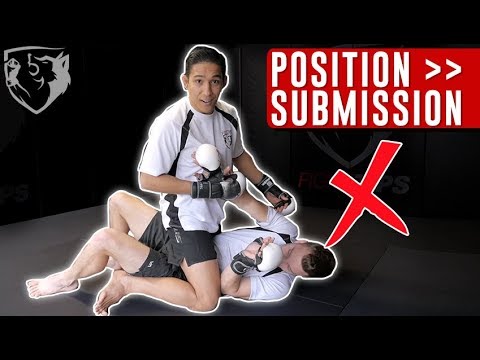
The Secret to Locking Up Submissions: Position First!
0
From Prone Control·fightTIPS
You've probably heard the expression in BJJ "position before submission," which stresses the importance of not rushing a…
Перевод: from prone control
The chin-down wrist lock from prone control is applied when the attacker has the opponent pinned face-down and traps one wrist, bending it into flexion while pressing it toward the opponent's own face or chin. [1],[2] The prone position eliminates the opponent's ability to rotate or bridge to relieve the wrist pressure, and the attacker's weight prevents any significant movement. [1] The technique is commonly applied when the opponent is flattened from top control and extends a hand to post or push, exposing the wrist to manipulation. [1],[2]
Wrist locks from prone control positions are prominent in law enforcement and military combatives, where controlling a face-down subject with wrist manipulation is a standard restraint protocol. [1],[2] In grappling, prone wrist locks developed as top players explored joint lock options from the flattened turtle or face-down control positions. [1] The technique reflects the cross-pollination between tactical control methods and sport submission grappling. [1],[2]
Prone control submissions attack a face-down opponent with chokes, cranks, and arm locks, exploiting a position where the bottom player has limited defensive options. [1]
Prone control attacks were developed in catch wrestling (the 'chain wrestling' system) and adopted into modern BJJ. [1]
Prone position chokes and cranks are used in both MMA (ground-and-pound to submission sequences) and advanced BJJ competition. [1]
Изображений для этой техники пока нет.
Войдите, чтобы предложить изображение.
You've probably heard the expression in BJJ "position before submission," which stresses the importance of not rushing a…
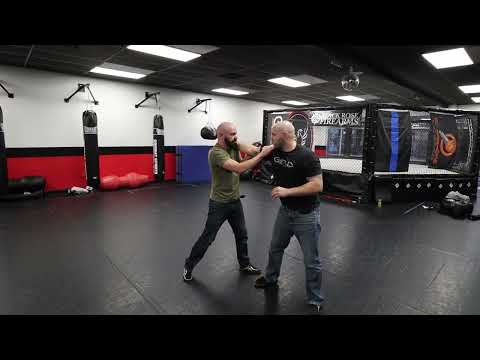
Kevin and Justin show a limb control option to defend, takedown, and handcuff. Using a simple block and drag, controllin…
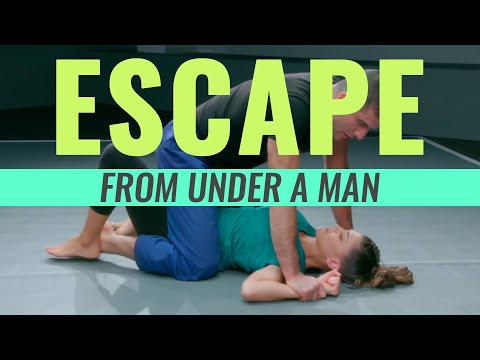
This is an 8-minute "Slice" or variation from Lesson 4 of our new women's self-defense program, Women Empowered 2.0. The…
From prone control, a wrist-lock flexion submission with chin-down positioning represents an advanced control principle rather than a discrete isolated technique across the instructional sources. FightTIPS emphasizes the foundational concept of 'position before submission,' demonstrating how premature submission attempts without proper positional control result in escape or reversal. The instructor illustrates that securing an opponent's base, angle, and available space—through measures such as hip elevation, perpendicular positioning (90-degree angles), and limb clamping—must precede applying flexion force to wrist locks. GracieBreakdown addresses the wrist-pin trap-and-roll escape from mount, where an attacker pins both wrists to the ground; the defender bridges hips high and throws hands downward explosively in a snow-angel motion, exploiting the biomechanical transition past vertical to force hand release. Guard Defense Solutions presents wrist control from a standing framework position, emphasizing skeletal system engagement (elbow hyperextension) to stretch and weaken the opponent's arm while maintaining head control. All three instructors converge on the principle that arm extension, angular cuts relative to the opponent's structure, and distance management must be established before applying submission pressure. Where they differ: FightTIPS focuses on positional sequencing in grappling contexts; GracieBreakdown prioritizes escape mechanics and safety during the bridge motion; Guard Defense Solutions applies wrist control to law enforcement takedown scenarios with structural emphasis.
Сформировано на основе 3 инструкторов
Учебных курсов по этой технике пока нет.
Войдите, чтобы предложить курс.
Риск травмы для человека, к которому применяется техника
Wrist lock variant targeting carpal and radioulnar joints through forced deviation or torsion
Уровень мастерства, необходимый для надёжного выполнения техники
Разрешена ли техника по основным соревновательным правилам
Japanese BJJ community standard katakana transliteration
Japanese BJJ community standard katakana transliteration
Standard Japanese martial arts terminology (kanji/hiragana)
Established Japanese martial arts naming convention — native Japanese term (和語/漢語)
Japanese terminology sourced from Japanese BJJ community standard katakana transliteration
fine motor control, grip sensitivity, quick hand transitions
dexterous hands with strong fingers
forearm flexors and extensors, intrinsic hand muscles
According to GracieBreakdown, after you post your hands to create space, immediately hug their torso—this is critical for safety. Once your hands are free from the pin, they become targets for strikes, so controlling their upper body prevents them from punching you or re-establishing the wrist grip.
GracieBreakdown notes that the most common training injuries from this position come from face plants when the escape is executed incorrectly. The key safety issue is not controlling the opponent's torso after posting, which can lead to awkward falls.
If your opponent's hands are very vertical, first raise your arms to about 90 degrees before bridging—this shortens the distance to their grip and makes the escape easier, according to GracieBreakdown. Once you've created that angle, you can then hug and control their torso.
FightTIPS emphasizes that going for submissions without securing your position first allows your opponent to escape or counter—you must control their movement and eliminate their defensive options before committing to the submission itself.
The chin-down wrist lock from prone control is applied when the attacker has the opponent pinned face-down and traps one wrist, bending it into flexion while pressing it toward the opponent's own face or chin. The prone position eliminates the opponent's ability to rotate or bridge to relieve the wrist pressure, and the attacker's weight prevents any significant movement.
Wrist locks from prone control positions are prominent in law enforcement and military combatives, where controlling a face-down subject with wrist manipulation is a standard restraint protocol. In grappling, prone wrist locks developed as top players explored joint lock options from the flattened turtle or face-down control positions.
IBJJF: разрешён — Legal at all belt levels; IJF: запрещён — Only elbow joint locks (kansetsu-waza) permitted in judo — all other joint lo…; ADCC: разрешён — Legal — all submissions legal in ADCC; Unified MMA: разрешён — Legal submission technique; FIAS Sport Sambo: разрешён — Legal; FIAS Combat Sambo: разрешён — Legal
Оценка опасности 5/10. Wrist lock variant targeting carpal and radioulnar joints through forced deviation or torsion
Стандартная цепочка подготовки: Establish Position → Create the Threat → Secure the Hold → Finish.
Стандартные контрприёмы: Early Recognition — identify the submission attempt early and begin defence immediately / Posture and Base — maintain strong posture and base to prevent submission setups / Grip Fight — deny the attacker their preferred gripping configuration.
Распространённые варианты: Standard wrist lock (kote gaeshi) (two-handed rotational lock on the wrist); Gooseneck wrist lock (flexion lock bending the wrist down toward the forearm); Standing wrist lock (applied during grip fighting or a standing exchange); Ground wrist lock (catching the opponent's posted hand from mount, side cont…).
Prone position chokes and cranks are used in both MMA (ground-and-pound to submission sequences) and advanced BJJ competition.
Основные ошибки, на которые стоит обратить внимание: Not maintaining control while attacking — the prone opponent will scramble to escape; maintain chest-to-back contact … / Attempting submissions before establishing control — secure the riding position first, then identify which limbs are … / Not using body weight — from prone control, body weight is your primary tool; lifting off to apply a technique allows… / Ignoring the back-take — from prone control, the back take is often the highest-percentage option; don't skip it for ….
From Prone Control также известен как Fuse Seigyo kara, Ground Chin-Down Wrist Lock, Prone Chin-Down Lock.