Elevated Basics: The Ultimate No-Gi Closed Guard Guide
0
From Guard·IsakIvanovicjj
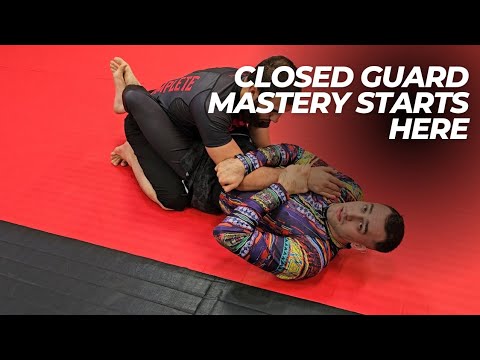
🔺 Welcome to IsakIvanovicjj - Your Gateway to BJJ Mastery! 🔺 📚 Today's Lesson: "Elevated Basics: The Ultimate No-Gi …
Перевод: from guard
Calf slicers from guard are applied when the bottom player catches the opponent's leg during guard passing attempts, threading a shin behind the knee and folding the calf. [1],[2] Common entries include catching the leg during toreando passes, long-step passes, or when the top player stands in guard. [3]
Guard submissions exploit the bottom position's hip mobility and leg control to attack with triangles, armlocks, and chokes. [1]
Guard-based submissions are a defining feature of BJJ, refined from judo's ne-waza and greatly expanded by Brazilian practitioners. [1]
Guard submissions are the most common finishing position in BJJ competition at all levels. [1]
Изображений для этой техники пока нет.
Войдите, чтобы предложить изображение.
🔺 Welcome to IsakIvanovicjj - Your Gateway to BJJ Mastery! 🔺 📚 Today's Lesson: "Elevated Basics: The Ultimate No-Gi …
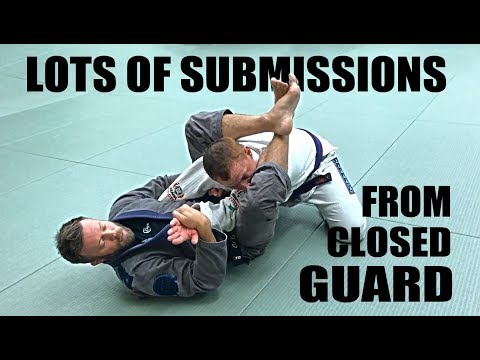
So much more at Patreon.com/KnightJiuJitsu Here are quite a lot of submissions from closed guard. These go from pretty …
Join My Online Academy to Improve Your Jiu Jitsu FAST!!! https://academy.mattarroyo.com/ -----------------------------…
From guard, the calf-slicer choke is accessed as part of a broader submission progression within closed guard, though direct instruction on this specific technique varies across the three sources. Matt Arroyo Jiu Jitsu emphasizes foundational guard control—maintaining posture, breaking grips, and opening the closed guard itself as prerequisites to any submission attempt, stressing that submissions like the calf-slicer cannot be effectively executed from a collapsed or improperly positioned guard. IsakIvanovicjj presents the closed guard as a positional framework enabling submissions through the top lock position (achieved by controlling the opponent's elbow and hip positioning), from which armbars, triangles, and kimura attacks become available; this systematic approach establishes positional dominance before submission attempts. Knight Jiu-Jitsu catalogs numerous closed guard submissions including chokes, armbars, triangles, and omoplata sequences, demonstrating linear submission progressions where one failed defense naturally transitions into the next attack. While none of the three instructors explicitly isolate the calf-slicer choke from guard in their transcripts, they collectively establish that submissions from closed guard depend on: (1) proper posture and grip control (Arroyo), (2) positional anchoring via elbow and hip control (Isak), and (3) chaining multiple submission angles to exploit defensive responses (Knight). All three emphasize that guard position must be secured and opponent positioning controlled before attempting any compression or neck-targeting submissions.
Сформировано на основе 3 инструкторов
Учебных курсов по этой технике пока нет.
Войдите, чтобы предложить курс.
Риск травмы для человека, к которому применяется техника
Joint locks from guard require control but carry significant injury risk
Уровень мастерства, необходимый для надёжного выполнения техники
Разрешена ли техника по основным соревновательным правилам
Wikipedia ja; JBJJF competition rules; Japanese BJJ sources
Japanese Wikipedia — martial arts technique articles
Official Japanese BJJ federation — competition rules and terminology
Standard katakana transliteration of Western martial arts terminology (外来語) — used in Japanese MMA, boxing, and BJJ communities
Japanese terminology sourced from Wikipedia ja; JBJJF competition rules; Japanese BJJ sources
shin pressure, leg triangling ability
bony, angular shins for sharper compression
quadriceps, hamstrings, calf muscles (for leg triangle lock)
Каждое движение в любом боевом искусстве обладает рядом универсальных свойств. Комбинируйте параметры ниже, чтобы найти нужный инструмент или сравнить аналоги из разных стилей.
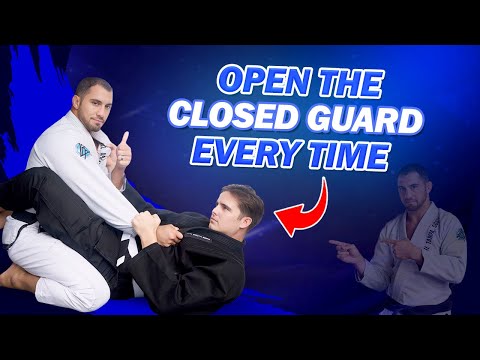
Most people waste energy with inefficient technique. Matt Arroyo explains that you should use your core and body weight to drive the guard open, not tricep strength—think of it like a bench press. When you use proper mechanics, the guard opens with minimal effort regardless of how hard your opponent is squeezing.
Matt Arroyo teaches: (1) Posture up with your head clear and pop off their chest, (2) Grab their wrist on the side you're lifting the leg, (3) Turn your knee into their hip to misalign their spine, (4) Keep your leg completely vertical and lock your elbow out, then drive straight down using your core. This works in both gi and no-gi.
Matt Arroyo recommends adopting a combat stance—one knee up, one knee down with your hips raised—before they can wrap their legs around you. This makes it very difficult for them to establish a closed guard.
Matt Arroyo notes that if you stand up with your head free and clear, your opponent will usually open their guard on their own 90% of the time because they'll try to sweep or go for leg locks. Just be ready for those two attacks when you stand.
Isak Ivanovic emphasizes that closed guard is a battle for inside position—you want your hands in the middle where you can grab the head, use overhooks, and set up shoulder crunches and other attacks. Pull your opponent's elbow to your belly button to maintain control for arm bars and triangles.
Calf slicers from guard are applied when the bottom player catches the opponent's leg during guard passing attempts, threading a shin behind the knee and folding the calf. Common entries include catching the leg during toreando passes, long-step passes, or when the top player stands in guard.
Guard-based calf slicers became popular in BJJ competition as leg lock systems expanded, particularly in IBJJF no-gi at advanced belt levels.
IBJJF: ограничен — Brown and black belt only; IJF: запрещён — Only elbow joint locks permitted in judo — compression locks prohibited; ADCC: разрешён — Legal; Unified MMA: разрешён — Legal; FIAS Sport Sambo: разрешён — Legal; FIAS Combat Sambo: разрешён — Legal
Оценка опасности 6/10. High — joint locks from guard require control but carry significant injury risk
Стандартная цепочка подготовки: Establish Position → Create the Threat → Secure the Hold → Finish.
Стандартные контрприёмы: Early Recognition — identify the submission attempt early and begin defence immediately / Posture and Base — maintain strong posture and base to prevent submission setups / Grip Fight — deny the attacker their preferred gripping configuration.
Распространённые варианты: Standard calf slicer (shin across the calf with triangle leg lock compressing t…); Truck calf slicer (applied from truck position after a back-take attempt); Standing calf slicer (trapping the calf during a scramble or guard exchange).
Guard submissions are the most common finishing position in BJJ competition at all levels.
Основные ошибки, на которые стоит обратить внимание: Relying on guard pressure instead of technique — pressure enhances guard work but doesn't replace sweeps, submissions… / Squeezing with the legs at full power constantly — constant maximum squeeze exhausts your legs; pulse the pressure fo… / Using the cross-face without setting up a follow-up — the cross-face creates head movement; exploit it with a choke o… / Applying rib pressure without foot position — the feet must be hooked and positioned correctly for the leg squeeze to….
From Guard также известен как Gādo kara, Guard Position Lock, Bottom Guard Submission.