Side Triangle

Разновидность

Перевод: Triangle Strangle — From Side Control

Дистанция и классификация

Категория
Удар и защитаЗамкиБлижний бойБой против нескольких
Дистанция
БлижняяСредняяДальняя
Целевая зона
Верхняя частьСредняя частьНижняя часть

Обзор

The side triangle from side control applies the triangle choke while maintaining the perpendicular side control position, with the legs wrapping around the opponent's head and arm from a lateral angle. [1] The attacker slides the near knee over the opponent's throat while controlling the far arm, then locks the figure-four leg configuration to establish the triangle from this side-mounted position. [1],[2] The side triangle provides top-position control throughout the submission attempt, meaning the attacker retains a dominant position even if the choke fails. [2] The lateral angle of compression can be equally effective as the standard front-facing triangle when properly tightened. [2],[3]

Также известна как
Yoko-sankaku-jimeJP[1]Side-Position Triangle[2]
Используется в

История и происхождение

Side triangles from top position developed as BJJ practitioners sought to maintain positional dominance while attacking with leg-based strangulations. [1] This approach aligned with the 'position before submission' philosophy central to Brazilian Jiu-Jitsu strategy. [2],[3]

Страна происхождения· показано в случайном порядке

  • БразилияБразильское джиу-джитсу, Сабмишн-грэпплинг, ММА
  • Япония三角絞(横四方から)(Sankaku-jime — From Side Control)Бразильское джиу-джитсу, Дзюдо, Сабмишн-грэпплинг
  • СШАСабмишн-грэпплинг, ММА
  • РоссияСамбо

Эффективность

The side triangle applies the triangle from a perpendicular angle, typically during transitions or scrambles. [1]

Родословная

Side triangles emerged in competition BJJ as fighters found triangle opportunities from unconventional angles. [1]

Соревновательные результаты

Side triangles are used at advanced BJJ competition levels during transitional scrambles. [1]

Изображения

Изображений для этой техники пока нет.

Войдите, чтобы предложить изображение.

Биомеханический механизм

Primary ActionBilateral compression of the carotid arteries — restricts blood flow to the brain, causing unconsciousness within seconds
Joints InvolvedCervical spine (lateral flexion), glenohumeral joint of the trapped arm (if arm-in), nuchal region
Force VectorLateral squeeze creates inward pressure on both sides of the neck simultaneously
Choking MechanismVascular strangle — occludes carotid arteries and jugular veins, distinct from airway (tracheal) chokes

Позиция и вход

From closed guardControl one arm across the centreline, throw legs up to lock the triangle (one arm in, one arm out), angle hips and squeeze
From mount (mounted triangle)Isolate one arm, slide the knee up and over the shoulder, lock the triangle from top position
From open guard (arm drag)Drag one arm across, shoot the legs up to lock the figure-four leg configuration around head and arm

Варианты

Standard triangleclassic figure-four leg lock around the head and one arm from guard
Reverse trianglelegs locked from behind or inverted angle for different attack setups
Mounted triangleapplied from mount position with gravity assisting the squeeze
No-arm triangleboth arms excluded, legs-only compression on the neck

Видео

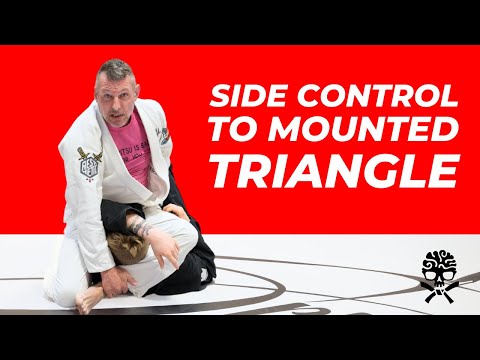
MOUNTED triangle from side control - Brazilian jiu-jitsu submission

0
Side Triangle·Grappling Nerds

Hey everyone! Welcome back to Grappling Nerds. Today, we're excited to teach you how to set up a mounted triangle starti

1 video

Изучить технику

Учебных курсов по этой технике пока нет.

Войдите, чтобы предложить курс.

Оценки

Уровень опасности

Риск травмы для человека, к которому применяется техника

8
Очень высокий8/10

Side triangle requires threading the legs from a perpendicular angle; less common but effective

Сложность

Уровень мастерства, необходимый для надёжного выполнения техники

Продвинутый
Допустимость на соревнованиях

Разрешена ли техника по основным соревновательным правилам

Запрещено
FIAS Sport Sambo — All chokes prohibited in Sport Sambo
FIAS International Sambo Competition RulesPDF
Разрешено
IBJJF — Legal at all belt levels, gi and no-gi — chokes a...
IBJJF Rules Book v6.0, June 2024PDF
ADCC — Legal
ADCC Rules Update, April 2025PDF
Unified MMA — Legal — choke submissions are among the mos...
Unified Rules of MMA, August 2025PDF
FIAS Combat Sambo — Legal
FIAS Combat Sambo RulesPDF

Заметки по тренировке

The side triangle locks the triangle choke from a lateral position — typically from side control, the attacker threads the legs from the side to catch the opponent's head and arm in the triangle (Danaher, Triangles: Enter the System, 2017)
From top side control: the attacker steps over the opponent's head with one leg while the other leg hooks under the near arm — then locks the figure-four to create the triangle from the side
The side triangle is a top-position submission: unlike guard triangles, it is applied while maintaining top control — the attacker doesn't sacrifice position to attack
The lateral angle creates a unique compression vector: the thigh presses the carotid from the side while the opponent's trapped arm and shoulder press the other — the 'side' geometry is effective because the opponent cannot posture
The side triangle is often set up during transitions: as the attacker moves from mount to side control, or during a kimura attempt from side control, the legs can thread into triangle position
The finish: squeeze the knees together while maintaining lateral pressure — from the side, hip extension and lateral hip drive increase compression
The side triangle is a positional trap: once locked, the opponent is pinned on their side with their head and arm caught — escapes require addressing both the triangle and the pin simultaneously

Типичные ошибки

!Not stepping the leg fully over the head — the leg must clear the head completely to sit on the back of the neck; partial placement doesn't create sufficient compression
!Losing side control during the leg transition — maintain upper body control with the arms while the legs thread into position
!Not hooking the near arm — the side triangle requires the arm trapped inside; without the arm, the position is a headscissors
!Attempting from too far away — the legs must reach the head and arm; if the upper body isn't controlled close to the opponent, the legs can't make the connection
!Squeezing without proper leg positioning — ensure the figure-four is locked and the thigh is on the neck before applying force
!Not using the upper body to maintain the pin — the side triangle works best when chest-to-chest pressure accompanies the leg compression
!Treating the side triangle as a guard technique — it is a top-position attack; approaching it with guard-triangle timing and distance fails

Связанные техники

Контрприёмы

Цепочка подготовки

1Achieve Controlling Positionsecure the position from which the choke is applied
2Isolate the Neckclear defending hands and establish access to the throat
3Set the Griplock the choking configuration (arm, lapel, or leg placement)
4Apply Pressuresqueeze to compress the carotid arteries for the finish

Источники и ссылки

Основной источник

Kodokan Judo — Sankaku-jime

1КнигаKodokan Judo — Sankaku-jime

Japanese terminology sourced from Kodokan Judo — Sankaku-jime

Official Kodokan ground technique classification system

3Учебная программаKodokan Judo Institute — Official Waza Names

Standard Japanese martial arts terminology (kanji/hiragana)

4ДругоеJapanese Martial Arts Standard Terminology (武道用語)

Established Japanese martial arts naming convention — native Japanese term (和語/漢語)

5ЦитатаKodokan Judo — Sankaku-jime

Japanese terminology sourced from Kodokan Judo — Sankaku-jime

Сообщество

Атлетизм

Requires

hip flexibility, long legs relative to torso

Favours

longer limbs for easier figure-four lock around head and arm

Key muscles

hip adductors, hamstrings, quadriceps

Часто задаваемые вопросы

How do I transition from side control into a mounted triangle without jumping and losing position?

Keep your side control and isolate your opponent's arm first rather than jumping immediately into mount. Slide your knees in gradually while maintaining control of the tricep, then shimmy into high mount position—this controlled approach prevents you from ending up in a compromised situation.

What's the key to finishing the side triangle tightly?

Bring the opponent's arm across their face and create a pinch with your legs similar to a triangle from the bottom. Sit heavy on their chest with your buttocks, positioning yourself slightly to the side rather than directly on top so you can control them and prevent counterattacks if you fall.

Why should I position myself to the side when finishing the triangle rather than directly on top?

Positioning to the side prevents your opponent from being able to touch your face, punch you, or grab you while you're finishing the submission. This also gives you better control and allows you to switch grips and finish effectively even if your initial position fails.

Как работает Side Triangle?

The side triangle from side control applies the triangle choke while maintaining the perpendicular side control position, with the legs wrapping around the opponent's head and arm from a lateral angle. The attacker slides the near knee over the opponent's throat while controlling the far arm, then locks the figure-four leg configuration to establish the triangle from this side-mounted position.

Откуда происходит Side Triangle?

Side triangles from top position developed as BJJ practitioners sought to maintain positional dominance while attacking with leg-based strangulations. This approach aligned with the 'position before submission' philosophy central to Brazilian Jiu-Jitsu strategy.

Разрешён ли Side Triangle на соревнованиях?

IBJJF: разрешён — Legal at all belt levels, gi and no-gi — chokes are the safest submission cat…; IJF: разрешён — Legal (shime-waza) — strangulation techniques are one of three permitted subm…; ADCC: разрешён — Legal; Unified MMA: разрешён — Legal — choke submissions are among the most common finishes in MMA; FIAS Sport Sambo: запрещён — All chokes prohibited in Sport Sambo; FIAS Combat Sambo: разрешён — Legal

Насколько опасен Side Triangle?

Оценка опасности 8/10. Side triangle requires threading the legs from a perpendicular angle; less common but effective

Как подготовить Side Triangle?

Стандартная цепочка подготовки: Achieve Controlling Position → Isolate the Neck → Set the Grip → Apply Pressure.

Как защититься от Side Triangle?

Стандартные контрприёмы: Tuck Chin — protect the neck by lowering the chin to prevent the choke from sinking / Two-on-One Grip Fight — use both hands to strip the choking grip before it locks / Turn Into — rotate toward the choking arm to relieve carotid pressure / Posture Up — straighten the spine and create distance to break the choking angle.

Какие есть варианты Side Triangle?

Распространённые варианты: Standard triangle (classic figure-four leg lock around the head and one arm …); Reverse triangle (legs locked from behind or inverted angle for different a…); Mounted triangle (applied from mount position with gravity assisting the sq…); No-arm triangle (both arms excluded, legs-only compression on the neck).

Насколько эффективен Side Triangle на соревнованиях?

Side triangles are used at advanced BJJ competition levels during transitional scrambles.

Какие типичные ошибки при выполнении Side Triangle?

Основные ошибки, на которые стоит обратить внимание: Not stepping the leg fully over the head — the leg must clear the head completely to sit on the back of the neck; par… / Losing side control during the leg transition — maintain upper body control with the arms while the legs thread into … / Not hooking the near arm — the side triangle requires the arm trapped inside; without the arm, the position is a head… / Attempting from too far away — the legs must reach the head and arm; if the upper body isn't controlled close to the ….

Какие ещё названия есть у Side Triangle?

Side Triangle также известен как Sankaku-jime — From Side Control, Yoko-sankaku-jime, Side-Position Triangle.