Удар и защитаЗамкиБлижний бойБой против нескольких
Дистанция
БлижняяСредняяДальняя
Целевая зона
Верхняя частьСредняя частьНижняя часть
Обзор
Kata Juji Jime is the half cross strangle — one hand grips the lapel palm-down while the other grips palm-up, creating an asymmetric cross choke that attacks from a slightly different angle than the normal version. [1] The mixed grip (one palm up, one palm down) creates a different pressure vector that can be harder to defend against. [1] One of the three Kodokan cross strangles. [1]
The mixed grip often catches opponents who have defended the normal cross strangle. [1] The asymmetric pressure angle is harder to defend because it attacks the neck differently than the standard version. One of the three Kodokan cross strangles. [1]
Родословная
Kodokan judo lineage: Jigoro Kano (1860–1938) systematized this technique as part of the Kodokan judo curriculum. Transmitted through the Kodokan instructor system to judo federations worldwide. Adopted into BJJ through Mitsuyo Maeda → Carlos Gracie → the Gracie family lineage. [1]
Соревновательные результаты
Recognized Kodokan judo technique. Used in IJF World Championships and Olympic judo competition. Frequency varies by weight class and era. [1]
Изображения
Изображений для этой техники пока нет.
Войдите, чтобы предложить изображение.
Биомеханический механизм
Primary Action — One hand grips palm-down, other palm-up, forearms cross to create asymmetric choking pressure
Juji Jime and Kata Juji-Jime from Full Guard - BJJ Cross Collar Choke Submission for MMA Grappling
0
Kata Juji Jime·Peter Mettler Martial Arts
2 videos
Что говорят инструкторы
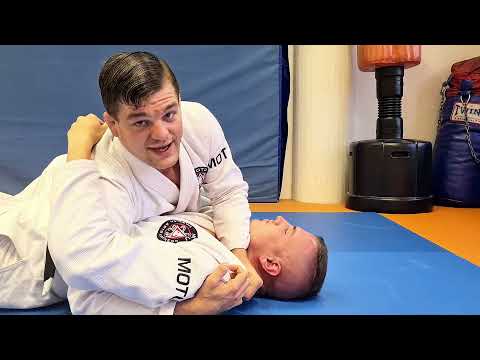
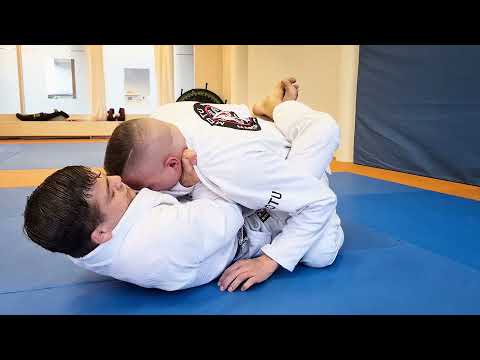
Kata Juji Jime is a cross-collar choke variation taught primarily from guard position, distinguished from standard Juji Jime by its application when the opponent prevents insertion of the second hand. Peter Mettler Martial Arts demonstrates the technique across two contexts: from full guard and from side mount (where it becomes the "paper cutter choke"). In both positions, the core mechanics remain consistent: one hand is inserted deep into the collar with four fingers, positioning the wrist below the earlobe where the sternocleidomastoideus and carotid artery are located. The distinguishing feature of Kata Juji Jime is the use of a reaching grip around the opponent's trap or shoulder fabric with the second hand when direct collar access is blocked, rather than forcing a second collar grip. The choke is executed through body weight and leverage rather than isolated hand strength, with the operative forearm (the "blade"—the radius side) cutting into the neck via a rotating, lifting motion. Frame control with one elbow while the opposite forearm applies pressure is critical. The technique's advantage lies in maintaining closed guard position without compromising posture or structure while still achieving a submission, making it suitable for both gi jiu-jitsu and MMA applications.
Сформировано на основе 2 инструкторов
Peter Mettler Martial Arts — Juji Jime and Kata Juji-Jime from Full Guard - BJJ Cross Collar Choke Submission for MMA Grappling: Detailed the distinction between standard Juji Jime (double collar control from guard) and Kata Juji Jime (trap/shoulder grip variation when second collar hand cannot be inserted), emphasizing wrist positioning below the earlobe, supination mechanics, proper blade application, and use of legs to pull opponent close.
Peter Mettler Martial Arts — Papercutter Choke from Side Mount - Kata Juji Jime Sidemount PaperCutter BJJ Judo Basics Submission: Demonstrated Kata Juji Jime application from side mount (paper cutter variation), detailing hand insertion depth, chin framing to prevent escape, elbow positioning for leverage advantage, body weight transfer, and knee control of opponent's defending arm.
Изучить технику
Учебных курсов по этой технике пока нет.
Войдите, чтобы предложить курс.
Оценки
Уровень опасности
Риск травмы для человека, к которому применяется техника
7
Очень высокий7/10
Blood choke.
Сложность
Уровень мастерства, необходимый для надёжного выполнения техники
Начинающий
Допустимость на соревнованиях
Разрешена ли техника по основным соревновательным правилам
Standard Japanese martial arts terminology (kanji/hiragana)
4ДругоеJapanese Martial Arts Standard Terminology (武道用語)
Established Japanese martial arts naming convention — native Japanese term (和語/漢語)
5ЦитатаKano, J. Kodokan Judo. Kodansha International.
[1] Kano, J. Kodokan Judo. Kodansha International.
Сообщество
Атлетизм
Requires
grip strength, ability to establish mixed grip quickly
Key muscles
forearms, biceps, pectorals
Заметки
Kata juji jime (half cross strangle) uses one hand palm-up and one hand palm-down on the opponent's lapels. The asymmetric grip creates a different pressure angle than nami or gyaku juji jime. (Kano, Kodokan Judo)
Часто задаваемые вопросы
Where should my wrist be positioned when entering the kata juji jime?
Your wrist should be positioned directly below the opponent's earlobe, where the sternocleidomastoideus muscle is located. This positioning allows you to apply pressure to the carotid artery for an effective choke.
How do I prevent my opponent from escaping by framing my elbow?
Keep your elbow positioned lower than your wrist and frame your opponent's chin with your forearm. This makes it difficult for them to push against or frame your elbow, while also preventing the arm-under escape.
Should I use my triceps to apply the choke or is there a better method?
Rather than extending your forearm with tricep strength, hang onto the collar and use your body weight by leaning into your elbow. You can also pull on the collar to add additional weight and force to the choke.
What's the key difference between juji jime and kata juji jime?
Kata juji jime is used when you cannot enter your second hand for a traditional juji jime. Instead, you frame the opponent's leg with one elbow while using your blade (forearm) to cut and compress the neck through a rotating motion.
Как работает Kata Juji Jime?
Kata Juji Jime is the half cross strangle — one hand grips the lapel palm-down while the other grips palm-up, creating an asymmetric cross choke that attacks from a slightly different angle than the normal version. The mixed grip (one palm up, one palm down) creates a different pressure vector that can be harder to defend against.
Откуда происходит Kata Juji Jime?
Classified in the Kodokan Judo syllabus.
Разрешён ли Kata Juji Jime на соревнованиях?
IJF Judo: Legal: разрешён — Kodokan classified technique; IBJJF: Legal {src:IBJJF Rules Book v6.0, June 2024|/sources/IBJJF: разрешён — Rules-v6.0-June-2024.pdf}; Unified MMA: Legal {src:Unified Rules of MMA, August 2025|/sources/Unified: разрешён — MMA-Rules-August-2025.pdf}; FIAS Sambo: Legal {src:FIAS International Sambo Competition Rules|/sources/FIAS: разрешён — Sambo-Rules.pdf}
Насколько опасен Kata Juji Jime?
Оценка опасности 7/10. High — blood choke.
Как подготовить Kata Juji Jime?
Стандартная цепочка подготовки: Nami Juji Jime defended → switch one hand to palm-up → Kata Juji Jime → From mount → one hand already in collar from control → add second hand palm-up → choke → Guard pass → immediately establish mixed grip → Kata Juji Jime before opponent recovers.
Как защититься от Kata Juji Jime?
Стандартные контрприёмы: Same as Nami Juji Jime — fight grips, posture up, tuck chin, turn to side.
Какие есть варианты Kata Juji Jime?
Распространённые варианты: Strong side emphasis (more pressure on the palm-down side); Weak side emphasis (more pressure on the palm-up side); Quick setup (establishing the mixed grip rapidly from a scramble).
Насколько эффективен Kata Juji Jime на соревнованиях?
Recognized Kodokan judo technique. Used in IJF World Championships and Olympic judo competition.
Какие типичные ошибки при выполнении Kata Juji Jime?
Основные ошибки, на которые стоит обратить внимание: Both hands same orientation — that's Nami or Gyaku, not Kata / Shallow grip on the palm-up hand — loses the anchor / Not pulling elbows together — the cross must be tight / Confusing which hand goes where — practice until it's automatic.
Какие ещё названия есть у Kata Juji Jime?
Kata Juji Jime также известен как Kata Juji Jime, Kata-Juji-Jime, Half Cross Choke, Katajujijime.