Kesa Gatame Deep Dive, Part 5: The Compression Choke
0
Forearm Compression Short Choke·Cheat Code Jiu Jitsu
Follow Cheat Code Jiu Jitsu on social media: https://www.facebook.com/Cheat-Code-Jiu-Jitsu-2479604595490997 https://www.…
Перевод: forearm compression short choke
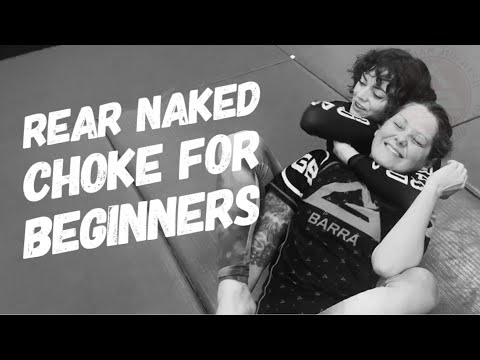
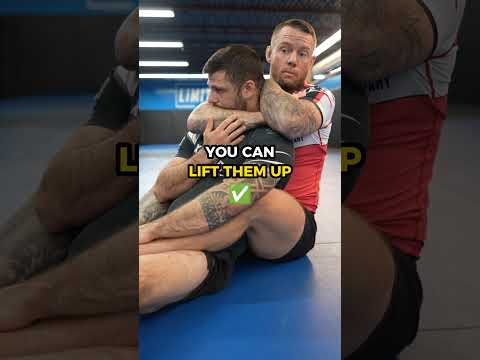
The Forearm Compression Short Choke is a rear naked choke variation where the choking arm wraps only partially around the neck. The forearm compresses one side of the neck against the practitioner's bicep, targeting the carotid artery rather than the trachea — the goal is the same arterial blood choke as the full rear naked choke, achieved through a tighter, shorter wrap. [1] This shorter choke is used when the opponent's chin defence prevents the standard full RNC wrap, and is also taught as a higher-leverage alternative using a 'blade of the forearm' or karate-chop hand at the back of the neck. [1],[2]
Developed within the BJJ/grappling submission system. [1]
Used in BJJ, MMA, and submission grappling competition. [1]
Изображений для этой техники пока нет.
Войдите, чтобы предложить изображение.
Follow Cheat Code Jiu Jitsu on social media: https://www.facebook.com/Cheat-Code-Jiu-Jitsu-2479604595490997 https://www.…
What do you call this choke? I tend to call it a variation of either single wing, kata ha jime, the cobra clutch or the …
📩 Newsletter: http://jordanteachesjiujitsu.com/newsletter/ ✅ BJJ Theory Course: https://courses.jordanteachesjiujitsu.…
#shorts #mma #ufc
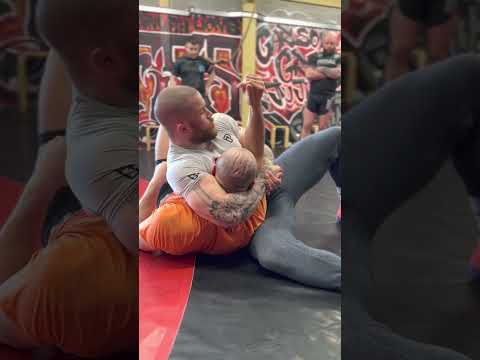
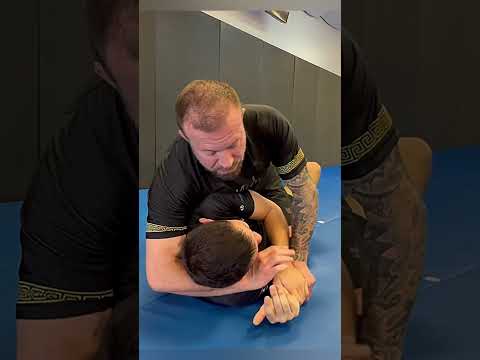
The forearm compression short choke is a submission that applies pressure primarily through body weight and structural compression rather than traditional neck-based strangulation. As detailed by Cheat Code Jiu Jitsu, this technique differs fundamentally from air chokes and blood chokes by attacking the lungs directly—the attacker compresses the opponent's chest and uses body weight to prevent inhalation, similar to a boa constrictor's mechanism. The setup commonly begins from kesa gatame (side control), where the attacker weaves an arm under the opponent's elbow, locks the hands together, and rocks backward to fold the opponent across the sternum while maintaining downward pressure. Brazilian Jiu-Jitsu & Submission Grappling demonstrates related rear control variations using seat belt grips and bicep control, though with different mechanical principles. Cheat Code Jiu Jitsu emphasizes that compression chokes require sustained pressure—often 10 to 30 seconds—and warns against releasing prematurely; the technique becomes most effective when the opponent begins thrashing, indicating successful compression. Knight Jiu-Jitsu adds a gift-wrap variation where the attacker can transition by grabbing the opponent's elbow and pulling it tight for a compressed effect. The technique's effectiveness was notably demonstrated when Josh Barnett submitted Dean Lister, a 15-year undefeated competitor, despite the move's initially implausible appearance.
Сформировано на основе 4 инструкторов
Учебных курсов по этой технике пока нет.
Войдите, чтобы предложить курс.
Риск травмы для человека, к которому применяется техника
Chokes and neck cranks carry significant risk; blood chokes cause unconsciousness in 6-10 seconds; neck cranks can cause cervical spine damage; always tap early
Уровень мастерства, необходимый для надёжного выполнения техники
Разрешена ли техника по основным соревновательным правилам
Jiu-Jitsu University (Saulo Ribeiro, 2008)
Description sources — [1] Choking/cranking technique curriculum [2] Competition analysis
Standard katakana transliteration of Western martial arts terminology (外来語) — used in Japanese MMA, boxing, and BJJ communities
Description sources — [1] Choking/cranking technique curriculum [2] Competition analysis
grip strength, arm positioning precision, back control ability
forearms (squeeze), biceps (compression), shoulders (positioning)
Каждое движение в любом боевом искусстве обладает рядом универсальных свойств. Комбинируйте параметры ниже, чтобы найти нужный инструмент или сравнить аналоги из разных стилей.
The Gable Grip finishing variation uses a palm-to-palm grip (no thumbs interlocked) to secure the short choke — the strongest clasp grip available, named after wrestling legend Dan Gable. [1] The Gable grip prevents the hands from being stripped because there are no fingers to peel. [1,2]
The Palm-to-Palm Grip variation of the forearm compression short choke uses an alternative palm-to-palm clasp (similar to the Gable grip but with slightly different hand positioning) to lock the choking configuration behind the opponent's neck. [1,2]
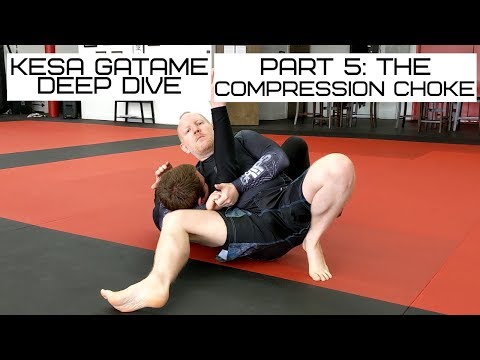
A common mistake is focusing pressure on the head and neck, which creates a neck crank. Instead, the compression choke targets the sternum by bending the opponent's body across it—achieved by locking up the position, leaning back slightly, and moving your hips forward.
Position yourself underneath the opponent's elbow so they cannot slide it out, and pull their head up from underneath. This control makes the standard escape of pushing back and throwing the leg over the head much less effective, especially when chest compression is applied.
The Forearm Compression Short Choke is a rear naked choke variation where the choking arm wraps only partially around the neck. The forearm compresses one side of the neck against the practitioner's bicep, targeting the carotid artery rather than the trachea — the goal is the same arterial blood choke as the full rear naked choke, achieved through a tighter, shorter wrap.
This variation developed within the broader choking/cranking system of its parent technique family.
IBJJF: разрешён — Legal at all belt levels, gi and no-gi — chokes are the safest submission cat…; IJF: разрешён — Legal (shime-waza) — strangulation techniques are one of three permitted subm…; ADCC: разрешён — Legal; Unified MMA: разрешён — Legal — choke submissions are among the most common finishes in MMA; FIAS Sport Sambo: запрещён — All chokes prohibited in Sport Sambo; FIAS Combat Sambo: разрешён — Legal
Оценка опасности 8/10. High — chokes and neck cranks carry significant risk; blood chokes cause unconsciousness in 6-10 seconds; neck cranks can cause cervical spine damage; always tap early
Стандартная цепочка подготовки: Establish Control Position → Secure the Specific Grip → Position the Choking Surface → Apply Compression → Finish.
Стандартные контрприёмы: Hand fighting — stripping the grip before the choke is set / Chin tuck — protecting the throat / Posture — creating distance to prevent the choke / Turning — turning to face the attacker.
Распространённые варианты: This is a specific variation (see parent genus/species for alternative variations).
Used in BJJ, MMA, and submission grappling competition.
Основные ошибки, на которые стоит обратить внимание: Applying too fast — gradual application is safer and often more effective / Wrong grip positioning — the specific grip variation defines this technique; incorrect grip = different technique / Not controlling posture before applying / Holding after the tap — release immediately.
Forearm Compression Short Choke также известен как Zen-Wan Asshuku Shōto Chōku, Short RNC, Forearm Choke, Quick Choke.