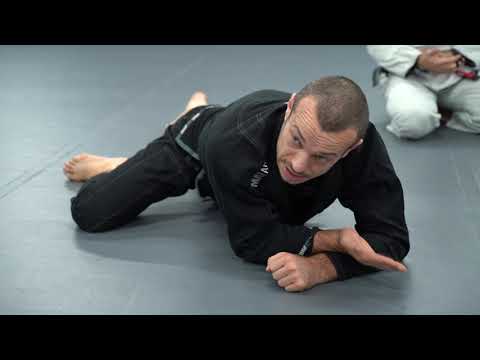
Head and arm choke from mount (arm triangle) - Lachlan Giles
0
Mount to Side Arm Triangle Transition·Absolute MMA St Kilda - Melbourne
Check out http://lachlangiles.net for more instructionals
Перевод: Shoulder Hold / Head-and-Arm Choke — Mount to Side
A classic Kata Gatame sequence begun from mount and finished from side control. The attacker sets the head-and-arm choke from mount, then “slides off” to the side while maintaining the lock. The angle change tightens carotid compression and removes the defender’s ability to bridge or re-guard, increasing finishing percentage.
Rooted in Judo’s Kata Gatame; widely taught in BJJ as the preferred angle to finalize the choke when the defender’s bridge disrupts finishes from mount.
The mount-to-side control arm triangle transition is the standard finishing sequence, moving from mount to side control to complete the choke. [1]
This transition is the most common arm triangle finishing sequence in both BJJ competition and MMA. [1]
Изображений для этой техники пока нет.
Войдите, чтобы предложить изображение.
Check out http://lachlangiles.net for more instructionals
Учебных курсов по этой технике пока нет.
Войдите, чтобы предложить курс.
Риск травмы для человека, к которому применяется техника
Direct vascular choke; finish often accelerates after angle change.
Уровень мастерства, необходимый для надёжного выполнения техники
Разрешена ли техника по основным соревновательным правилам
Kodokan Judo — Official Katame-waza Classification (肩固め Kata-gatame)
Japanese terminology sourced from Kodokan Judo — Official Katame-waza Classification (肩固め Kata-gatame)
Official Kodokan ground technique classification system
Established Japanese martial arts naming convention — native Japanese term (和語/漢語)
Japanese terminology sourced from Kodokan Judo — Official Katame-waza Classification (肩固め Kata-gatame)
hip flexibility, long legs relative to torso
longer limbs for easier figure-four lock around head and arm
hip adductors, hamstrings, quadriceps
If the defender frames the hip during the slide, windshield-wiper your legs to settle side control first, then re-tighten the choke before squeezing.
According to Lachlan Giles, you want your shoulder lower than your opponent's chin and your hand and shoulder both positioned below the line of their head. Lean to the side and reach deep so your elbow drops into their neck, with your bicep landing across the neck when you sprawl.
Lachlan Giles explains that if you drop from the face downwards and your opponent tucks their chin, you'll never get proper contact on the neck. By positioning your shoulder lower than the chin, you can fall into the neck much better.
Lachlan Giles recommends putting your hands together underneath the opponent's shoulder blade. This keeps them from rolling further away and turning to face you, which would make the choke impossible to finish.
According to Lachlan Giles, your body weight sprawling with your elbow low should be the main mechanism of the choke, not arm squeeze. Keep your elbow from lifting, as this indicates you're relying too much on arm strength.
A classic Kata Gatame sequence begun from mount and finished from side control. The attacker sets the head-and-arm choke from mount, then “slides off” to the side while maintaining the lock.
Rooted in Judo’s Kata Gatame; widely taught in BJJ as the preferred angle to finalize the choke when the defender’s bridge disrupts finishes from mount.
Оценка опасности 9/10. Direct vascular choke; finish often accelerates after angle change.
Стандартная цепочка подготовки: Achieve Controlling Position → Isolate the Neck → Set the Grip → Apply Pressure.
Стандартные контрприёмы: Tuck Chin — protect the neck by lowering the chin to prevent the choke from sinking / Two-on-One Grip Fight — use both hands to strip the choking grip before it locks / Turn Into — rotate toward the choking arm to relieve carotid pressure / Posture Up — straighten the spine and create distance to break the choking angle.
Распространённые варианты: High-mount to side arm triangle; S-mount to side arm triangle; Knee-slide off to side with head post; Hip-walk angle before slide.
This transition is the most common arm triangle finishing sequence in both BJJ competition and MMA.
Основные ошибки, на которые стоит обратить внимание: Sliding before securing head position / Letting the opponent’s elbow slip back across the chest / Staying square after the slide instead of turning shoulders to seal the artery / Finishing with arm strength instead of chest/shoulder pressure.
Mount to Side Arm Triangle Transition также известен как Kata Gatame — Mount to Side Transition, Mount-to-Side Kata Gatame, Mount Arm Triangle Slide-Off, Mount Angle-Off Arm Triangle.