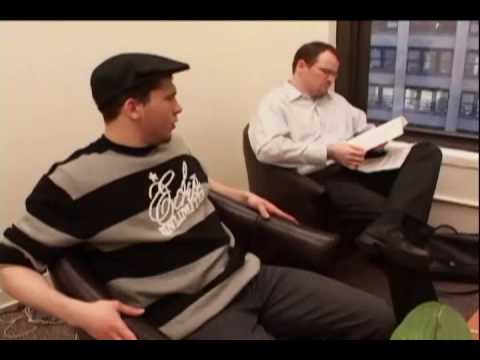
Scenes from Orthodox Stance
0
Orthodox Stance·emhoffk
A good sampling of the scenes from the great documentary on Dmitriy Salita - Orthodox Stance. Directed by the very tale…
Перевод: orthodox stance
The Orthodox Stance subfamily covers the fighting stance with the left foot forward and the right foot back, used by right-handed fighters as the standard stance in boxing, kickboxing, and MMA. [1] The orthodox stance places the power hand (right) in the rear position for maximum power generation on crosses and right hooks, while the lead hand (left) is used for jabs and range-finding. [1],[2] Approximately 85-90% of fighters use the orthodox stance, making it the most common fighting stance in all combat sports. [2],[3]
The orthodox stance (left foot forward, right hand back) is used by the majority of fighters and is the default stance taught in boxing, kickboxing, MMA, and wrestling. [1] The stance provides a balanced platform for both offence and defence, with the dominant right hand loaded as the power hand. [1]
Orthodox stance (left foot forward, right hand rear) is the standard fighting position in Western boxing, dating to the establishment of modern boxing rules. [1]
The majority of fighters in boxing and MMA compete from orthodox stance. [1]
Изображений для этой техники пока нет.
Войдите, чтобы предложить изображение.
A good sampling of the scenes from the great documentary on Dmitriy Salita - Orthodox Stance. Directed by the very tale…
Учебных курсов по этой технике пока нет.
Войдите, чтобы предложить курс.
Риск травмы для человека, к которому применяется техника
Standing positions are pre-engagement stances; minimal direct risk
Уровень мастерства, необходимый для надёжного выполнения техники
Разрешена ли техника по основным соревновательным правилам
Advanced Brazilian Jiu-Jitsu Techniques (Marcelo Garcia, 2011)
Alias sources — [1] Mastering Jujitsu (Gracie & Danaher, 2003) [2] Championship Fighting (Dempsey, 1950) [3] Championship Fighting (Dempsey, 1950)
Effectiveness sources — [1] Mastering Jujitsu (Gracie & Danaher, 2003)
Mixed Japanese-Western terminology — combines traditional Japanese terms with katakana loanwords
Alias sources — [1] Mastering Jujitsu (Gracie & Danaher, 2003) [2] Championship Fighting (Dempsey, 1950) [3] Championship Fighting (Dempsey, 1950)
Effectiveness sources — [1] Mastering Jujitsu (Gracie & Danaher, 2003)
hook control, seatbelt grip endurance, hip connection
long legs for deep hooks, strong grip for seatbelt
hip adductors, biceps, forearms, core
Каждое движение в любом боевом искусстве обладает рядом универсальных свойств. Комбинируйте параметры ниже, чтобы найти нужный инструмент или сравнить аналоги из разных стилей.
In the beginning, you should focus on the jab as your primary tool—working that pop, pop, pop action to establish range and control before building into more complex combinations.
The Orthodox Stance subfamily covers the fighting stance with the left foot forward and the right foot back, used by right-handed fighters as the standard stance in boxing, kickboxing, and MMA. The orthodox stance places the power hand (right) in the rear position for maximum power generation on crosses and right hooks, while the lead hand (left) is used for jabs and range-finding.
The orthodox stance has been the dominant fighting stance since the formalisation of boxing rules in the 18th and 19th centuries. The term 'orthodox' reflects its status as the standard, conventional stance from which most fighters are taught.
Unified MMA: разрешён — Legal; IBJJF: разрешён — Legal; IJF: разрешён — Legal; WBC/Boxing: разрешён — Legal — stance and footwork are fundamental; WKF: разрешён — Legal; UWW: разрешён — Legal
Оценка опасности 2/10. Low — standing positions are pre-engagement stances; minimal direct risk
Стандартная цепочка подготовки: Achieve Position → Stabilize → Maintain → Attack.
Стандартные контрприёмы: Hand Fight — grip-fight the choking hand to prevent the rear naked choke / Shoulder Walk — walk shoulders to the mat to escape back control / Turn into Guard — rotate to face the attacker and recover guard position.
Распространённые варианты: Back control with hooks (both feet hooked inside the opponent's thighs); Body triangle back control (legs locked in a figure-four around the torso); Rear mount (mounted on the back with both hooks, opponent face-down); Chair sit back control (sitting behind the opponent with hooks, upright position).
The majority of fighters in boxing and MMA compete from orthodox stance.
Основные ошибки, на которые стоит обратить внимание: Placing the feet too far apart in orthodox — the rear foot should be about shoulder-width behind and slightly outside… / Keeping the rear hand at the waist — the rear hand protects the chin at all times / Leaning forward excessively — the weight should be balanced, with slight favouring of the rear leg for power / Not turning the lead foot slightly inward — the lead foot should point at the opponent or slightly inward.
Orthodox Stance также известен как Ōsodokkusu Kamae, Orthodox, Left Foot Forward Stance, Regular Stance.