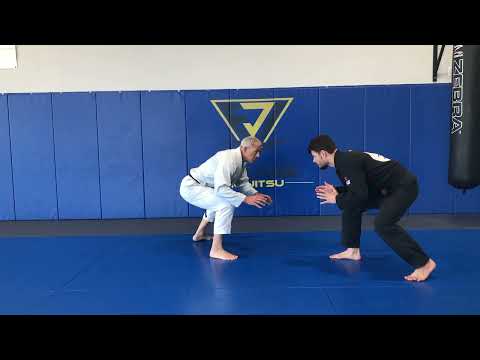
Proper Stance Fighting Stance in BJJ
0
Stance·Emerge Jiu Jitsu
This video demonstrates and explains proper stance concepts and typical stance in BJJ.
Перевод: stance
The Stance family covers the fundamental standing positions from which fighters launch attacks, defend, and move. [1] A fighter's stance determines their balance, power generation capability, defensive coverage, and available techniques at any moment. [1],[2] This family covers the primary fighting stances: orthodox (left foot forward), southpaw (right foot forward), square (feet even), and the staggered wrestling stance (low, wide base), each optimised for different combat objectives. [2],[3]
Fighting stances have been studied since the earliest martial arts traditions, with each combat system developing stances optimised for its techniques. [1] Modern combat sports have synthesised elements from multiple traditions to develop stances that balance striking, grappling, and defensive requirements. [2],[3]
Stance switching has become a significant tactical element in modern MMA, used by fighters like Israel Adesanya and TJ Dillashaw. [1]
Изображений для этой техники пока нет.
Войдите, чтобы предложить изображение.
This video demonstrates and explains proper stance concepts and typical stance in BJJ.
Учебных курсов по этой технике пока нет.
Войдите, чтобы предложить курс.
Риск травмы для человека, к которому применяется техника
Standing positions are pre-engagement stances; minimal direct risk
Уровень мастерства, необходимый для надёжного выполнения техники
Разрешена ли техника по основным соревновательным правилам
Karate-Do Kyohan: The Master Text (Gichin Funakoshi, 1935)
Alias sources — [1] Championship Fighting (Dempsey, 1950) [2] Boxing Mastery (Hatmaker, 2004) [3] Boxing Mastery (Hatmaker, 2004)
Effectiveness sources — [1] Boxing: The Complete Guide to Training and Fitness (Hatmaker, 2004) [2] Mastering Jujitsu (Gracie & Danaher, 2003)
Standard Japanese martial arts terminology (kanji/hiragana)
Established Japanese martial arts naming convention — native Japanese term (和語/漢語)
Alias sources — [1] Championship Fighting (Dempsey, 1950) [2] Boxing Mastery (Hatmaker, 2004) [3] Boxing Mastery (Hatmaker, 2004)
Effectiveness sources — [1] Boxing: The Complete Guide to Training and Fitness (Hatmaker, 2004) [2] Mastering Jujitsu (Gracie & Danaher, 2003)
balance, lower body stability, quick directional change
well-proportioned build with strong base
calves, quadriceps, core, hip stabilisers
Каждое движение в любом боевом искусстве обладает рядом универсальных свойств. Комбинируйте параметры ниже, чтобы найти нужный инструмент или сравнить аналоги из разных стилей.
The En Garde is the fundamental ready position in modern Olympic fencing — feet at right angles with the front foot pointing toward the opponent, rear foot perpendicular and roughly shoulder-width behind, both knees deeply bent so the centre of gravity sits between the feet, weapon arm extended toward the opponent, and rear arm raised behind for balance. [1,2] The stance enables explosive forward lunges, equally fast retreats, and the small constant footwork (advances, retreats, ballestras, balestra-lunges) that defines fencing engagements. [1] Each fencing weapon (foil, épée, sabre) has subtle variations in en garde depending on target area and tempo conventions, but the core posture — bent knees, sideways body, weapon-out — is universal. [1,3]
The Horse Stance (kiba-dachi in Japanese, ma bu in Chinese) is a wide low-stance position with both feet pointing forward, knees deeply bent, and weight distributed equally between both legs — as if seated on a horse. [1,2] The torso remains upright and the hips press downward; the depth of the stance directly correlates to the lateral stability and grounding it provides. [1] Used as a static training position to build leg endurance, hip mobility and structural alignment, and as a fighting stance in side-thrust kicks (yoko geri kekomi), middle blocks, and certain hand techniques where lateral force generation matters more than mobility. [1,3] Horse stance is foundational in karate, kung fu, and Korean traditional martial arts, and is one of the first stances taught after natural stance. [2]
The Orthodox Stance subfamily covers the fighting stance with the left foot forward and the right foot back, used by right-handed fighters as the standard stance in boxing, kickboxing, and MMA. [1] The orthodox stance places the power hand (right) in the rear position for maximum power generation on crosses and right hooks, while the lead hand (left) is used for jabs and range-finding. [1,2] Approximately 85-90% of fighters use the orthodox stance, making it the most common fighting stance in all combat sports. [2,3]
The Southpaw Stance subfamily covers the fighting stance with the right foot forward and the left foot back, used by left-handed fighters or as a tactical choice by right-handed fighters who 'switch' stances. [1] The southpaw stance mirrors the orthodox stance, placing the power hand (left) in the rear for maximum power generation. [1,2] Southpaw fighters have a tactical advantage because most opponents are less experienced fighting against the mirrored stance, and the lead-foot-to-lead-foot positioning creates a different dynamic than orthodox-versus-orthodox. [2,3]
The Square Stance subfamily covers the fighting stance where both feet are approximately even, with the body facing the opponent more directly rather than being turned sideways. [1] The square stance provides equal access to techniques from both sides and is commonly used in Muay Thai, where the fighter needs to check kicks from both legs and throw kicks without switching stances. [1,2] While the square stance sacrifices some power generation on rear-hand punches, it provides greater defensive symmetry and versatility. [2,3]
The Staggered Wrestling Stance subfamily covers the low, wide fighting stance used in wrestling, with one foot slightly forward, knees deeply bent, and a low centre of gravity. [1] The wrestling stance is optimised for takedown offence and defence, with the low centre of gravity making it harder for opponents to shoot underneath and the wide base providing stability against throws and trips. [1,2] The stance keeps the hands low and forward, ready to sprawl, underhook, or shoot for takedowns. [2,3]
Stance appears in 8,608 passages across our entire corpus — the most fundamental concept in all martial arts. Every technique begins and ends in a stance. Each art has characteristic stances: boxing has the orthodox/southpaw, karate has zenkutsu-dachi, Muay Thai has the square stance, wrestling has the low crouch. (200+ books; universal across all martial arts texts)
According to Emerge Jiu Jitsu, a proper stance requires balance, mobility, strength, and the ability to deliver and absorb power. Your core muscles between your knees and mid-torso must be engaged and working in synergy—this has to be trained deliberately or your stance will become lazy. Your head should be up, shoulders and chest up, and your back straight, as this makes you stronger and able to lift opponents effectively.
According to Emerge Jiu Jitsu, when you stand directly in front of your opponent facing square, you're very vulnerable—a push from the front or rear will easily knock you off balance, whereas resisting a lateral push is much harder. This is why a staggered stance is used instead, which distributes your weight more defensively.
According to Emerge Jiu Jitsu, most right-handed people naturally put their right foot forward because that's where their power hand is, allowing them to grab and use that dominant side for gripping. However, you can develop your game with either foot forward, and it's important to train both sides.
According to Emerge Jiu Jitsu, judo uses a more upright stance because judoka only use upper-body throws and don't worry about leg takedowns, which allows them to save energy. In contrast, BJJ requires a lower stance with bent knees to defend against leg attacks, though both sports value balance and mobility within their respective rule sets.
The Stance family covers the fundamental standing positions from which fighters launch attacks, defend, and move. A fighter's stance determines their balance, power generation capability, defensive coverage, and available techniques at any moment.
Fighting stances have been studied since the earliest martial arts traditions, with each combat system developing stances optimised for its techniques. Modern combat sports have synthesised elements from multiple traditions to develop stances that balance striking, grappling, and defensive requirements.
Unified MMA: разрешён — Legal; IBJJF: разрешён — Legal; IJF: разрешён — Legal; WBC/Boxing: разрешён — Legal — stance and footwork are fundamental; WKF: разрешён — Legal; UWW: разрешён — Legal
Оценка опасности 2/10. Low — standing positions are pre-engagement stances; minimal direct risk
Стандартная цепочка подготовки: Achieve Position → Stabilize → Maintain → Attack.
Стандартные контрприёмы: Posture Control — maintain strong posture to limit the opponent's offensive options / Escape to Neutral — work back to standing or a neutral position.
Распространённые варианты: Standard variation (primary positioning for control and attack); Offensive variation (configured for submission or striking opportunities); Transitional variation (positioned for quick movement to the next position); Defensive variation (prioritising stability and control over attack).
Stance switching has become a significant tactical element in modern MMA, used by fighters like Israel Adesanya and TJ Dillashaw.
Основные ошибки, на которые стоит обратить внимание: Standing with feet parallel (square) when a staggered stance is needed — staggered stances provide better mobility an… / Keeping the weight on the heels — weight should be on the balls of the feet for quick movement / Hands too low — the hands must protect the chin and temple at all times / Chin up and forward — the chin must be tucked behind the lead shoulder.
Stance также известен как Kamae, Fighting Stance, Combat Stance, Base Position.