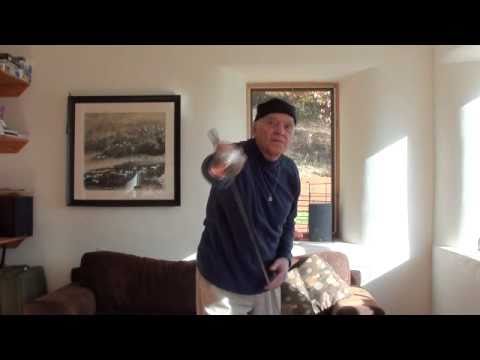
Fencing Technique: Parry Combinations and Drills, Part 1
0
Fencing Parry·selbergfencing
Fencing Master Charles Selberg answers the following question from fencer, Mark T., "What drills / teaching methods does…
Перевод: Fencing parry
The Fencing Parry family covers the system of blade deflections used in fencing to redirect an opponent's attacking blade away from the valid target area — the sword-fighting equivalent of blocking in unarmed combat, but executed with the blade itself. [1] Modern fencing recognises eight primary parries (prime through octave), each protecting a specific sector of the body by positioning the blade to intercept attacks from different directions. [1],[2] Parries are the foundation of defensive fencing and are always followed by an immediate riposte (return attack) — the parry-riposte sequence is fencing's fundamental defensive-offensive unit, conceptually identical to the block-counter in boxing. [2],[3] The parry system was formalised in the French and Italian fencing schools of the 17th–18th centuries and remains the standard teaching methodology in modern Olympic fencing across all three weapons (foil, épée, sabre). [3]
The parry system was formalised in the French and Italian fencing schools of the 17th–18th centuries as the rapier replaced the heavier broadsword and fencing technique became increasingly refined. [1] The eight-parry system (prime through octave) was codified by French fencing masters, with each parry corresponding to a specific threat line (high/low × inside/outside). [1],[2] Italian fencing developed a somewhat different parry nomenclature and technique, with the Italian masters emphasising wrist-based parries from a different guard position. [2],[3] Modern Olympic fencing uses the French parry system as the international standard. [3]
Parries are the fundamental defensive technique in fencing — without parrying ability, a fencer cannot defend against attacks and cannot establish the right-of-way needed to score in foil and sabre. [1] The parry-riposte is the most common scoring sequence in foil fencing, accounting for a significant percentage of touches at the Olympic level. [2] Elite fencers demonstrate parry-riposte execution in fractions of a second. [3]
Изображений для этой техники пока нет.
Войдите, чтобы предложить изображение.
Fencing Master Charles Selberg answers the following question from fencer, Mark T., "What drills / teaching methods does…
Учебных курсов по этой технике пока нет.
Войдите, чтобы предложить курс.
Риск травмы для человека, к которому применяется техника
Very low — in modern sport fencing, parries are executed with flexible blades and protective equipment; there is essentially no injury risk from the parry itself; in historical swordsmanship, parries were life-or-death defensive actions
Уровень мастерства, необходимый для надёжного выполнения техники
Разрешена ли техника по основным соревновательным правилам
The Art and Science of Fencing (William Gaugler, 2004)
Description sources — [1] The Art and Science of Fencing (Gaugler, 2004) on parry system [2] On Fencing (Nadi, 1943) on Italian technique [3] Fencing historical development
History sources — [1] The Theory and Practice of Fencing (Castle, 1885) on French school [2] Italian fencing tradition [3] FIE modern standardisation
Description sources — [1] The Art and Science of Fencing (Gaugler, 2004) on parry system [2] On Fencing (Nadi, 1943) on Italian technique [3] Fencing historical development
History sources — [1] The Theory and Practice of Fencing (Castle, 1885) on French school [2] Italian fencing tradition [3] FIE modern standardisation
fine motor control (blade manipulation is a precision skill), quick reflexes (parrying at competition speed requires sub-200ms reactions), wrist strength and flexibility
fast hands, good depth perception (judging blade distance), long arms (more reach for both defence and riposte)
finger flexors (grip and blade control), forearm pronators/supinators (blade rotation), deltoid (arm positioning), quadriceps (lunging for the riposte)
Каждое движение в любом боевом искусстве обладает рядом универсальных свойств. Комбинируйте параметры ниже, чтобы найти нужный инструмент или сравнить аналоги из разных стилей.
The Parry of Octave deflects low-line attacks to the outside by dropping the blade downward with the hand in pronation. [1] Octave covers the outside low line — the outer thigh and hip area. [1] It is the complement to septime for low-line defence. [1]
The Parry of Prime is the oldest and most instinctive defensive movement, sweeping the blade downward and across the body to deflect attacks to the inside low line. [1] It is rarely used in modern competition but remains important in classical and historical fencing. [1,2] Prime was the first parry documented in early fencing treatises. [1]
The Parry of Quarte is the most fundamental defensive action in Western fencing, deflecting attacks directed to the inside high line — the area of the chest and torso on the sword-arm side — by moving the blade laterally to the inside with the hand in supination (palm facing upward). [1] Quarte is universally taught as the first parry a beginning fencer learns because it defends the most commonly attacked target: the chest, which is the largest scoring surface in foil and the most natural target for a right-handed attacker facing a right-handed defender. [1,2] The mechanical execution is deceptively simple: from the en garde position, the fencer moves the blade approximately 4-6 inches to the inside (toward the torso), keeping the point slightly elevated and the hand in supination, using the forte (strong section) of their blade to deflect the incoming attack's foible (weak section). [1] This forte-to-foible contact is the key principle: by meeting the attacking blade's weakest section with the defending blade's strongest section, the parry requires minimal effort to redirect the attack off-target. [1,2] The parry of quarte is followed immediately by a riposte — the return attack delivered after the successful parry — making quarte-riposte (parry four, then attack) the most practised two-move sequence in all of fencing. [1] Pollock, Grove, and Prevost wrote in 1902 that the quarte parry 'is the parry par excellence,' noting that it defends the widest target area, is the most natural defensive movement, and sets up the most direct riposte. [1] In competitive fencing, the quarte parry accounts for approximately 40-50% of all successful defensive actions in foil, making it by far the most commonly used parry at all levels from beginner to Olympic competition. [3]
The Parry of Seconde deflects low-line attacks by dropping the blade down and to the outside with the hand in pronation. [1] It is a powerful parry used against attacks to the lower body and is particularly effective in sabre fencing. [1] Seconde combines well with a riposte to the upper body. [1]
The Parry of Septime deflects low-line attacks to the inside by dropping the blade downward with the hand in supination. [1] Septime protects the lower abdomen and thigh on the inside line. [1] It is essential against low-line attacks in épée fencing. [1]
The Parry of Sixte deflects attacks in the outside high line with the hand in supination, covering the outside shoulder and upper arm area. [1] Sixte is the modern counterpart to tierce and is the standard outside parry in French-school fencing. [1] It provides excellent coverage against disengagement attacks. [1]
The Parry of Tierce deflects attacks directed to the outside high line by moving the blade to the outside with the hand in pronation. [1] Tierce protects the area outside the sword arm — the flank and outside shoulder. [1] Combined with quarte, it forms the basic inside-outside defensive framework of fencing. [1]
Fencing parries appear in 5,648 passages under 'parry' across our entire corpus — the most documented defensive action. In sport fencing, eight numbered parries protect specific target areas. Each parry opens a specific riposte (counter-attack) line. (FIE fencing manuals; fencing instructional texts)
In fencing, how you move from one parry to another is where the real defense happens. According to Selberg Fencing, keeping the blade in constant motion between positions makes it harder for your opponent to find an opening and gives you better overall defense.
Keep the movements small—only large enough to protect the target area. Selberg Fencing emphasizes avoiding large sweeping movements, as they waste energy and expose you unnecessarily.
Parries are best performed with a retreat. According to Selberg Fencing, stepping back gives you extra time to execute your parries, maintains your rhythm, and prevents the encumbrance that comes from holding your ground.
Every opponent presents a different challenge, and you never know in advance which combination will be most useful. Having a full arsenal of parry combinations takes pressure off your defense and ensures you have backup options even if you don't find your opponent's blade on the first attempt.
The Fencing Parry family covers the system of blade deflections used in fencing to redirect an opponent's attacking blade away from the valid target area — the sword-fighting equivalent of blocking in unarmed combat, but executed with the blade itself. Modern fencing recognises eight primary parries (prime through octave), each protecting a specific sector of the body by positioning the blade to intercept attacks from different directions.
The parry system was formalised in the French and Italian fencing schools of the 17th–18th centuries as the rapier replaced the heavier broadsword and fencing technique became increasingly refined. The eight-parry system (prime through octave) was codified by French fencing masters, with each parry corresponding to a specific threat line (high/low × inside/outside).
Unified MMA: разрешён — Legal defensive technique; WBC/Boxing: разрешён — Legal — blocking and evasion are core boxing skills; WKF: разрешён — Legal — blocking is a fundamental karate skill; Kyokushin: разрешён — Legal; WT: разрешён — Legal; WAKO: разрешён — Legal; K: разрешён — 1/GLORY — Legal; IFMA: разрешён — Legal
Оценка опасности 1/10. Very low — in modern sport fencing, parries are executed with flexible blades and protective equipment; there is essentially no injury risk from the parry itself; in historical swordsmanship, parries were life-or-death defensive actions
Стандартная цепочка подготовки: Maintain Guard (En Garde) → Read the Attack → Select Parry → Execute Parry → Riposte → Return to Guard.
Стандартные контрприёмы: Disengage — going around the parry by circling the blade to the opposite line / Compound attack (one-two) — feinting to draw the parry, then attacking the opposite line / Remise — continuing the attack immediately after the parry, beating the riposte with speed / Counter-disengage — anticipating a circular parry and going the opposite direction.
Распространённые варианты: Simple parry (a direct lateral blade movement to deflect the attack; th…); Circular parry (counter-parry) (a circular blade movement that gathers the attacker's bla…); Semi-circular parry (a half-circle movement, typically from high to low or vic…); Beat parry (a sharp, percussive blade contact that knocks the attacki…); Ceding parry (yielding to the opponent's blade pressure and redirecting…); The eight parries: prime (1st), seconde (2nd), tierce (3rd), quarte (4th), quinte (5th), sixte (6th), septime (7th), octave (8th) (each protecting a specific body sector [2]).
Parry-riposte is the most common scoring action in Olympic foil fencing. All Olympic fencing medalists demonstrate elite parrying skills.
Основные ошибки, на которые стоит обратить внимание: Making oversized parries — large sweeping blade movements leave the fencer out of position for the riposte and create… / Parrying with the foible instead of the forte — using the tip-end of the blade has no mechanical advantage and result… / Forgetting the riposte — parrying without immediately riposting wastes the opening created by the parry; the riposte … / Predicting which parry to use — the correct parry must be a response to the actual attack, not a guess; guessing lead….
Fencing Parry также известен как Fenshingu Parī, Parry, Fencing Parry, Parade, Defensive Blade Action.