Octaves are SO easy when you know HOW to practice them!
0
Parry of Octave·PIANO LAB
Watch the full video here: https: //youtu.be/tGMu_213xdc
Перевод: Eighth parry
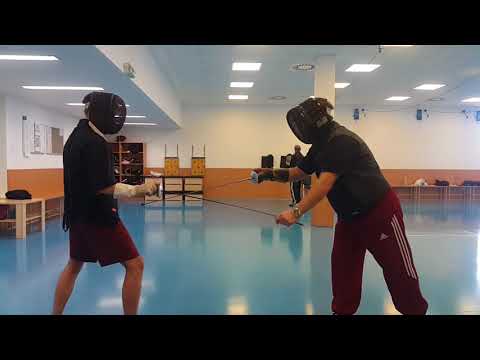
The Parry of Octave deflects low-line attacks to the outside by dropping the blade downward with the hand in pronation. [1] Octave covers the outside low line — the outer thigh and hip area. [1] It is the complement to septime for low-line defence. [1]
The Parry of Octave remains a core technique in modern competitive fencing and historical swordsmanship. [1]
Used in FIE international fencing competition
Изображений для этой техники пока нет.
Войдите, чтобы предложить изображение.
Watch the full video here: https: //youtu.be/tGMu_213xdc
Delivered as part of the FIE Coaching Academy in Budapest from Hungarian coach educator, Bela Kopetka. They aim to help …
The parry of octave is a defensive fencing technique executed in the eighth position, designed to deflect incoming attacks in the low line. According to Beth Speedy, the octave parry presents technical challenges because the defender must first move the blade upward and across to locate the opponent's blade before executing the deflection. The mechanics involve moving in an upward direction, then crossing downward with the outside edge of the blade, with the hand positioned in fifth position. Speedy emphasizes that edge alignment is critical—which edge meets which edge affects the tactile feedback and effectiveness of the parry. The coordination sequence consists of beating the opponent's blade, extending the arm, and gliding, all executed as a unified motion. Speedy notes that the octave parry is less common than the quarte parry but remains important in epée fencing. The technique requires the defender to avoid pushing downward, instead using controlled blade movement to meet and deflect the attack while maintaining proper hand position and blade contact throughout the action.
Сформировано на основе 2 инструкторов
Учебных курсов по этой технике пока нет.
Войдите, чтобы предложить курс.
Риск травмы для человека, к которому применяется техника
Defensive parrying technique
Уровень мастерства, необходимый для надёжного выполнения техники
Разрешена ли техника по основным соревновательным правилам
Fencing (Pollock, Grove & Prevost, 1902)
description, historyOrigin: sourced from Pollock, W
description, historyOrigin: sourced from Pollock, W
Requires good arm extension
Quick reflexes
Balance and footwork
The parry of octave is not a standard numbered fencing parry — it may refer to a variant position used in some schools. The eight standard parries (prime through octave) cover all attack lines. (Fencing technique manuals)
According to Beth Speedy, which edge contacts which edge significantly affects the feel and effectiveness of the parry. The specific edge alignment determines whether you're beating the outside or inside edge of your opponent's blade, which changes how the technique responds.
The Parry of Octave deflects low-line attacks to the outside by dropping the blade downward with the hand in pronation. Octave covers the outside low line — the outer thigh and hip area.
The Parry of Octave was codified in European fencing treatises from the 16th century onward. Italian and French schools developed the technique into its modern form through centuries of refinement.
Unified MMA: разрешён — Legal defensive technique; WBC/Boxing: разрешён — Legal — blocking and evasion are core boxing skills; WKF: разрешён — Legal — blocking is a fundamental karate skill; Kyokushin: разрешён — Legal; WT: разрешён — Legal; WAKO: разрешён — Legal; K: разрешён — 1/GLORY — Legal; IFMA: разрешён — Legal
Оценка опасности 1/10. Defensive parrying technique
Стандартная цепочка подготовки: En garde → Preparation → Parry of Octave → Recovery.
Стандартные контрприёмы: Counter-parry / Distance management / Stop-hit.
Распространённые варианты: Direct parry of octave; Indirect parry of octave; Compound parry of octave.
Used in FIE international fencing competition
Основные ошибки, на которые стоит обратить внимание: Over-extending / Telegraphing the action / Poor recovery.
Parry of Octave также известен как Okutābu, Octave, Parry 8, Eighth Parry, Parade d'Octave.