4 Martial Arts Shoes Explained | And Their Uses
0
Standard Boot·FightCamp·Added by Admin
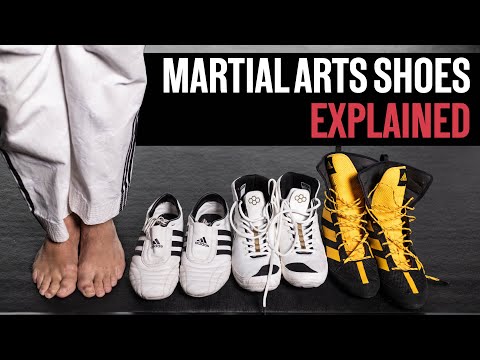
In today's video, FightCamp trainer, FloMaster, explains 4 different martial arts shoes and their specific use for that …
Перевод: standard boot
The Standard Boot curls the toes downward, points the foot, and tucks the heel tight behind the opponent's thigh or hip, making the foot impossible to grip and preventing the opponent from isolating it for heel hooks or ankle locks. [1] The boot is maintained by actively pressing the top of the foot against the opponent's body, creating friction that keeps the foot in place even when the opponent pulls on the ankle or shin. [1],[2] The standard boot must be maintained throughout any leg lock exchange, as even a momentary lapse in foot protection can allow the opponent to secure a devastating heel hook. [2],[3]
The standard boot became a foundational defensive concept in the modern leg lock era, emphasised by coaches worldwide as the most important first-line defence against heel hooks and ankle locks. [1] Its systematic teaching represents one of the most important defensive innovations in 21st-century grappling. [2],[3]
The boot (hiding the foot by curling the toes and flexing the ankle) is the primary defence against straight ankle locks and toe holds, as it prevents the attacker from isolating and extending the ankle joint. [1] John Danaher's leglock system identifies the boot as the first and most important defensive response to any ankle-based submission attack. [2]
The boot defence became systematically taught through the development of modern leg-lock systems, particularly through John Danaher's Death Squad methodology and Dean Lister's leg attack curriculum. [1]
Boot defence is a critical leg lock defence in no-gi competition. [1]
Изображений для этой техники пока нет.
Войдите, чтобы предложить изображение.
In today's video, FightCamp trainer, FloMaster, explains 4 different martial arts shoes and their specific use for that …
Учебных курсов по этой технике пока нет.
Войдите, чтобы предложить курс.
Риск травмы для человека, к которому применяется техника
Submission defence involves resisting joint locks/chokes; risk of injury if defence fails or is delayed
Уровень мастерства, необходимый для надёжного выполнения техники
Разрешена ли техника по основным соревновательным правилам
Kodokan Judo (Jigoro Kano, 1986)
Alias sources — [1] Jiu-Jitsu University (Ribeiro, 2008) [2] Fundamentals of Brazilian Jiu-Jitsu (Danaher, 2012) [3] Brazilian Jiu-Jitsu: Theory and Technique (Gracie, 2001)
Effectiveness sources — [1] Jiu-Jitsu University (Ribeiro, 2008) [2] Fundamentals of Brazilian Jiu-Jitsu (Danaher, 2012)
Standard katakana transliteration of Western martial arts terminology (外来語) — used in Japanese MMA, boxing, and BJJ communities
Alias sources — [1] Jiu-Jitsu University (Ribeiro, 2008) [2] Fundamentals of Brazilian Jiu-Jitsu (Danaher, 2012) [3] Brazilian Jiu-Jitsu: Theory and Technique (Gracie, 2001)
Effectiveness sources — [1] Jiu-Jitsu University (Ribeiro, 2008) [2] Fundamentals of Brazilian Jiu-Jitsu (Danaher, 2012)
grip fighting technique, forearm endurance, timing
strong hands and forearms, quick stripping motions
forearm flexors/extensors, wrist rotators, biceps
According to FightCamp, excessive grip on boxing shoes interferes with footwork because you need to be able to push and slide smoothly when standing up.
FightCamp notes that while you can box and move in wrestling shoes, the high grip can prevent you from pivoting effectively, making them less ideal for boxing footwork.
The Standard Boot curls the toes downward, points the foot, and tucks the heel tight behind the opponent's thigh or hip, making the foot impossible to grip and preventing the opponent from isolating it for heel hooks or ankle locks. The boot is maintained by actively pressing the top of the foot against the opponent's body, creating friction that keeps the foot in place even when the opponent pulls on the ankle or shin.
The standard boot became a foundational defensive concept in the modern leg lock era, emphasised by coaches worldwide as the most important first-line defence against heel hooks and ankle locks. Its systematic teaching represents one of the most important defensive innovations in 21st-century grappling.
Unified MMA: разрешён — Legal defensive technique; IBJJF: разрешён — Legal — defensive techniques are fundamental to grappling; IJF: разрешён — Legal defensive action; ADCC: разрешён — Legal; UWW: разрешён — Legal defensive technique; FIAS Sport Sambo: разрешён — Legal
Оценка опасности 3/10. Moderate — submission defence involves resisting joint locks/chokes; risk of injury if defence fails or is delayed
Стандартная цепочка подготовки: Anticipate the Attack → Execute Defence → Recover Stance → Counter or Disengage.
Стандартные контрприёмы: Timing — attack when the defence is recovering or between movements / Feint — use deception to create openings in the defensive structure / Angle Change — attack from an unexpected angle that the defence does not cover.
Распространённые варианты: Standard defence (primary defensive technique from the most common position); Reactive defence (triggered by the opponent's attack, minimal movement for …); Proactive defence (anticipating the attack and positioning to neutralise it …); Counter defence (using the defensive movement to create an immediate count…).
Boot defence is a critical leg lock defence in no-gi competition.
Основные ошибки, на которые стоит обратить внимание: Applying only one element of the three (plantarflex, internal rotate, straighten) — all three must work together / Applying the boot too late after the opponent has already begun rotating the heel — timing is critical / Holding the boot statically without working to escape — the boot degrades over time as the opponent adjusts / Not using the free leg to pummel and create escape opportunities — the boot-side foot defends while the free leg works.
Standard Boot также известен как Sutandādo Būtsu, Basic Boot Defence, Standard Boot Escape, Ankle Boot.