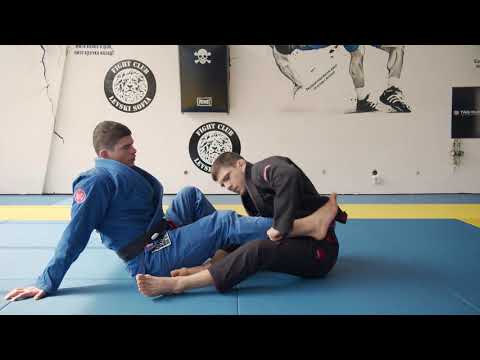
Leglock Defence Concepts (Dinu Bucalet)
0
Leglock Defence·Dinu Bucalet BJJ
Easy 3 step way to defend and then look to counter leg attacks. Of course there are many other ways but this is a very b…
Перевод: leglock defence
The Leglock Defence family covers all defensive techniques against leg-based submissions including heel hooks, kneebars, toe holds, and ankle locks. [1] Leglock defence has become one of the most critical areas of submission defence in modern grappling due to the explosive growth of leg lock offence in competitive BJJ and MMA. [1],[2] The primary defensive strategies are the boot (hiding the foot to prevent grip), hip pressure (driving the hips toward the opponent to relieve rotational force), and leg pummelling (freeing the legs from entanglement). [2],[3]
Leglock defences were historically underdeveloped in BJJ compared to upper body submission defence, as the IBJJF's restriction of heel hooks slowed the development of comprehensive leg lock defensive systems. [1] The revolution in leg lock offence led by Dean Lister, John Danaher, and the Danaher Death Squad during the 2010s forced a corresponding revolution in leg lock defence that has become essential at all levels of competitive grappling. [2],[3]
Leglock defence developed alongside the leg lock revolution in no-gi BJJ. [1]
Leglock defence is critical in modern no-gi competition. [1]
Изображений для этой техники пока нет.
Войдите, чтобы предложить изображение.
Easy 3 step way to defend and then look to counter leg attacks. Of course there are many other ways but this is a very b…
Учебных курсов по этой технике пока нет.
Войдите, чтобы предложить курс.
Риск травмы для человека, к которому применяется техника
Submission defence involves resisting joint locks/chokes; risk of injury if defence fails or is delayed
Уровень мастерства, необходимый для надёжного выполнения техники
Разрешена ли техника по основным соревновательным правилам
Boxing (Edwin Haislet, 1940)
Alias sources — [1] Enter the System (Danaher, 2018) [2] Enter the System (Danaher, 2018) [3] Jiu-Jitsu University (Ribeiro, 2008)
Effectiveness sources — [1] Mastering Jujitsu (Gracie & Danaher, 2003) [2] Jiu-Jitsu University (Ribeiro, 2008)
Mixed Japanese-Western terminology — combines traditional Japanese terms with katakana loanwords
Alias sources — [1] Enter the System (Danaher, 2018) [2] Enter the System (Danaher, 2018) [3] Jiu-Jitsu University (Ribeiro, 2008)
Effectiveness sources — [1] Mastering Jujitsu (Gracie & Danaher, 2003) [2] Jiu-Jitsu University (Ribeiro, 2008)
grip fighting technique, forearm endurance, timing
strong hands and forearms, quick stripping motions
forearm flexors/extensors, wrist rotators, biceps
Каждое движение в любом боевом искусстве обладает рядом универсальных свойств. Комбинируйте параметры ниже, чтобы найти нужный инструмент или сравнить аналоги из разных стилей.
The Boot Defence subfamily covers the technique of hiding the foot from the opponent's grip by curling the toes, pointing the foot, and tucking the heel behind the opponent's body or thigh. [1] The boot is the first-line defence against heel hooks and ankle locks — by preventing the opponent from accessing and controlling the foot, the submission cannot be applied. [1,2] The boot defence requires the defender to actively manage foot position throughout any leg entanglement, treating the foot like a hand that must be kept safe from grips. [2,3]
The Hip Pressure Defence subfamily covers leg lock defence techniques where the defender drives their hips toward the opponent, reducing the space needed for the submission's rotational or extension mechanics. [1] Hip pressure defence works by closing the distance between the defender's hip and the opponent's controlling hands, which reduces the lever arm and consequently the force the opponent can generate on the joint. [1,2] Driving the hips forward is the primary defence against kneebars and a critical secondary defence against heel hooks. [2,3]
The Leg Pummeling Defence subfamily covers defensive techniques where the defender systematically frees their legs from the opponent's entanglement, working to remove the legs from positions that expose them to submission attacks. [1] Leg pummelling is the ground-equivalent of hand fighting in the clinch — it involves using the legs to swim inside and outside the opponent's leg control, clearing hooks and entanglements. [1,2] Effective leg pummelling is essential for escaping saddle, 50/50, and other leg entanglement positions that are the foundation of modern leg lock attacks. [2,3]
Leg lock defense follows the Danaher principle: 'clear the knee line first, then address the grip.' If the attacker's hips are above your knee, you are in immediate danger. The boot (straightening the foot to prevent the heel hook grip) is the first-line defense. Never rotate away from a heel hook — always rotate into the pressure to relieve torque. (Danaher, Enter the System; Lachlan Giles instructionals)
According to Dinu Bucalet, the key is to hide your heel by turning your whole leg and foot into your opponent's ribs rather than just turning your knee. This positioning makes it nearly impossible for them to catch your heel for either a straight foot lock or heel hook, regardless of whether your leg is on the same side or across their body.
Dinu Bucalet emphasizes three core concepts: first, turn your heel in the right direction to hide your heel and Achilles; second, put weight and pressure on the leg being attacked; and third, work to undo your opponent's control by managing their grip and positioning.
Identify which direction you need to push based on your opponent's control—you may need to push up or in different directions. Dinu Bucalet notes that you should look for where their top leg is and apply pressure accordingly by controlling their grip either over or under, depending on the situation.
The Leglock Defence family covers all defensive techniques against leg-based submissions including heel hooks, kneebars, toe holds, and ankle locks. Leglock defence has become one of the most critical areas of submission defence in modern grappling due to the explosive growth of leg lock offence in competitive BJJ and MMA.
Leglock defences were historically underdeveloped in BJJ compared to upper body submission defence, as the IBJJF's restriction of heel hooks slowed the development of comprehensive leg lock defensive systems. The revolution in leg lock offence led by Dean Lister, John Danaher, and the Danaher Death Squad during the 2010s forced a corresponding revolution in leg lock defence that has become essential at all levels of competitive grappling.
Unified MMA: разрешён — Legal defensive technique; IBJJF: разрешён — Legal — defensive techniques are fundamental to grappling; IJF: разрешён — Legal defensive action; ADCC: разрешён — Legal; UWW: разрешён — Legal defensive technique; FIAS Sport Sambo: разрешён — Legal
Оценка опасности 3/10. Moderate — submission defence involves resisting joint locks/chokes; risk of injury if defence fails or is delayed
Стандартная цепочка подготовки: Anticipate the Attack → Execute Defence → Recover Stance → Counter or Disengage.
Стандартные контрприёмы: Timing — attack when the defence is recovering or between movements / Feint — use deception to create openings in the defensive structure / Angle Change — attack from an unexpected angle that the defence does not cover.
Распространённые варианты: Standard defence (primary defensive technique from the most common position); Reactive defence (triggered by the opponent's attack, minimal movement for …); Proactive defence (anticipating the attack and positioning to neutralise it …); Counter defence (using the defensive movement to create an immediate count…).
Leglock defence is critical in modern no-gi competition.
Основные ошибки, на которые стоит обратить внимание: Ignoring the leg entanglement and focusing only on the heel/knee — the entanglement is the root problem; clear it / Not understanding inside vs. outside position — outside knee position means you're the one being attacked / Crossing your legs when defending — this gives the opponent control of both legs / Bending the knee against a heel hook — straighten or at minimum keep it neutral; bending gives more rotational access.
Leglock Defence также известен как Ashi Kansetsu-waza Difensu, Leg Lock Escape, Anti-Leglock, Lower Body Defence.