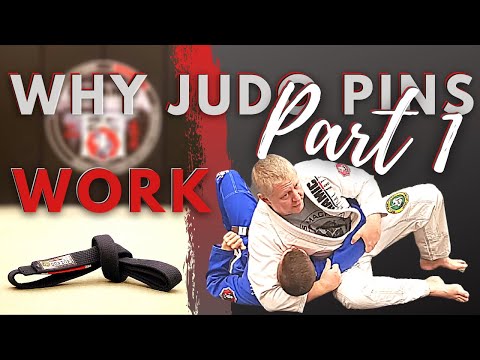
Judo Pins For BJJ - Part 1 - Spinal Control
0
Spinal Twist Defence·Takedowns For Jiu-jitsu
Why Judo Pins Work: Osaekomi Waza (pinning techniques) used in Judo are efficient by design. The intent is high level …
Перевод: spinal twist defence
The Spinal Twist Defence subfamily covers defences against submissions that apply rotational force to the thoracic or lumbar spine, such as the twister, banana split, and similar techniques that rotate the torso relative to the hips. [1] Spinal twist defence focuses on preventing the opponent from isolating and controlling both the upper and lower body independently, which is the prerequisite for applying rotational force to the spine. [1],[2] The defender works to keep the hips and shoulders aligned, preventing the opponent from creating the separation needed for the twist. [2],[3]
Spinal twist defence prevents rotational spinal submissions like the twister. [1]
Developed in response to 10th Planet twister attacks. [1]
Used in no-gi competition. [1]
Изображений для этой техники пока нет.
Войдите, чтобы предложить изображение.
Why Judo Pins Work: Osaekomi Waza (pinning techniques) used in Judo are efficient by design. The intent is high level …
Учебных курсов по этой технике пока нет.
Войдите, чтобы предложить курс.
Риск травмы для человека, к которому применяется техника
Submission defence involves resisting joint locks/chokes; risk of injury if defence fails or is delayed
Уровень мастерства, необходимый для надёжного выполнения техники
Разрешена ли техника по основным соревновательным правилам
Boxing (Edwin Haislet, 1940)
Alias sources — [1] Jiu-Jitsu University (Ribeiro, 2008) [2] Fundamentals of Brazilian Jiu-Jitsu (Danaher, 2012) [3] Brazilian Jiu-Jitsu: Theory and Technique (Gracie, 2001)
Effectiveness sources — [1] Mastering the Rubber Guard (Bravo, 2006)
Standard katakana transliteration of Western martial arts terminology (外来語) — used in Japanese MMA, boxing, and BJJ communities
Alias sources — [1] Jiu-Jitsu University (Ribeiro, 2008) [2] Fundamentals of Brazilian Jiu-Jitsu (Danaher, 2012) [3] Brazilian Jiu-Jitsu: Theory and Technique (Gracie, 2001)
Effectiveness sources — [1] Mastering the Rubber Guard (Bravo, 2006)
reaction speed, structural body mechanics, defensive awareness
quick reflexes and conditioned defensive surfaces
varies — forearms (blocking), legs (movement), core (stability)
Каждое движение в любом боевом искусстве обладает рядом универсальных свойств. Комбинируйте параметры ниже, чтобы найти нужный инструмент или сравнить аналоги из разных стилей.
Elongating the spine prevents the opponent from looking away from you, which removes their ability to scoot away. Additionally, it neutralizes their bridging power, making it very difficult for them to generate the core strength needed to create space and escape.
Simply pushing pressure on the opponent allows them to bridge and elongate their spine to escape. True spinal control involves lifting the head and elongating the spine while preventing them from looking away, which eliminates both their bridging ability and their ability to scoot away.
The Spinal Twist Defence subfamily covers defences against submissions that apply rotational force to the thoracic or lumbar spine, such as the twister, banana split, and similar techniques that rotate the torso relative to the hips. Spinal twist defence focuses on preventing the opponent from isolating and controlling both the upper and lower body independently, which is the prerequisite for applying rotational force to the spine.
Spinal twist defences became more important with the popularisation of the twister by Eddie Bravo and the 10th Planet Jiu-Jitsu system. The technique's potential for serious spinal injury has made its defence a priority topic in modern grappling instruction.
Unified MMA: разрешён — Legal defensive technique; IBJJF: разрешён — Legal — defensive techniques are fundamental to grappling; IJF: разрешён — Legal defensive action; ADCC: разрешён — Legal; UWW: разрешён — Legal defensive technique; FIAS Sport Sambo: разрешён — Legal
Оценка опасности 3/10. Moderate — submission defence involves resisting joint locks/chokes; risk of injury if defence fails or is delayed
Стандартная цепочка подготовки: Anticipate the Attack → Execute Defence → Recover Stance → Counter or Disengage.
Стандартные контрприёмы: Timing — attack when the defence is recovering or between movements / Feint — use deception to create openings in the defensive structure / Angle Change — attack from an unexpected angle that the defence does not cover.
Распространённые варианты: Standard defence (primary defensive technique from the most common position); Reactive defence (triggered by the opponent's attack, minimal movement for …); Proactive defence (anticipating the attack and positioning to neutralise it …); Counter defence (using the defensive movement to create an immediate count…).
Used in no-gi competition.
Основные ошибки, на которые стоит обратить внимание: Allowing the opponent to control both the legs and the head simultaneously — fight to free one or the other / Resisting the twist with upper body only — the defence must include lower body repositioning (hip rotation) / Not recognizing the twister setup from back control and truck position — these are the primary entries / Ignoring the lockdown defence — the lockdown is the gateway position to the twister.
Spinal Twist Defence также известен как Supainaru Tsuisuto Difensu, Twister Defence, Spine Lock Defence, Rotational Defence.