Rubber Guard TIPS all BEGINNERS should know..
0
Основи на Rubber Guard·Brandon Mccaghren
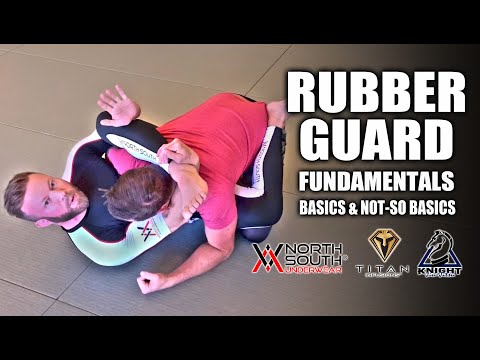
Triangle Chokes, Omoplatas, Gogo Clinch... So many great options to come from playing Rubber Guard with THESE details in…
Translation: основи на rubber guard
Документирано в множество борчески традиции. [1]
Доказано в състезания и мачове между различни стилове. [1]
Многостилова борческа традиция. [1]
Използвано в UFC и професионални MMA състезания
No images yet for this technique.
Sign in to suggest an image.
Triangle Chokes, Omoplatas, Gogo Clinch... So many great options to come from playing Rubber Guard with THESE details in…
Join this channel or Patreon.com/KnightJiuJitsu for exclusive detailed instructional content! This video has had a lot …
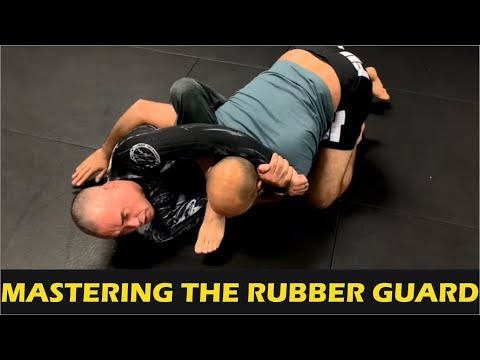
Mastering The Rubber Guard by Eddie Bravo - For The Best BJJ Instructional Videos, Check Out: https://bjjfanatics.com - …
The rubber guard is a closed-guard position initiated when an opponent's posture is broken down with the defender's hands controlling the opponent's upper body while maintaining a specific leg configuration. Eddie Bravo pioneered this position in Brazilian Jiu-Jitsu, and instructors across multiple channels emphasize distinct entry mechanics and applications. Bernardo Faria, citing Eddie Bravo's instruction, stresses that the entry is the critical foundation—establishing what he calls the "cocoon" position (deep overhook and underhook with both knees out in butterfly configuration) through a calculated sacrifice of the knee shield. This requires winning the "battle of the knee" by transitioning from lockdown through a superweapon position, using the "pimp arm" to control the opponent's free leg and forcing them to retreat into the underhook catch. Brandon McCaghren emphasizes early space-clearing mechanics—moving the hips to the side and using the elbow to create separation while securing a meat hook grip, stressing that the grip must be wrist-deep and angled properly to prevent the opponent from establishing heavy pressure. Knight Jiu-Jitsu (Eli Knight) provides the most comprehensive technical breakdown, distinguishing between optimal positioning (off to the side, hugging the knee, maintaining proper angle) and detailing the transition into multiple submission systems including go-go plata, omoplata, triangles, and shoulder locks. All three instructors agree that rubber guard requires proper hip positioning and emphasis on controlling one arm while framing the neck; they diverge in entry sequencing and submission focus, with Bravo prioritizing entry mechanics, McCaghren emphasizing defensive posture-breaking, and Knight cataloging the position's versatile attacking options.
Synthesized from 3 instructors
No instructional courses yet for this technique.
Sign in to suggest a course.
Risk of injury to the person this technique is applied to
Позиционна техника
Skill level needed to execute this technique reliably
Whether this technique is allowed under major competition rule sets
The Ultimate Guide to Grappling (Sattler, 2007)
description, historyOrigin: sourced from Sattler, J
description, historyOrigin: sourced from Sattler, J
Добър контрол на тялото и гъвкавост
Rubber guard се среща в 421 пасажа в 7 книги — най-добре документираната система за гарда в нашия корпус. Системата на Bravo използва екстремна гъвкавост за контрол на стойката на противника отдолу чрез краката — разработена специално за MMA, където затворената гарда излага долния борец на удари. (7 книги; Bravo, Mastering the Rubber Guard, 2006)
You have to give up position strategically to gain better position—Eddie Bravo calls this 'giving up five yards to gain 10 yards.' Start from Z guard with your shield protecting your neck, then make a trade: remove the shield and offer an underhook in exchange for a lockdown, which opponents will typically accept 99% of the time.
The pimp arm is your control on the opponent's leg, typically positioned palm-up above the knee. It's critical because it prevents your opponent from passing your guard—even if they get an underhook, they still can't advance if you maintain control of their leg.
Don't pull your ankle in front of your knee, as this creates unnecessary torque on your knee and hip. Instead, drape your shin over their arm properly and keep tight control—never let space open up during the setup, or your opponent will gain positioning advantage.
From rubber guard you can transition into omoplata setups by clearing your opponent's arm, or progress to attacks like the saddle and honey hole (also called gaku)—though entry into these positions is the most important fundamental to master first.
Rubber Guard използва екстремна гъвкавост на краката за контрол на противника от затворена гарда, като поставя крака зад главата на противника, създавайки платформа за сабмишъни и обръщания, без да разчита на хватки за ги.
Документирано в множество борчески традиции.
IBJJF: легална — Разрешено — гардата е основополагаща за BJJ, обръщанията от гарда носят 2 точки; IJF: ограничена — Влизането в гарда се наказва като пасивна борба — наземна работа от гарда е р…; ADCC: легална — Разрешено, влизането в гарда се наказва с -1 точка в точковата фаза; Unified MMA: легална — Разрешено — без наказание за игра в гарда; FIAS Sport Sambo: легална — Разрешено
Оценка на опасност 3/10. Позиционна техника
Стандартната верига за подготовка: Позиция → Основи на Rubber Guard.
Стандартните контри включват: Специфични за техниката контри.
Чести варианти: Стандартни основи на Rubber Guard.
Използвано в UFC и професионални MMA състезания
Основни грешки, за които да внимавате: Лош контрол / Бързане.
Основи на Rubber Guard е известна също като Rubber Guard Basics, 10th Planet Rubber Guard, Mission Control.