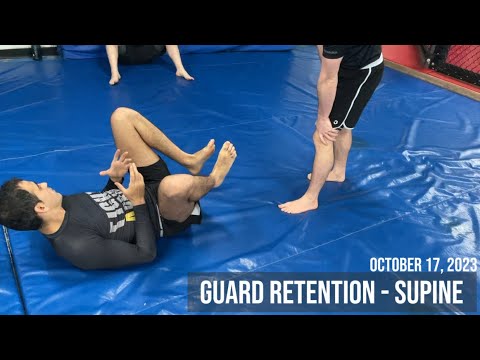
Guard Retention - Supine
0
Стандартен легнал заден маунт·Bjj_saad·Added by Admin
0:00 Intro to supine guard 1:56 How to deal with grips 4:25 How to prevent the grips 5:42 How to defend against side ste…
Translation: стандартен легнал заден маунт
При стандартния легнал заден маунт контролиращият боец лежи по гръб, а противникът е върху него с лице нагоре, куките или триъгълникът на тялото са заключени, а хватката „предпазен колан
Стандартният легнал заден маунт е основната позиция за контрол на гърба с куки. [1]
Класическата позиция за контрол на гърба в BJJ и джудо. [1]
Най-честата финишираща позиция при контрол на гърба в MMA. [1]
No images yet for this technique.
Sign in to suggest an image.
0:00 Intro to supine guard 1:56 How to deal with grips 4:25 How to prevent the grips 5:42 How to defend against side ste…
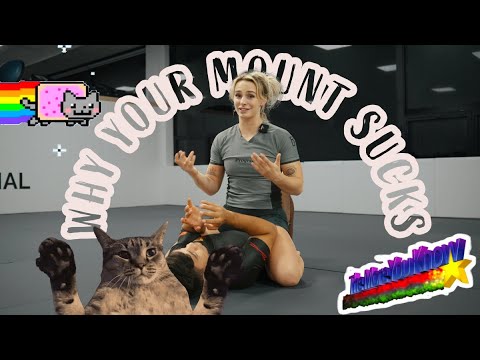
When you first start Jiu Jitsu, you're gonna be getting stuck in the bottom of mount. A lot. Even by people who aren't v…
Here are a few of my favourite tips on controlling from the mount position, and why you may be struggling in this positi…
The Standard Supine Rear Mount represents a position where a grappler controls an opponent from behind while both fighters are on their backs. Bjj_saad emphasizes the foundational importance of establishing and maintaining connection through controlled grip work on the ankles and wrists, stressing that proper positioning prevents the bottom player from escaping via lateral movement. The instructor advocates for specific hook placement above rather than below the knee to prevent paddle escapes, and describes defensive mechanics against both side-step and cross-step passing attempts by the top player. Bjj_saad's teaching focuses on minimizing the opponent's options through active leg positioning and preventing them from advancing past the hip line. Brandon Mccaghren addresses escape methodology from mounted positions, detailing three primary escapes—bridge and roll, knee-elbow escape, and kipping escape—that bottom players can employ from the supine rear mount position. Ffion Davies contributes control principles for the mounted position, including head control via cross-face, elbow elevation to prevent bridge mechanics, hip positioning slightly above the opponent's hips, and knee spacing relative to opponent arm position. Davies also emphasizes bailing out of unsustainable positions rather than clutching desperately. The three instructors collectively present a comprehensive view of the position: Bjj_saad on top-player control and connection, Mccaghren on bottom-player escapes, and Davies on positional refinement and weight distribution.
Synthesized from 3 instructors
No instructional courses yet for this technique.
Sign in to suggest a course.
Risk of injury to the person this technique is applied to
Умерена — контролът на гърба е доминантна позиция; позволява задно задушаване (Danaher 2021)
Skill level needed to execute this technique reliably
Whether this technique is allowed under major competition rule sets
Mastering Jujitsu (Renzo Gracie & John Danaher, 2003)
Alias sources — [1] Jiu-Jitsu University (Ribeiro, 2008) [2] Mastering Jujitsu (Gracie & Danaher, 2003)
Effectiveness sources — [1] Mastering Jujitsu (Gracie & Danaher, 2003)
Mixed Japanese-Western terminology — combines traditional Japanese terms with katakana loanwords
Alias sources — [1] Jiu-Jitsu University (Ribeiro, 2008) [2] Mastering Jujitsu (Gracie & Danaher, 2003)
Effectiveness sources — [1] Mastering Jujitsu (Gracie & Danaher, 2003)
стабилна основа, тежък таз, способност за яздене
по-едра физика със силен таз за натиск
аддуктори на бедрото, корем, седалищни мускули, четириглав мускул
Control your opponent's head by turning it in a specific direction and using your chest to drive their face—this forces them to bridge in only one direction rather than letting them decide left or right. Ffion Davies emphasizes that if your opponent can look square or control their head freely, they have options for where to bridge.
Keeping your hips slightly above your opponent's hips prevents them from throwing your weight when they bridge, since your heaviest point won't be directly on top of their strongest point. Ffion Davies notes that positioning hips in line with theirs makes it much easier for them to escape.
Use a 'blanketing motion' by opening your arms wide rather than bunching up tight, which makes you feel much heavier and harder to move. Ffion Davies explains that when you ball up, it's significantly easier for your opponent to turn you, so staying open creates better control.
It's easier to control the position if you establish mount from side control by collecting the elbows in front (disconnecting them from the mat) before transitioning up. Ffion Davies explains that when elbows are already tight and blocking you, the resulting position is much harder to control compared to when they're already separated.
При стандартния легнал заден маунт контролиращият боец лежи по гръб, а противникът е върху него с лице нагоре, куките или триъгълникът на тялото са заключени, а хватката „предпазен колан
Стандартният легнал заден маунт е най-честата финишираща позиция при задно голо задушаване както в BJJ, така и в MMA. Разпространението му отразява естествената динамика на смените в контрола на гърба, при които контролиращият боец често завършва по гръб.
IBJJF: легална — Разрешено, маунтът носи 4 точки — позицията с най-висок резултат; IJF: легална — Разрешено, осаекоми (притискане) — 10-19 секунди носи ваза-ари, 20 секунди но…; ADCC: легална — Разрешено, маунтът носи 2 точки; Unified MMA: легална — Разрешена доминантна позиция; UWW: легална — Разрешено, излагането на гръб носи точки, притискането завършва мача с падане; FIAS Sport Sambo: легална — Разрешено, притискането носи точки
Оценка на опасност 4/10. Умерена — контролът на гърба е доминантна позиция; позволява задно задушаване (Danaher 2021)
Стандартната верига за подготовка: Преминаване на гарда → Натиснете с тежест → Контролирайте ръцете → Заплашвайте с финиши.
Стандартните контри включват: Мост (Упа) — взривно повдигане на таза за дестабилизиране на горния играч / Бягство с лакът-коляно (скарида) — създаване на пространство чрез натискане на лакъта към коляното и избягване с таза / Рамка — установяване на рамки с предмишницата за предотвратяване на натиска на горния играч.
Чести варианти: Нисък маунт (тежък таз върху корема на противника, крака обвити за ста…); Висок маунт (колена под мишниците, ръцете изолирани за финиши); С-маунт (едното коляно високо под мишницата, другият крак прехвърл…); Технически маунт (единият крак закачен, другото коляно поставено, модифицир…).
Най-честата финишираща позиция при контрол на гърба в MMA.
Основни грешки, за които да внимавате: Глава от грешната страна — главата трябва да е от силната страна (на задушаването) / Тазът е твърде далеч от кръста на противника — затворете разстоянието за максимален контрол / Неподдържане на активни куки — куките не позволяват на противника да се плъзне надолу за бягство / Атакуване с RNC преди позицията да е напълно осигурена — първо установете всички елементи на контрола.
Стандартен легнал заден маунт е известна също като Sutandādo Aomuke Ushiro Kijōi, Плосък заден маунт, Позиция раница.