Introduction and Context
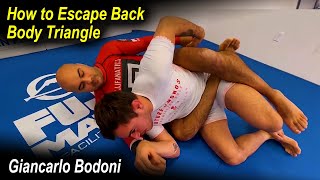
Luke Griffin, a prominent no-gi competitor known for exceptional back escape mechanics, demonstrates a body triangle escape method. The technique addresses one of the most challenging defensive scenarios in back control, where traditional leg-scissoring approaches may prove ineffective against a well-positioned opponent.
Initial Setup and Defensive Positioning
When caught in a body triangle with the opponent maintaining strong back heel position, the defender establishes defensive hand positioning. The traditional approach of attempting to scissor the legs and capture the back leg becomes difficult when the opponent actively prevents leg penetration through proper heel management.
Elbow Wedge and Leg Control
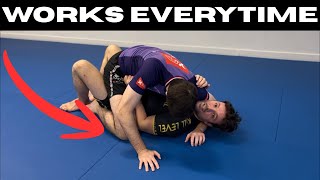
The defender inserts their elbow to the inside of the opponent's knee while simultaneously gripping their own thigh. By pulling the knee toward the chest while wedging the elbow inward, significant pressure is generated that makes maintaining the triangle substantially more uncomfortable for the opponent.
Breaking the Triangle and Initial Escape
As the opponent's legs split under the wedging pressure, the defender immediately runs in the opposite direction and steps over the opponent's leg. This creates distance and positioning that prevents easy re-establishment of back control while the defender works toward a more advantageous position.
Head Position Management
If the opponent maintains good head control, the defender fights their head toward the bottom side while cutting their elbow to the floor inside the opponent's hip. This repositioning further compromises the opponent's ability to maintain control, forcing them to either abandon the position or engage in continued leg wrestling.
Counter-Adaptation to Foot Positioning
When the opponent flares their foot outward to pinch the knees closed and resist the wedge technique, the defender can transition to a traditional leg-fishing approach in the opposite direction. This combination of techniques ensures the defender has effective responses to multiple defensive reactions.
Efficiency and Positional Security
The technique emphasizes making position regain as difficult as possible for the opponent while minimizing energy expenditure by the defender. Each step of the escape—wedging the elbow, moving the head away, controlling the legs—progressively eliminates the opponent's options for re-establishing back control.
Application for Practitioners of Varied Levels
The method is particularly valuable for older or less athletic practitioners because it relies on mechanical leverage and positioning rather than cardio or strength. The escape uses minimal additional motion beyond the core wedging action, making it accessible and sustainable for hobbyist practitioners.
TRAPPED in a Body Triangle? Do THIS to Instantly Break It.
Key Takeaways
- •Introduction and Context
- •Initial Setup and Defensive Positioning
- •Elbow Wedge and Leg Control
- •Breaking the Triangle and Initial Escape
Getting trapped in a body triangle used to mean a slow, exhausting submission. Not anymore. John Danaher student and No-Gi phenom Luke Griffith shows Bernardo Faria a zero-effort, highly mechanical Body Triangle Escape that literally breaks the lock in seconds. If you are tired of getting your back taken by younger, more flexible grapplers and burning all your cardio trying to escape, this video is your cure. Luke reveals a concept we are calling the "Inside Wedge"—a leverage-based trick that uses your body weight to create unbearable tension on your opponent's lock, forcing them to open their legs or face the pain. No explosive bridging or wild scrambling required. Bernardo Faria himself was mind-blown, stating he lost all his control in just 5 seconds. Watch how the pros neutralize the most dominant position in Brazilian Jiu-Jitsu. 🏆 Master Your Escapes: Want to learn the rest of Luke Griffith’s world-class escape system? Check out his brand new instructional on Back Escapes at BJJ Fanatics! 🔥 Get 10% OFF Any Instructional! Use the promo code YOUTUBEFARIA at checkout on BJJFanatics.com to improve your Jiu-Jitsu faster. 👉 https://bjjfanatics.com/ ⏱️ Chapters (Crucial for YouTube SEO & Retention): 00:00 - The Best No-Gi Competitor in the World Right Now 00:54 - The Problem: Why Traditional Body Triangle Escapes Fail 01:21 - Step 1: Setting up the "Inside Wedge" 02:40 - Step 2: Hip Pressure & Popping the Lock 03:27 - Step 3: Beating Every Reaction & Counter 04:44 - The "Zero-Effort" Solo Blueprint (How the Leverage Works) 🥋 About Bernardo Faria: Bernardo Faria is a 5x World Champion and co-founder of BJJ Fanatics. His mission is to bring you the best Jiu-Jitsu techniques, tips, and secrets from the greatest minds in the sport, helping hobbyists and competitors alike elevate their game on the mats. . For the best fightwear, check out https://www.kojofightwear.com/ and use code " YTD15 " to get 15% off your first order.
Related Techniques
Frequently Asked Questions
What does this video teach about body triangle escape?
This video covers introduction and context, initial setup and defensive positioning, elbow wedge and leg control. It provides detailed instruction from Bernardo Faria BJJ Fanatics.
How long does it take to learn body triangle escape?
The basic mechanics can be understood in a single session, but developing reliable execution requires consistent drilling over weeks of practice. This 8-part breakdown helps structure your training by isolating each phase of the technique.
What are the key details for finishing body triangle escape?
The technique emphasizes making position regain as difficult as possible for the opponent while minimizing energy expenditure by the defender. Each step of the escape—wedging the elbow, moving the head away, controlling the legs—progressively eliminates the opponent's options for re-establishing back control.