Establishing the Clinch Position
The instructor begins by demonstrating the fundamental setup for wrist control in the clinch. The practitioner must first secure a solid clinch position, preparing to transition into wrist control techniques on both sides of the opponent's body.
Grabbing and Shoulder Control
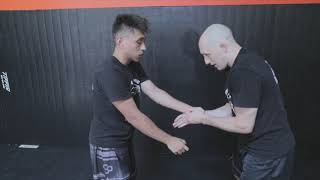
On the first side, the practitioner grabs the opponent's arm and drives upward toward their shoulder. This initial grip establishes control while preventing the opponent from creating distance or executing counter-techniques.
Alternating Side Technique
The instructor introduces a stabbing motion with the opposite hand while maintaining control on the first side. This alternating pattern allows the practitioner to control both of the opponent's arms sequentially, creating dominant clinch positioning.
Breaking Down the Opponent's Structure
The practitioner cuts downward with the controlled arm, applying downward pressure to break the opponent's posture and structural integrity. This cutting motion destabilizes the opponent while the practitioner maintains superior positioning.
Progressive Pressure Application
The instructor emphasizes the importance of progressively increasing pressure throughout the technique. By gradually intensifying control rather than applying force explosively, the practitioner can maintain leverage and prevent the opponent from escaping the clinch.
Control in the Clinch | Namsaknoi Muay Thai
Key Takeaways
- •Establishing the Clinch Position
- •Grabbing and Shoulder Control
- •Alternating Side Technique
- •Breaking Down the Opponent's Structure
Clinching is my favorite part of Muay Thai. Here at Namsaknoi Muay Thai, we spend at least half hour every session working on our clinch game. It is like a dance to me. I glide around my opponent out of his grips, disrupt the direction of his flow, and trick him into losing his balance. The trick is to keep your body loose and your feet light. Don’t fight against the force head on, or you can get tired very quickly. You go along with it, understand your opponent’s movement patterns, capitalize on his momentum, and find an opening to disrupt it. With good understanding of technique and balance, you can control and trip anyone, even if he’s heavier than you!
Related Techniques
Frequently Asked Questions
What does this video teach about wrist control clinch?
This video covers establishing the clinch position, grabbing and shoulder control, alternating side technique. It provides detailed instruction from Namsaknoi Muay Thai.
How long does it take to learn wrist control clinch?
The basic mechanics can be understood in a single session, but developing reliable execution requires consistent drilling over weeks of practice. This 5-part breakdown helps structure your training by isolating each phase of the technique.
What are the key details for finishing wrist control clinch?
The practitioner cuts downward with the controlled arm, applying downward pressure to break the opponent's posture and structural integrity. This cutting motion destabilizes the opponent while the practitioner maintains superior positioning.